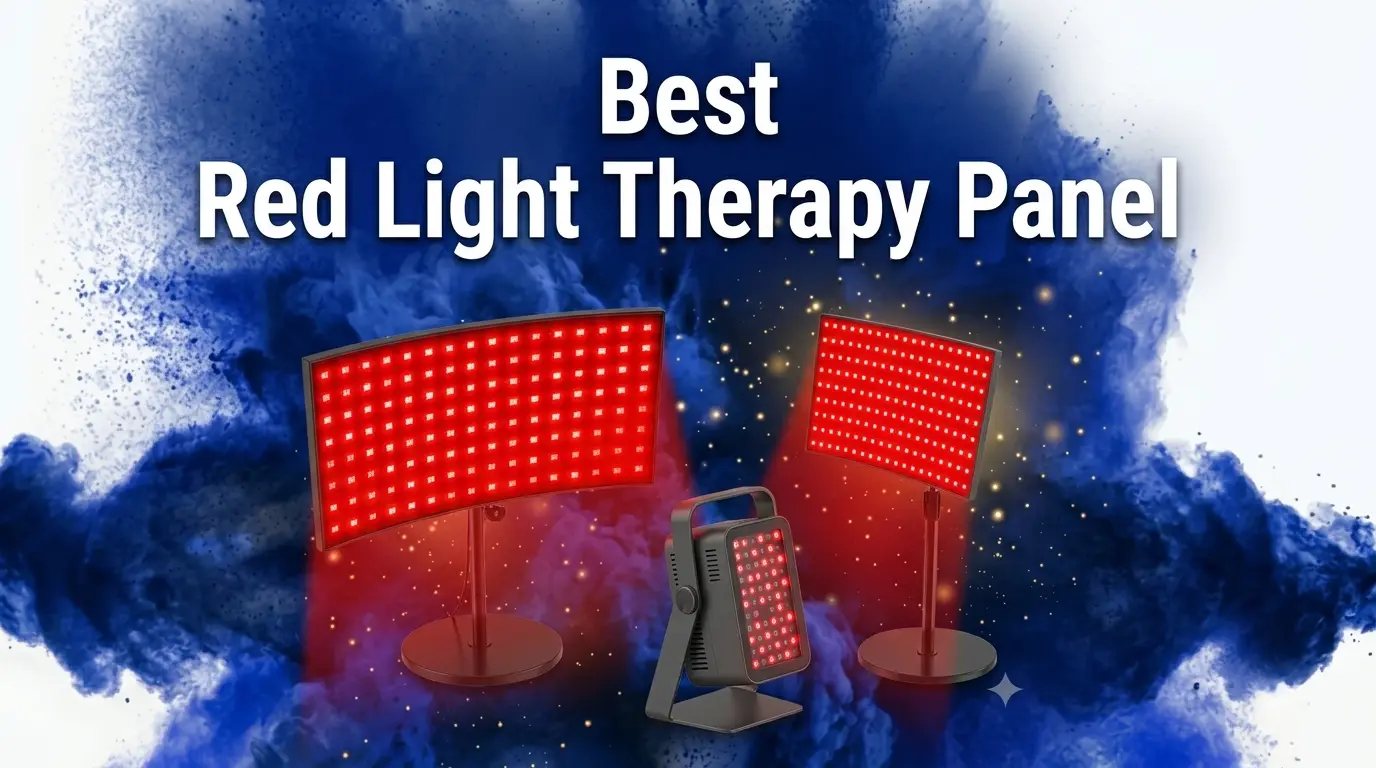
Best Red Light Therapy Panel: Expert Picks for Home Use
Red light therapy panels have moved out of clinics and into everyday home routines, with more US buyers now choosing at-home devices for skin health, muscle recovery, and general wellness. The panels that consistently deliver results combine both 660 nm red and 850 nm near-infrared wavelengths, sufficient irradiance output, and low-EMF construction backed by third-party testing. The Mito Red MitoPRO 750 is our top overall pick, standing out for its dual-chip output, verified irradiance data, and durable aluminum build at a price that holds up against premium alternatives.
This guide is for adults comparing red light therapy panels for home use, whether the goal is post-training recovery, skin texture improvement, or building a consistent daily wellness habit. Wavelength accuracy, irradiance at distance, and build quality vary widely across brands, and selecting the wrong panel often means poor results despite consistent use.
Product Name | Best For | Key Feature | Link |
Mito Red MitoPRO 750 | Best Overall | Dual-chip 660/850 nm, verified irradiance | |
Hooga HG300 | Best Budget | 660/850 nm combo, lightweight | |
Rouge Panel Series 1 | Best Beginner | Adjustable floor stand included |
Best Red Light Therapy Panels: In-Depth Reviews
Mito Red MitoPRO 750
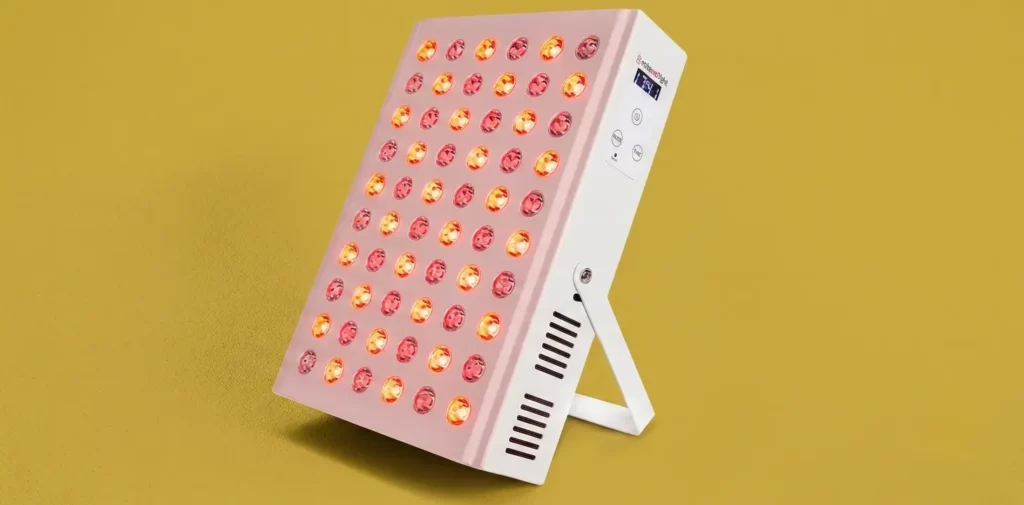
The MitoPRO 750 is a mid-to-large panel from Mito Red Light, built with dual-chip LEDs that deliver both 660 nm and 850 nm wavelengths with published irradiance figures consistently above 100 mW/cm2 at six inches. It suits active adults and athletes who want a verified alternative to clinical red light therapy devices, with aluminum construction, a quiet internal fan, and a steel hanging kit included. Third-party EMF testing and transparent specification documentation set this panel clearly above most competitors in its price range.
Why We Picked It: Third-party irradiance verification and dual-chip LED design make this the most trustworthy panel at its price point.
Pros: Dual 660 nm and 850 nm wavelengths backed by independent irradiance lab data and low-EMF certification.
Cons: Larger footprint may be limiting in compact spaces.
Hooga HG300
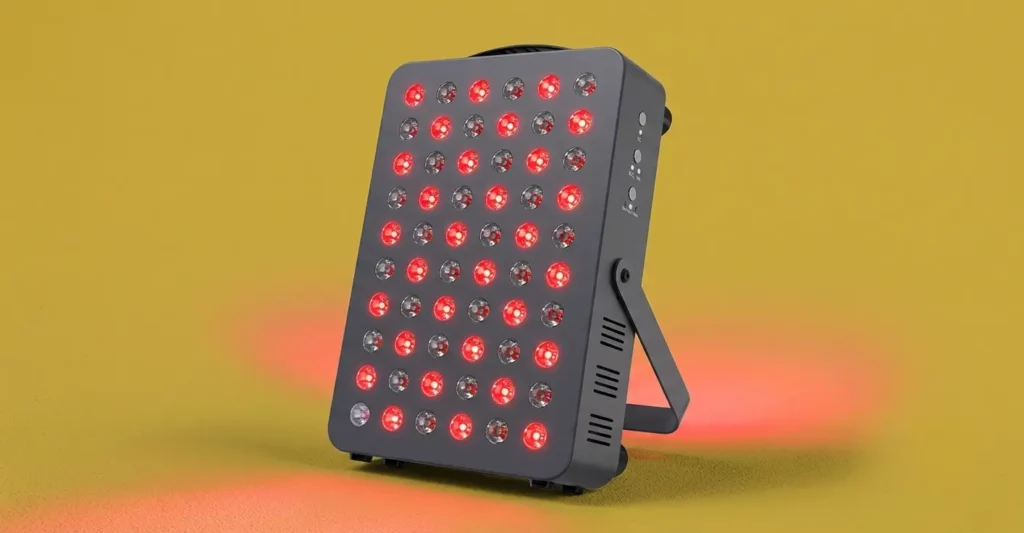
The Hooga HG300 is a compact entry-level panel that delivers genuine 660 nm and 850 nm wavelengths at a price point that makes red light therapy accessible for first-time buyers without requiring a significant upfront commitment. It works best for adults with smaller treatment areas such as the face, neck, shoulder, or a single joint, and it ships with a simple hanging strap that works on most standard doors. Hooga publishes basic irradiance figures, and while output does not match dual-chip premium panels, the value relative to cost is genuinely competitive within the budget segment of the best red light panels market.
Why We Picked It: Reliable wavelength combination and honest brand communications make this the strongest budget starting point.
Pros: Genuine 660 nm and 850 nm output with a simple door-mount strap at an accessible entry price.
Cons: Lower irradiance means longer session times to achieve results comparable to premium panels.
Rouge Panel Series 1
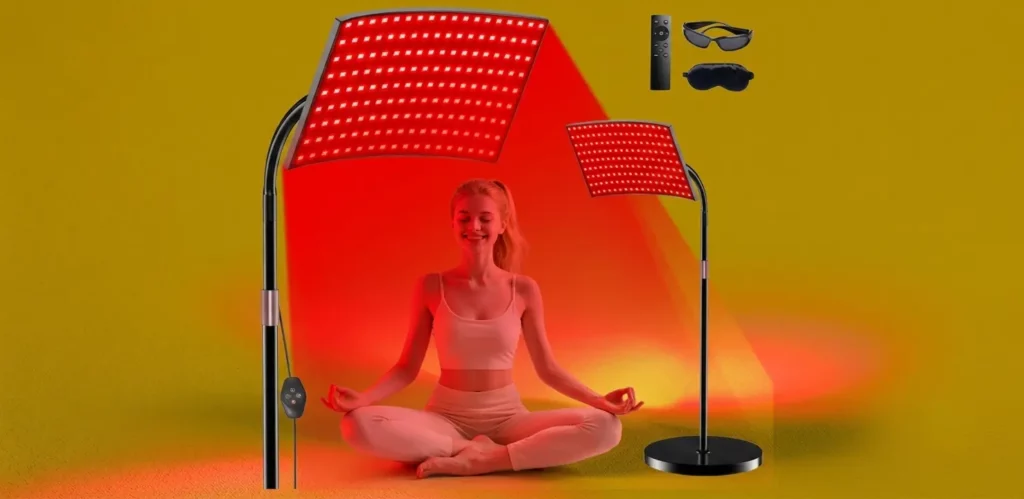
The Rouge Panel Series 1 is built with beginner usability as the clear design priority, pairing a standard 660/850 nm LED layout with an adjustable freestanding floor stand that eliminates wall mounting or door hardware entirely. It suits adults who are new to red light therapy panels for home use and want a setup that works immediately, including older adults or those recovering from an injury who need flexible daily positioning. Rouge is a Canadian brand with transparent technical communications, a clean warranty structure, and the Series 1 ships fully assembled so the time from unboxing to first session is minimal.
Why We Picked It: The included adjustable stand removes every setup barrier that typically prevents consistent beginner use.
Pros: Freestanding adjustable floor stand included; ships fully assembled with zero installation required.
Cons: Floor stand adds footprint that may be impractical in very compact rooms.
What Do Red Light Therapy Panels Actually Do?
Red light therapy panels emit wavelengths at 660 nm and 850 nm that penetrate skin and underlying tissue at different depths, where they are thought to stimulate mitochondrial activity, potentially supporting tissue repair, collagen production, and circulation. The practical difference between a strong and a weak panel usually comes down to whether the device delivers sufficient irradiance at the skin surface to trigger a meaningful cellular response, which is why specification transparency matters more than wattage claims alone. Users already managing post-training soreness alongside a light therapy routine often find that combining it with approaches like those covered in our
Users already managing post-training soreness alongside a light therapy routine often find that pairing it with a foam roller or massage gun covers more of the mechanical tension that light therapy alone does not address.
How Should You Use a Red Light Therapy Panel at Home?
Most manufacturers recommend positioning the panel six to twelve inches from the treatment area, with sessions lasting between five and twenty minutes depending on irradiance output and the area being targeted. Consistency matters more than session length: short daily sessions tend to produce better outcomes than infrequent long ones, which is why ease of setup and mounting flexibility are practical buying factors alongside raw specification numbers. Adults managing chronic muscle tightness between sessions may also benefit from a
Adults managing chronic muscle tightness between red light sessions may find that a back massager with heat helps address residual tension that photobiomodulation alone does not fully resolve.
Are Red Light Therapy Panels Worth It for Home Use?
For adults who use them consistently, quality red light therapy panels for home use represent strong long-term value compared to ongoing clinic visits, particularly for skin and muscle recovery goals. The panels with the highest real-world satisfaction in this category tend to share two traits: verified irradiance output and a mounting setup that fits naturally into an existing daily routine. Budget panels from brands that publish honest data, such as the Hooga HG300, offer a low-risk entry point before investing in a larger full body red light therapy panel system.
How to Pick a Red Light Therapy Panel: Key Buying Factors
The strongest red light therapy at home comes from matching panel specifications to actual use goals, not from choosing the panel with the highest watt number on the listing page.
Factor | What to Look For |
Wavelengths | Look for both 660 nm red and 850 nm near-infrared. Red targets skin surface; NIR penetrates deeper muscle and joint tissue. |
Irradiance | Aim for 50 to 100+ mW/cm2 at six inches. Higher irradiance means shorter sessions for equivalent results. |
Panel Size | Larger panels suit full-body recovery; smaller panels work well for targeted face, knee, or shoulder use. |
EMF Levels | Prefer panels with published third-party EMF testing. Reputable brands make this data easy to find. |
Build Quality | Aluminum housing handles heat better than plastic. Quiet fan operation matters for bedroom or evening use. |
Warranty | A minimum two-year warranty reflects manufacturer confidence. Avoid brands offering only 90-day coverage. |
Modular Design | If you may want full-body coverage later, choose a panel compatible with a modular expansion system now. |
Setup Flexibility | Door-mount, wall-mount, or freestanding stand options each suit different room types and routines. |
Frequently Asked Questions
What red light therapy panel is best?
The best red light therapy panel for most home users combines 660 nm and 850 nm wavelengths, delivers verified irradiance above 50 mW/cm2 at six inches, and comes from a brand that publishes third-party testing data. Based on these criteria, the Mito Red MitoPRO 750 is our top overall recommendation for home use.
What is the most reputable red light therapy device brand?
Joovv, Mito Red Light, and PlatinumLED are consistently regarded as the most reputable brands in the at-home red light therapy panel space, each publishing verifiable irradiance and EMF data with meaningful warranties. Joovv carries the highest brand recognition, while Mito Red and PlatinumLED are often preferred by users prioritizing verified output per dollar spent.
Are red light therapy panels worth it?
Red light therapy panels are worth the investment for adults who use them consistently and maintain realistic expectations about outcomes. Research on photobiomodulation is ongoing in areas like muscle recovery and skin health, and results depend heavily on panel quality, session frequency, and appropriate distance from the device.
How do I pick a red light therapy panel?
Prioritize panels that combine 660 nm and 850 nm wavelengths, publish third-party irradiance measurements, carry low-EMF documentation, and offer a minimum two-year warranty. Match panel size to your treatment goal: small panels suit targeted areas, while full-body goals require a larger device with higher total output.
Does red light therapy help with muscle recovery?
Research suggests red light therapy may support muscle recovery by promoting cellular energy production and reducing localized post-exercise inflammation, though results depend on wavelength accuracy, irradiance output, and session consistency. Near-infrared wavelengths at 850 nm penetrate deeper into muscle tissue than surface red light, making dual-wavelength panels the more practical choice for recovery-focused use.

- Best Heating Pads for Back Pain: Electric, Cordless, or Microwavable? - October 9, 2026
- How Do Air Purifiers Work? Inside the Filtration Process - October 9, 2026
- How to Use a Massage Gun: A Safe Guide for Beginners - October 7, 2026