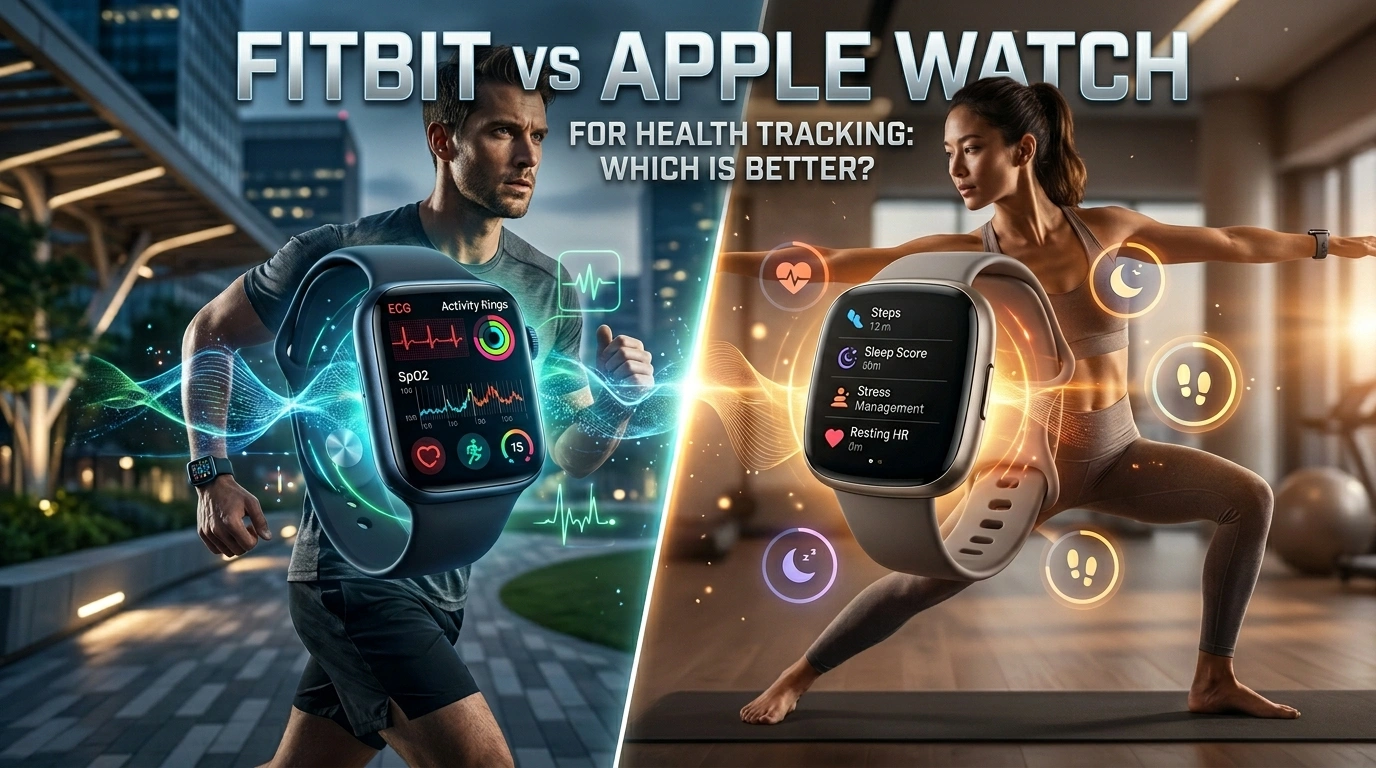
Fitbit vs Apple Watch for Health Tracking: Which Is Better?
Tracking your daily health statistics was incredibly difficult just a decade ago. You had to visit a doctor or use bulky, expensive medical equipment. Today, you carry a massive medical laboratory right on your wrist constantly. Two massive technology giants currently dominate the wearable health market completely.
Apple and Google are fighting a brutal war for your daily fitness data. The Apple Watch is a beautiful, highly advanced extension of your mobile phone. The Fitbit platform focuses almost entirely on pure fitness and human recovery metrics. They approach personal wellness from two totally different design philosophies.
Choosing the wrong digital device is an expensive and deeply frustrating mistake. You need to know exactly how these powerful gadgets measure your daily health. They record your heart rates differently and score your nightly sleep uniquely.
Let us break down this massive technology rivalry to find your perfect match. We will look at battery life, medical sensors, and hidden software costs. This guide will help you buy the absolute best tracker for your body.
Core Fitness and Activity Tracking
The Famous Apple Activity Rings
Apple uses a highly visual, gamified system to track your daily physical movement. Three brightly colored rings close slowly as you move throughout the day. The red ring tracks the active calories you burn during waking hours. The green ring records your actual daily exercise minutes perfectly.
The blue ring simply reminds you to stand up once every single hour. This visual system is incredibly addictive and highly motivating for casual users. You actually feel guilty when you fail to close your bright digital rings. It forces you to move when you would normally just sit down.
However, the Apple system completely ignores the basic concept of physical rest days. It expects you to hit the exact same aggressive goals every single day. This constant pressure can lead to serious physical burnout if you train intensely.
The Fitbit Daily Readiness Score
Fitbit takes a much more clinical approach to your daily fitness data. They look deeply at how your body physically recovers overnight while you sleep. The Daily Readiness Score tells you exactly how hard you should train today.
If you slept poorly, the app actually tells you to take a rest day. It suggests light stretching or a gentle walk instead of heavy gym work. This highly intelligent feature prevents serious sports injuries before they even happen. It listens to your nervous system rather than forcing a strict daily quota.
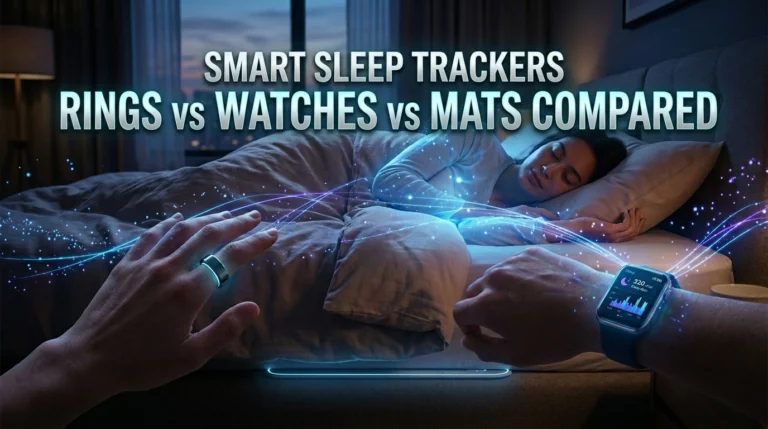
You can also try exploring other wearable recovery options if you hate wearing watches. Some modern rings and smart mats offer similar daily readiness feedback perfectly.
Basic Step Counting Accuracy
Many people just want a simple device to count their daily walking steps. Fitbit is the undisputed king of raw, visible step counting. They display your total daily steps proudly right on the main watch face.
Apple tends to hide your total daily steps deep inside their confusing menus. Apple prefers to focus on calories burned rather than raw steps taken. If you love walking ten thousand steps daily, Fitbit wins this category easily.
Both brands use excellent internal sensors to filter out fake arm movements. Typing on your keyboard will not magically add a thousand steps to your total.
Heart Health and Medical Sensors
ECG and Atrial Fibrillation Detection
Modern smartwatches can literally save your life by monitoring your heart rhythms. Both top-tier Apple and Fitbit watches now feature built-in ECG sensors.
You place your finger on the metal crown to take a medical reading. The watch checks your electrical heart signals for signs of atrial fibrillation. This dangerous irregular heartbeat causes strokes and blood clots if left untreated entirely.
Both devices will send an alert if your resting heart rate spikes suddenly. You can print these detailed PDF reports and hand them directly to your doctor. This technology offers incredible peace of mind for older adults and cardiac patients.
Blood Oxygen Monitoring
Your blood oxygen saturation is a very important indicator of overall lung health. Both major brands use red and infrared sensors to measure your oxygen levels. They shine bright light through your skin to read the oxygen in your blood.
This metric is highly useful if you train at very high physical altitudes. It also helps detect potential signs of severe sleep apnea overnight. If your oxygen drops drastically while you sleep, the app will alert you.
The Apple Watch allows you to take spot oxygen readings during the day. Fitbit mostly restricts this deep reading to your nightly sleep tracking hours.
Skin Temperature Tracking
Tracking your nighttime skin temperature changes is a very new wearable feature. Both platforms use sensitive thermometers to read your skin heat while you rest.
This data helps predict oncoming sickness before you actually feel bad. A sudden spike in skin temperature usually means your body is fighting a virus. Women also use these temperature trends to track their monthly ovulation cycles closely.
This hidden sensor runs quietly in the background without needing your direct input. It just provides another highly useful data point for your total wellness picture.
Sleep Tracking and Recovery Data
Measuring Your Nightly Rest
Sleep tracking is arguably the most important metric for your overall physical health. Poor sleep completely ruins your immune system and destroys your daily energy levels. You cannot outwork a terrible night of broken, restless sleep.
Fitbit is the original pioneer of wearing a smart watch to bed. The app breaks down your light, deep, and REM sleep cycles beautifully.
It gives you a single, easy to read sleep score every single morning. Apple recently improved their sleep tracking software significantly to match this detail. However, Apple’s native sleep data still feels slightly less clinical than Fitbit data.
The Reality of Battery Life
You cannot track your nightly sleep if your watch is completely dead. This is the single biggest hardware difference between these two famous brands.
The standard Apple Watch must be charged every single day without fail. Most people just charge it on their nightstand while they actually sleep. This totally defeats the purpose of buying a device to track your rest. You have to find a weird time during the day to charge it.
Fitbit devices easily last for five to seven solid days on a single charge. You can wear it to bed every single night without any battery anxiety. This massive battery advantage makes Fitbit the superior dedicated overnight health tracker.
Dealing with Sleep Environment Issues
Wearing a heavy, sweaty watch to bed is highly uncomfortable for many people. The silicone bands trap heat against your skin all night long. If you suffer from hot flashes, wearing heavy technology to bed is miserable.
You might consider upgrading to a chilled bed surface to stop heavy sweating. A cool sleep environment drastically improves the data your smart watch actually records.
You should also look into blocking annoying street traffic completely for better rest. A quiet, cool room ensures your wearable tracker captures deep, healing sleep cycles.
Outdoor Tracking and GPS Accuracy
Built-In GPS Performance
Runners and cyclists need highly accurate distance tracking for their daily outdoor workouts. You want to map your exact running route without carrying a heavy phone. Both the Apple Watch and high-end Fitbits feature strong built-in GPS antennas.
Apple connects to global satellites incredibly fast when you step outside. It draws highly accurate maps of your morning run perfectly. Fitbit GPS can sometimes take a minute or two to finally lock on.
If you run in dense cities with tall buildings, Apple generally performs better. The expensive Apple Watch Ultra features dual-frequency GPS for extreme outdoor accuracy.
Altitude and Elevation Tracking
Hiking up steep mountains requires tracking your total vertical elevation gains. Both brands feature internal altimeters to measure the exact height you climb daily.
Apple translates this data into a “flights of stairs climbed” metric very well. Fitbit also records your elevation, but it focuses more on flat distance traveled. If you love mountain biking or steep trail running, both watches perform admirably.
You can leave your heavy smartphone in your car and still record everything. Your exact pace, distance, and heart rate are saved directly on your wrist.
Smartwatch Features and Phone Integration
The True Smartwatch Experience
The Apple Watch is a brilliant, tiny computer strapped directly to your wrist. You can answer phone calls, dictate text messages, and control your smart home. The screen is gorgeous, and the third-party app store is absolutely massive.
Fitbit devices are primarily fitness trackers first and smartwatches second. The smart features are very basic and sometimes quite clunky to use daily. You can read your text messages, but replying is often very frustrating.
If you want to leave your phone at home constantly, Apple wins easily. You can stream music and buy hot coffee using just your watch.
The Smartphone Ecosystem Trap
Your current mobile phone completely dictates which watch you should actually buy today. The Apple Watch only works if you own an expensive Apple iPhone. It will never sync with a Google or Samsung Android mobile device.
Fitbit is proudly platform agnostic and works perfectly with both major phone systems. This gives you total freedom to switch your phone brand later without penalty.
Apple relies heavily on its closed ecosystem to keep you buying its products. If you hate being locked into one brand, Fitbit is the safer choice. You can upgrade your Android phone without throwing your expensive watch away.
The Problem with Subscription Paywalls
You must understand the hidden costs associated with tracking your health data today. When you buy an Apple Watch, you get every software feature for free. The deep health metrics are completely unlocked on day one forever.
Fitbit hides their absolute best clinical data behind a frustrating monthly premium subscription. You cannot see your detailed sleep analysis without paying extra money. You cannot see your Daily Readiness Score without an active Premium membership.
This hidden paywall is deeply annoying after buying an expensive piece of hardware. You must factor this extra monthly cost into your final buying decision. You might save money long-term by relying on gentle morning light routines instead.
FAQs
Can I use an Apple Watch with my Android smartphone?
No, you absolutely must own an iPhone to activate and use an Apple Watch. They are completely locked into the closed Apple software ecosystem forever.
Does Fitbit charge a monthly fee to see my health data?
Yes, Fitbit Premium costs a monthly fee to unlock your detailed sleep scores. Basic step counting and raw heart rate data remain completely free to view.
Which watch is actually better for tracking my nightly sleep?
Fitbit provides much deeper sleep cycle data and a massive multi-day battery life. It is significantly better for dedicated nightly sleep tracking without charging anxiety.
Are the heart rate sensors highly accurate on these devices?
Yes, both brands use highly advanced optical sensors that are incredibly accurate. They are nearly identical in raw clinical heart rate tracking during daily wear.
Can I swim in the pool with my fitness tracking watch?
Yes, modern devices from both brands are fully water-resistant for shallow surface swimming. Just rinse the harsh pool chlorine off with fresh water immediately afterward.
Final Takeaways
Choosing between Fitbit and Apple comes down to your primary daily technology goal. If you want a brilliant tiny computer that makes your life easier, buy Apple. The Apple Watch is a flawless extension of your iPhone that tracks fitness beautifully. It is highly expensive, and the battery life is unfortunately very poor.
If your only goal is fixing your physical health, buy a high-end Fitbit. The multi-day battery life means you actually capture your crucial sleep data nightly. The app focuses purely on human recovery instead of buzzing you with texts. It is a dedicated wellness tool rather than a distracting miniature smartphone.
Remember to factor the monthly Premium subscription cost into your total Fitbit budget. Pick the device that naturally fits your current phone ecosystem and daily routine. A fitness tracker is only useful if you actually remember to wear it.

- How to Use a Massage Gun: A Safe Guide for Beginners - October 7, 2026
- How to Speed Up Muscle Recovery: Beyond Rest and Stretching - August 13, 2026
- Best Piercing Pillows: Which Ones Actually Relieve Pressure? - August 11, 2026