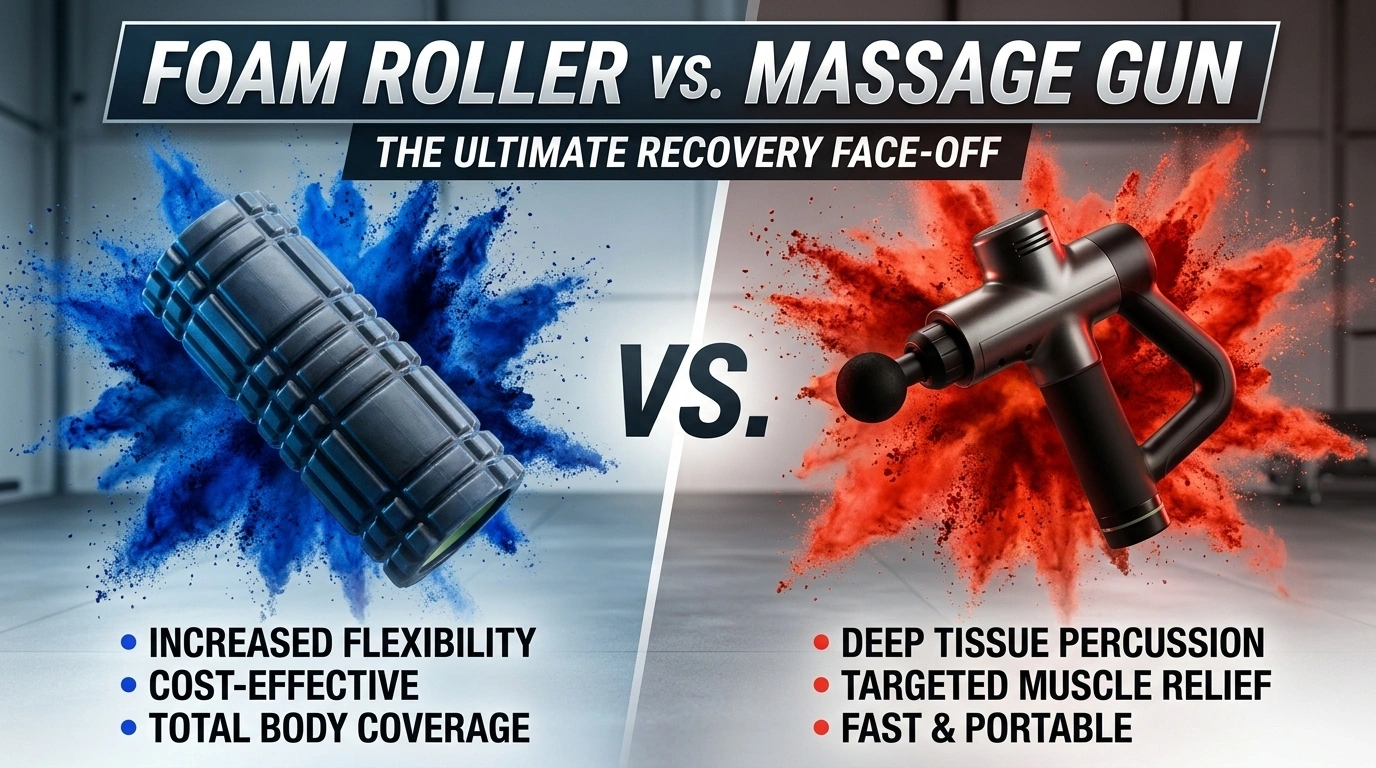
Foam Roller vs Massage Gun: Which Recovery Tool Wins?
Your muscles are locked up tight after a heavy workout. You stare at your gym bag, looking for fast physical relief. Two specific tools dominate the fitness recovery market today. One is a cheap cylinder of dense foam. The other is an expensive, battery-powered percussion device. Which one actually deserves your hard-earned money?
Let us break down the exact physical science behind both options. You need to know exactly how they treat sore tissue. They look completely different, and they heal your body differently. One requires a sweaty physical workout, while the other offers passive rest. This guide will help you make the smartest buying choice today.
The Mechanics of Foam Rolling
Active Physical Effort
Foam rolling is officially called self-myofascial release in medical terms. This analog technique uses your own physical body weight for pressure. You lay down on the floor and roll over the cylinder. This action physically squeezes trapped blood out of your tight muscles. Fresh, oxygen-rich blood then rushes back into the treated area.
This process requires actual physical effort to use properly. You must hold your body up in plank positions frequently. This means your core gets a light workout during your recovery. Some people hate this extra physical demand after lifting heavy weights. However, it gives you total control over the pressure applied.
You decide exactly how much weight to drop onto the foam. If it hurts too much, you simply lift your hips up. This natural feedback loop makes foam rolling incredibly safe for beginners.
Treating Large Muscle Groups
Rollers excel at treating large, sweeping muscle groups easily. Your quads, hamstrings, and calves respond beautifully to this broad pressure. You can cover massive physical areas in just a few short minutes. The wide surface area flattens out large sheets of tight fascia.
Fascia is the thin casing of connective tissue surrounding your muscles. When it gets sticky and tight, your flexibility drops to zero. A roller irons out this tissue like a rolling pin on dough. You will notice a huge increase in your joint mobility afterward.
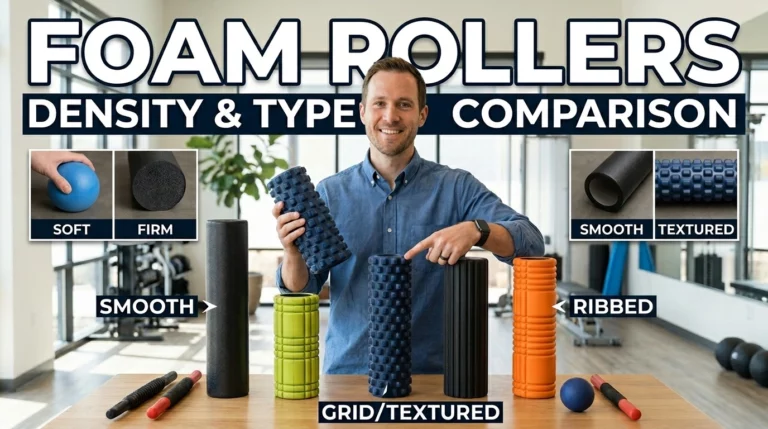
If you want to understand the different firmness levels, we have a guide. Choosing the correct density matters deeply for your personal pain tolerance. A roller that is too hard will just cause severe bruising.
Limitations of the Roller
The biggest downside is the inability to target tiny, specific knots. The broad surface cannot dig deep into a sharp shoulder spasm. You end up rolling over the knot without actually releasing it. It is like trying to fix a tiny watch with a hammer.
You also cannot effectively roll out your sensitive neck or arms. The physical angles are just too awkward to manage on the floor. Foam rollers belong strictly on the large muscles of your legs and back. They are blunt instruments, not precision medical tools.
The Mechanics of Massage Guns
Passive Deep Tissue Relief
A massage gun delivers targeted percussive therapy directly into your tissue. It uses a high-speed electric motor to punch your muscles rapidly. You just hold the handle and let the machine do the work. This passive approach is incredibly appealing when you feel totally exhausted.
You do not have to hold a difficult plank position ever. You can sit on your couch and treat your sore legs comfortably. Good resting posture matters deeply for muscle health. You might consider upgrading your seating to support your daily home recovery. Proper resting posture prevents new muscle knots from forming daily.
The rapid vibration confuses your nervous system completely. Your brain stops focusing on the sharp pain of the muscle knot. This allows the tight muscle fibers to finally relax and let go.
Pinpoint Precision Control
These electric devices target specific, tiny trigger points perfectly. If you have a sharp knot in your shoulder, a gun wins easily. The narrow attachment heads dig right into the center of the pain. It is a highly precise tool for stubborn, isolated muscle cramps.
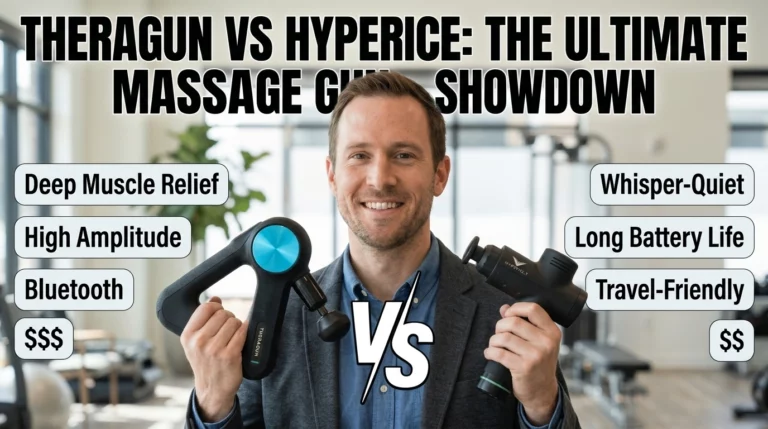
You can easily compare popular models to see their specific attachments. Different heads treat different types of human tissue effectively. A flat head is great for your chest muscles. A bullet head digs deep into the soles of your feet.
This level of customization is impossible with a standard foam roller. You can adjust the speed, the depth, and the exact attachment head. This makes the massage gun a highly versatile piece of equipment.
Safety Risks and Warnings
Massage guns carry a much higher risk of accidental injury. You should never use a percussive device directly on a solid bone. Hitting your spine with a fast motor causes severe, shocking pain. You must strictly keep the device on soft muscle tissue only.
You must also avoid the front of your sensitive neck entirely. The rapid pulsing can easily damage delicate blood vessels located there. Pregnant women and people with blood clots must consult a doctor first. The intense vibration can cause serious medical complications if used incorrectly.
Cost, Time, and Portability
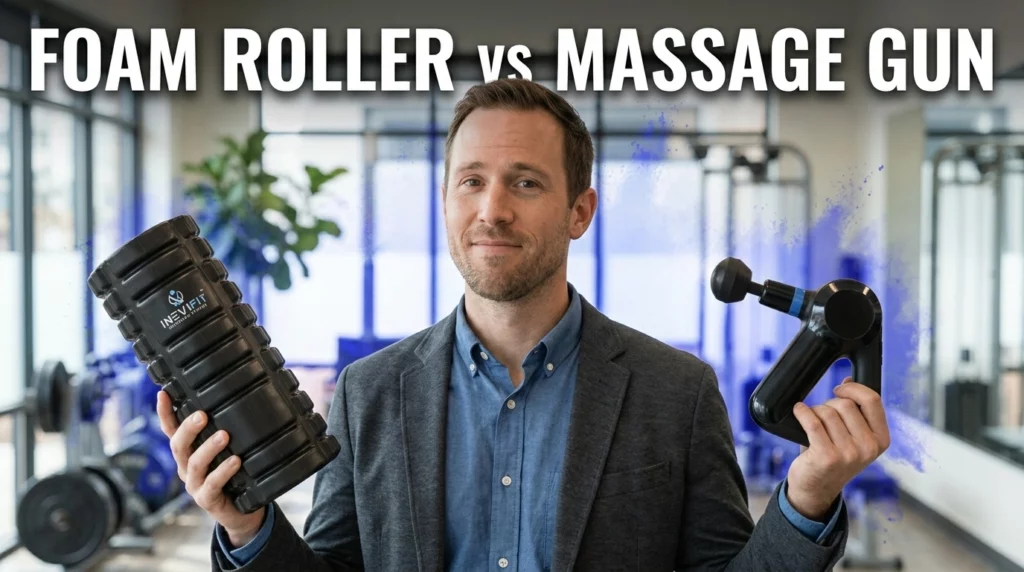
The Financial Investment
Foam rollers are incredibly cheap and highly accessible for everyone. You can buy a fantastic roller for under twenty dollars. They never run out of battery power during a recovery session. They never break down or require expensive motor repairs later.
Massage guns are a very serious financial investment for your health. High-end athletic models cost hundreds of dollars easily. You must remember to charge them constantly after your daily workouts. A dead battery makes the expensive tool completely useless to you.
If your budget is extremely tight, the foam roller is the clear winner. It provides excellent baseline recovery without draining your bank account.
Time Efficiency
Foam rolling takes a solid ten to fifteen minutes of work. You have to move your entire body across the hard floor. It is a slow, methodical process that requires deep patience. You have to breathe slowly and sink into the dense foam.
Massage guns are incredibly fast and highly efficient tools. You can treat a severely sore muscle in just two minutes flat. The high-speed motor does the heavy work instantly for you. If you are an extremely busy person, the electric gun wins easily.
You can use a massage gun right at your office desk quickly. You cannot easily lay down and foam roll in a corporate boardroom.
Travel Considerations
A standard thirty-six-inch foam roller is impossible to pack in a suitcase. It takes up way too much room in a standard gym bag. You have to leave it at home when you travel for work.
Massage guns pack massive recovery power into a tiny travel case. Many brands make miniature versions specifically for airplane carry-on luggage. You can easily toss one into your backpack for a weekend trip. This allows you to maintain your recovery routine inside a hotel room.
Combining Both Recovery Tools
The Ultimate Two-Step Routine
You do not actually have to pick just one recovery tool. Many professional athletes use both items in their daily fitness routines. They serve completely different physical purposes for your body. Using them together creates the ultimate muscle healing protocol.
Use the cheap foam roller first to warm up large areas. Roll out your back and legs to increase total blood circulation. This preps the tissue safely for deeper, targeted vibration work. It acts as a broad sweep to find the worst tight spots.
Finishing with Percussion
Grab the massage gun next for those specific problem areas. Hit the stubborn knots that the broad roller missed entirely. Let the rapid percussion break apart the deepest muscle adhesions.
This two-step process provides amazing physical relief extremely fast. It is the smartest way to treat delayed onset muscle soreness safely. You get the broad sweep and the surgical precision combined. Your muscles will recover twice as fast using this combined method.
FAQs
Can a massage gun completely replace my foam roller?
No, they serve different purposes entirely. A roller stretches out large fascia sheets, while a gun targets deep, localized knots.
Is it safe to use a foam roller on my lower back?
You should avoid rolling directly over your lower lumbar spine. It forces your spine into a dangerous arch that can cause injury.
Should I use these tools before or after my workout?
You can use both tools briefly before a workout to increase blood flow. Use them for longer sessions after your workout to relieve tight soreness.
Why does foam rolling hurt so much at first?
Your fascia is likely very tight and inflamed from heavy exercise. The pain will decrease significantly as your tissue becomes healthier and looser.
How long should I use a massage gun on one muscle?
You should limit the percussion to about two minutes per muscle group. Overusing the device can actually bruise the tissue and increase inflammation.
Final Takeaways
Deciding between a foam roller and a massage gun depends on your goals. Foam rollers are cheap, highly effective tools for broad muscle groups. They require physical effort but offer excellent, safe stretching for your fascia. They are the perfect starting point for any basic home recovery routine.
Massage guns offer passive, highly targeted relief for deep muscle knots. They are expensive but save you massive amounts of time and effort. The rapid percussion melts tension away without any physical work from you. They are ideal for busy professionals and serious daily athletes.
If your budget allows it, buy both tools for your home gym. Use the roller for a broad sweep and the gun for surgical strikes. Consistency is the true secret to healing sore muscles permanently. Pick the tool you will actually use every single day.

- How to Use a Massage Gun: A Safe Guide for Beginners - October 7, 2026
- How to Speed Up Muscle Recovery: Beyond Rest and Stretching - August 13, 2026
- Best Piercing Pillows: Which Ones Actually Relieve Pressure? - August 11, 2026