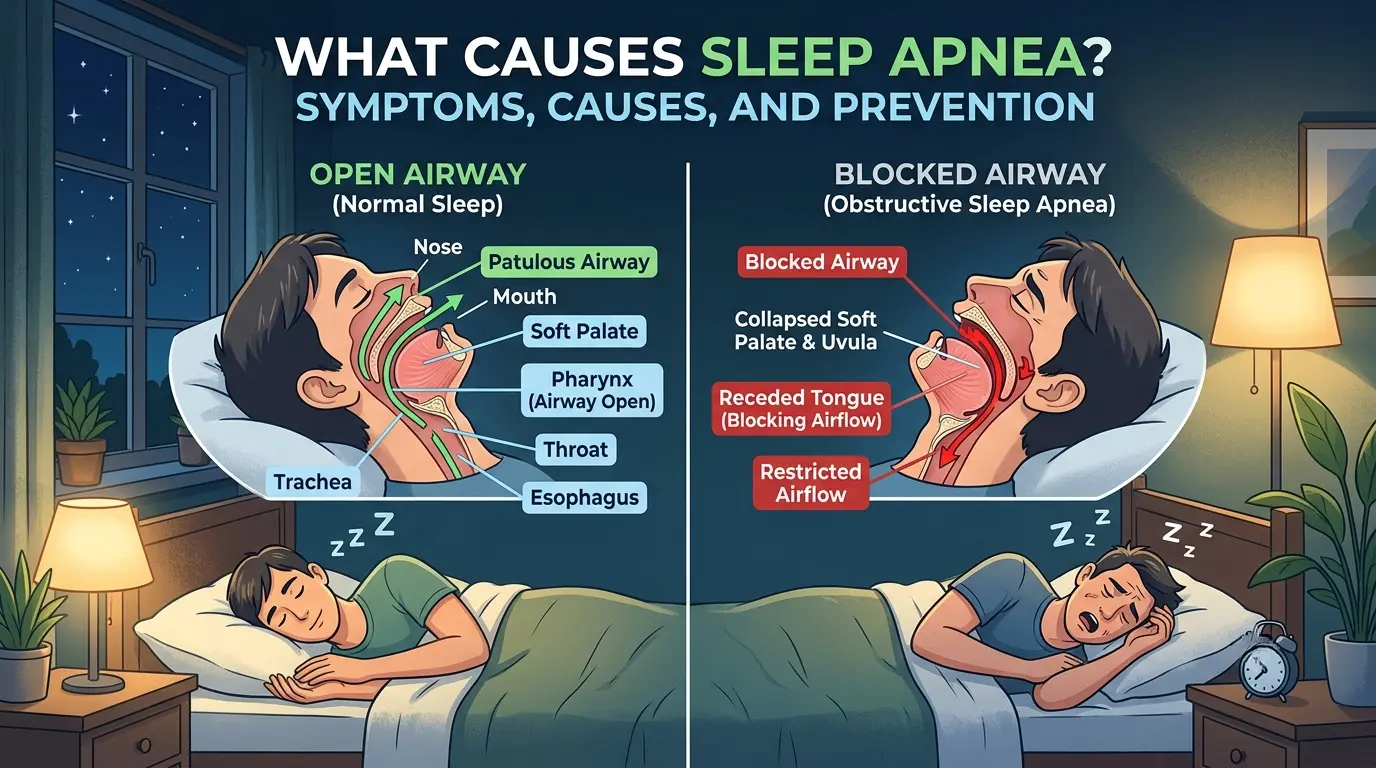
What Causes Sleep Apnea? Symptoms, Causes, and Prevention
Sleep apnea happens when your breathing repeatedly stops and starts while you sleep. In most cases the cause is a blocked or collapsed airway, but it can also start when the brain briefly stops signaling your breathing muscles. Understanding what causes sleep apnea matters because untreated breathing pauses can lower your oxygen, disturb your rest, and strain your heart over time. In this guide you will learn the real causes of sleep apnea, the symptoms to watch for, and practical steps that may help lower your risk.
Many people ignore loud snoring or daytime tiredness and assume it is just poor sleep. That mistake can delay a diagnosis for years, which is why informed decisions matter so much here. The information below is based on trusted health sources, so you can feel confident about what you read.
What Is Sleep Apnea?
Sleep apnea is a sleep disorder where breathing stops and restarts many times during the night. Each pause can last a few seconds or longer, and it can happen dozens of times an hour without you knowing.
These interruptions pull you out of deep sleep, even if you never fully wake up. Over time this leaves you tired during the day and can affect your overall health.
What Causes Sleep Apnea?
Sleep apnea is caused by either a physical blockage of the airway or a breakdown in the brain signals that control breathing. Which one you have depends on the type of sleep apnea. There are three main types, and each has a different underlying cause.
Type | What Causes It |
|---|---|
Obstructive sleep apnea | The airway collapses or gets blocked when throat muscles relax during sleep. |
Central sleep apnea | The brain fails to send the proper signals to the muscles that control breathing. |
Complex sleep apnea | A mix of both obstructive and central types occurring together. |
Obstructive Sleep Apnea Causes
Obstructive sleep apnea is the most common form. It happens when the soft tissues at the back of your throat relax too much and block airflow. Common contributors include:
- Excess weight around the neck and throat that narrows the airway
- Naturally large tonsils, a thick neck, or a small jaw
- Nasal congestion from allergies or sinus problems
- Alcohol or sedatives that relax throat muscles before bed
- Sleeping flat on your back, which lets the tongue fall backward
Central Sleep Apnea Causes
Central sleep apnea is less common and works differently. Instead of a blockage, the brain fails to send steady signals to your breathing muscles. This type is often linked to heart conditions, stroke, certain medications, or high altitude.
Complex Sleep Apnea
Complex sleep apnea, sometimes called treatment emergent apnea, is a combination of both types. A person may show signs of an airway blockage and irregular brain signals at the same time. A sleep specialist is needed to confirm this form.
Common Risk Factors
Some people are more likely to develop sleep apnea than others. Knowing these risk factors helps you understand why sleep apnea develops and whether you should get checked.
- Carrying extra body weight, especially around the upper body
- Being male, though risk rises for women after menopause
- Growing older, since throat muscles lose tone with age
- A family history of sleep apnea
- Smoking, which increases swelling in the airway
Can skinny people have sleep apnea? Yes. While weight is a major factor, slim and otherwise healthy people can still develop sleep apnea due to jaw shape, large tonsils, or nasal issues. This is why symptoms should never be ignored based on body type alone.
Symptoms of Sleep Apnea
The most noticeable symptom is loud snoring followed by silent pauses in breathing. Many signs show up during the day rather than at night, which is why they are easy to miss. Watch for these common symptoms:
- Loud, chronic snoring with gasping or choking sounds
- Waking up with a dry mouth, headache, or sore throat
- Feeling very tired during the day even after a full night in bed
- Trouble focusing, memory problems, or mood changes
- Waking often to use the bathroom at night
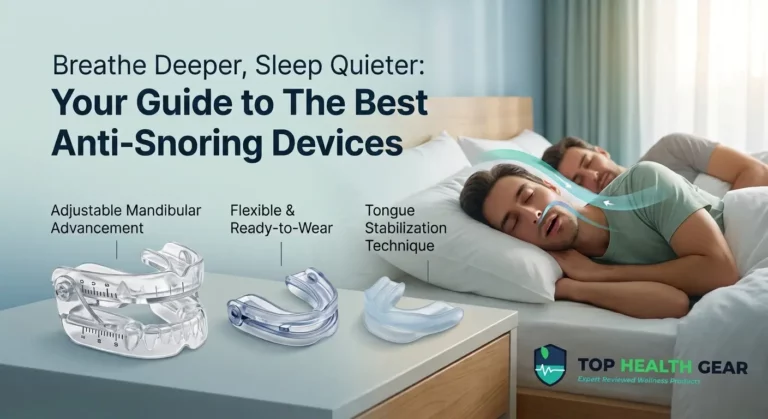
A partner is often the first to notice the pauses in breathing. A smart sleep tracker can also reveal restless nights and low sleep quality that may point to a problem worth checking.
How to Help Prevent Sleep Apnea
You cannot prevent every case, but healthy habits can lower your risk and ease mild symptoms. These steps support better breathing and deeper rest.
- Keep a healthy weight to reduce pressure on your airway
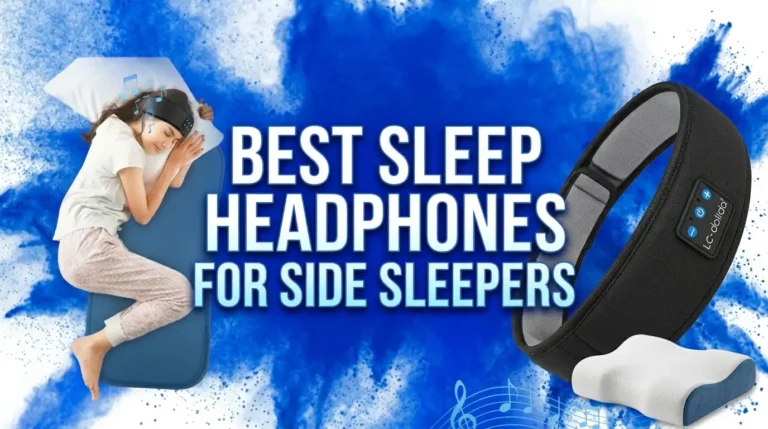
- Sleep on your side instead of your back. A supportive pillow for side sleepers can make this easier to maintain.
- Limit alcohol and avoid sedatives close to bedtime
- Treat nasal congestion and allergies so you breathe freely at night
- Reduce bedroom dust and irritants with an air purifier for allergies to keep airways clear.
- Quit smoking and follow up on any heart health concerns
If you already use a CPAP machine, checking your overnight oxygen with a home pulse oximeter can help you and your doctor see whether treatment is working.
5 Easy Steps to Clean CPAP Equipment
If a doctor prescribes a CPAP machine, keeping it clean protects you from germs, odors, and airway irritation. Follow these five simple steps.
- Unplug and take apart. Turn off the machine, then remove the mask, tubing, and water chamber.
- Wash with mild soap. Clean each part in warm water with a small amount of gentle, fragrance free soap.
- Rinse well. Rinse every piece thoroughly so no soap residue is left behind.
- Air dry fully. Lay the parts on a clean towel away from direct sunlight until completely dry.
- Reassemble and refill. Put the parts back together and fill the chamber with distilled water before your next use.
Tip: Wash the mask and tubing weekly, and always follow the cleaning guidance in your device manual.
When to See a Doctor
See a healthcare professional if you snore loudly, wake gasping for air, or feel exhausted during the day despite enough sleep. These signs deserve a proper medical evaluation.
Only a sleep study can confirm sleep apnea and how severe it is. Wellness products can support better sleep, but they are not a substitute for professional diagnosis or treatment.
Conclusion
Understanding what causes sleep apnea is the first step toward better sleep and better health. In most cases the cause is a blocked airway, though brain signal problems and certain health conditions can also play a role. Watching for symptoms like snoring, gasping, and daytime fatigue helps you catch it early.
Simple habits such as keeping a healthy weight, sleeping on your side, and reducing airway irritants can lower your risk. Remember that helpful products support healthy sleep, but they do not replace professional medical advice when symptoms persist or worsen. If you notice the warning signs, talk to a healthcare provider about a sleep evaluation.
Frequently Asked Questions
What is the most common cause of sleep apnea?
The most common cause is a blocked airway from relaxed throat tissues, known as obstructive sleep apnea. Excess weight, a narrow airway, and enlarged tonsils are frequent contributors.
Can your sleep apnea go away?
Mild sleep apnea may improve with weight loss, side sleeping, and avoiding alcohol before bed. More serious cases usually need ongoing treatment guided by a doctor rather than going away on their own.
Do healthy people have sleep apnea?
Yes. Even fit and slim people can have sleep apnea because of jaw shape, large tonsils, or nasal problems. Symptoms should be checked regardless of how healthy someone appears.
What are 5 symptoms of sleep apnea?
Five common symptoms are loud snoring, gasping or choking at night, daytime tiredness, morning headaches, and trouble concentrating. Waking often to use the bathroom is another frequent sign.
Can losing 20 pounds cure sleep apnea?
Losing weight can reduce airway pressure and ease symptoms for many people, and some see major improvement. Whether it fully resolves the condition depends on the cause, so follow up with your doctor.

- Best Heating Pads for Back Pain: Electric, Cordless, or Microwavable? - October 9, 2026
- How Do Air Purifiers Work? Inside the Filtration Process - October 9, 2026
- How to Use a Massage Gun: A Safe Guide for Beginners - October 7, 2026