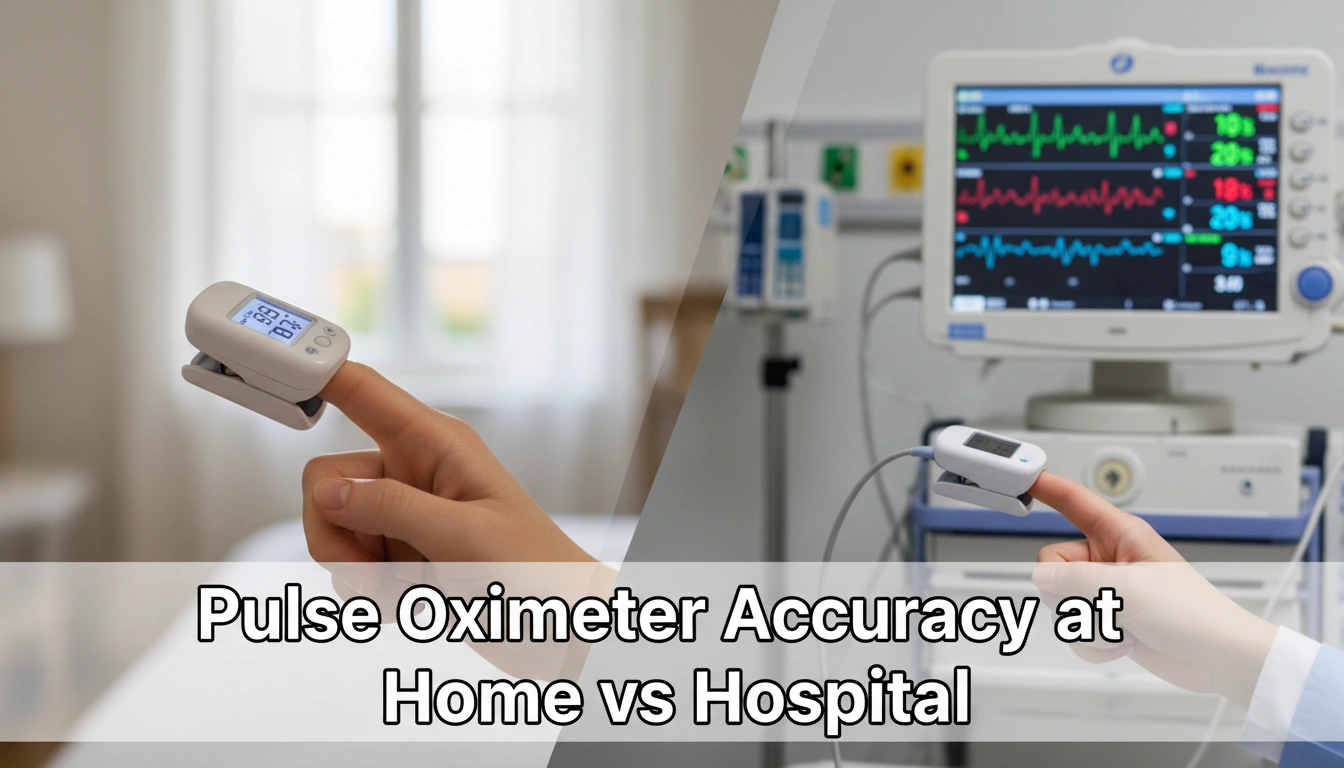
Pulse Oximeter Accuracy at Home vs Hospital: Key Differences
It is terrifying when you or a loved one cannot catch a breath. You clip a little plastic device onto your finger. You wait nervously for the digital numbers to pop up on the screen. But you might wonder if this cheap gadget actually tells the truth.
The short answer is both yes and no. A home pulse oximeter is generally reliable for spotting massive drops in oxygen. However, it cannot match the extreme precision of hospital-grade monitors. These consumer devices have severe limitations that you must understand. Let us break down exactly why these clinical differences exist and how to protect yourself.
How Pulse Oximetry Actually Works
To understand why readings fluctuate, you must learn the basic science first. A pulse oximeter uses light to measure your blood oxygen saturation. This specific medical measurement is clinically known as SpO2.
The device shines two specific wavelengths of light through your fingernail. It uses both a red light and an invisible infrared light. Your red blood cells contain a special protein called hemoglobin. Hemoglobin is strictly responsible for carrying oxygen molecules throughout your entire body.
Oxygen-rich blood absorbs more infrared light and lets more red light pass through. Oxygen-poor blood absorbs more red light and lets infrared light pass through. The sensor on the bottom reads exactly what light made it through your finger. The internal computer then calculates the exact percentage of oxygen in your arterial blood.
The Hospital Grade Advantage
Hospitals use highly advanced clinical equipment to monitor your vital signs. Their medical devices cost thousands of dollars for a very good reason. They feature powerful sensors that filter out background noise perfectly. Furthermore, hospitals do not just rely on external finger clips for sick patients.
Doctors frequently perform an arterial blood gas test in the emergency room. They draw blood directly from your artery to measure the exact oxygen content. This physical blood test is the absolute gold standard for measuring respiratory health.
Your tiny home device only provides a non-invasive estimation of your blood. We see this exact same technology gap in other popular medical areas. You can read our ECG smartwatch vs medical ECG difference guide for another prime example. Consumer health gadgets simply cannot replace actual clinical laboratory testing.
The Danger of Skin Pigmentation
For decades, the medical industry ignored a massive flaw in non-invasive oximetry. Darker skin pigmentation heavily impacts how these consumer devices absorb light. Melanin is the natural biological pigment that gives human skin its unique color.
High levels of melanin physically absorb the device’s red and infrared light beams. This creates a highly dangerous false positive for patients of color. The screen might show a healthy ninety-eight percent saturation level. In reality, the patient might be suffering from hidden, severe hypoxia.
Hospitals are finally upgrading their clinical equipment to account for this melanin interference. However, most cheap home devices have not fixed this dangerous hardware flaw yet. If you have a darker skin tone, you must treat home readings with extreme caution.
Cold Hands and Poor Circulation
Your blood must pulse strongly for the machine to detect it properly. This specific pulse strength is clinically called the perfusion index. If your hands are freezing cold, your blood vessels shrink dramatically to save heat. This completely restricts arterial blood flow to your extreme fingertips.
The home pulse oximeter will struggle heavily to detect a proper pulse. It might display a terrifyingly low oxygen number on the digital screen. In reality, your lungs and heart are working perfectly fine. You simply need to warm up your hands to increase your blood flow.
You should rub your hands together briskly before taking a home measurement. Running your hands under warm water also expands your blood vessels quickly. A hospital monitor uses advanced algorithms to find a pulse even during low perfusion. Your home device will just panic and show you an inaccurate number.
Movement and Signal Artifacts
Consumer-grade devices are incredibly sensitive to physical motion and shaking. If your finger trembles, the light beams scatter wildly inside the plastic clip. This creates a signal artifact that completely confuses the internal computer chip.
Hospital monitors are specifically designed to filter out this motion interference safely. Home devices simply cannot handle the extra visual noise. They will often spit out random, fluctuating numbers that jump up and down. You must sit completely still to get an accurate reading at home.
Nail Polish and Artificial Nails
Women often face unique struggles with fingertip pulse oximeter readings daily. Dark nail polish physically blocks the red and infrared light from passing through. Blue, black, and dark purple polishes are the absolute worst offenders.
Artificial acrylic nails also create a thick physical barrier over your nail bed. The light simply cannot penetrate down to your arterial blood supply effectively. You absolutely must remove your polish on at least one measuring finger. Otherwise, your home oxygen saturation readings will be completely useless and highly inaccurate.
FDA Approved vs Over The Counter
Not all home health devices are created equal in the eyes of the law. You can buy a cheap oximeter at any local pharmacy or online store today. However, these over-the-counter devices are meant for sports and aviation use only. They are not legally cleared by the FDA for making serious medical decisions.
Conversely, prescription pulse oximeters must pass strict clinical validation testing before sale. The FDA requires them to prove their accuracy against actual arterial blood tests. If you have a severe lung condition, ask your doctor for a prescription model. It will cost more, but the accuracy margin is significantly tighter and safer.
The Carbon Monoxide Blind Spot
There is one specific scenario where every pulse oximeter will fail you completely. Carbon monoxide poisoning completely breaks this mathematical light absorption system. Carbon monoxide binds to your hemoglobin much stronger than regular oxygen does.
The oximeter sees a full protein and assumes it is carrying healthy oxygen. It will display a perfect score of one hundred percent on the screen. Meanwhile, the patient is literally suffocating from toxic gas exposure. Hospitals use specialized blood tests to detect this specific chemical poisoning immediately. A home pulse oximeter will never warn you about a carbon monoxide leak.
How to Take a Perfect Home Measurement
You might feel discouraged by all these measurement variables and physical limitations. However, a home pulse oximeter remains a fantastic early warning system for your family. You just need to control your testing environment to get reliable data.
Follow these specific steps to ensure your home readings are as accurate as possible:
- Remove all nail polish and fake nails from your testing finger completely.
- Warm up your hands thoroughly until your fingertips are visibly pink.
- Sit comfortably in a chair and rest your hand flat on a table.
- Place the clip on your right middle finger or your right thumb.
- Breathe normally and sit completely still for one full minute before reading.
When Home Devices Truly Shine
You should use your home device to establish your healthy personal baseline. If your normal reading is usually ninety-seven percent, memorize that specific number. You only need to worry if that number suddenly plummets over several hours.
Tracking personal trends is highly valuable for managing chronic respiratory conditions safely. This heavily mirrors how people use the best blood pressure monitor for home accuracy test daily. You are looking for sudden, dangerous downward trends, not absolute medical perfection. If your numbers start dropping, you have early evidence to call your doctor.
Understanding Your SpO2 Numbers
A healthy pulse oximeter reading sits tightly between ninety-five and one hundred percent. Anything below ninety-two percent usually warrants an immediate call to your primary doctor.
If the number drops below ninety percent, you need emergency medical help instantly. Severe hypoxia causes permanent damage to your brain and heart very quickly. Do not wait around your house to see if the number magically improves. Your life is vastly more important than avoiding a trip to the emergency room.
The Absolute Value of Context
Your oxygen level is just one tiny piece of your entire health puzzle. You must always look at your actual physical symptoms first and foremost. Are you struggling to catch your breath while simply resting on the couch? Are your lips or fingertips turning a pale blue or gray color? Do you feel unusually confused, dizzy, or incredibly tired?
If you feel terrible, go to the hospital immediately regardless of the device. Do not let a falsely high oximeter reading convince you to stay home. You know your body much better than a cheap plastic clip ever could. We explain this exact concept deeply in our smart scale body fat accuracy article. Consumer health tools should guide your decisions, not replace your basic human common sense.
Frequently Asked Questions
Can a home pulse oximeter read too high?
Yes, it can easily provide a falsely high reading under certain specific conditions. High levels of skin melanin can absorb the light and artificially inflate the number. Carbon monoxide poisoning will also cause the device to read a perfect one hundred percent.
Which finger is best for a pulse oximeter?
Clinical studies show that the right middle finger provides the most accurate reading. The right thumb is the second best option for capturing a strong arterial pulse. You should avoid using your pinky finger because it has the weakest blood perfusion.
Does a fast heart rate affect pulse oximeter accuracy?
A fast heart rate alone does not ruin the oxygen saturation measurement directly. However, if your heart is racing due to severe anxiety, your blood vessels might constrict. This vasoconstriction causes poor peripheral perfusion, which will absolutely throw off the sensor’s accuracy.
How long should I leave the pulse oximeter on my finger?
You should leave the device on your finger for at least one full minute. The numbers will likely jump around wildly during the first twenty seconds of measurement. You must wait for the digital numbers to stabilize completely before trusting the final result.
Can severe dehydration affect my oxygen saturation reading?
Yes, severe dehydration heavily reduces your total blood volume and lowers your blood pressure. This makes it incredibly difficult for your body to push blood to your extreme fingertips. The oximeter will struggle to find a pulse and may output a falsely low reading.
Final Takeaways
Understanding the technical differences between home and hospital oximeters can literally save your life. Your home device is a wonderful tool for tracking your general respiratory trends daily. However, it is highly vulnerable to cold hands, dark nail polish, and skin pigmentation interference. You must always treat consumer health gadgets as a helpful guide rather than undeniable medical truth. Hospitals utilize arterial blood tests and advanced sensors to find your exact oxygen levels safely. If your home device shows a dangerously low number, you must take it seriously. More importantly, if you are struggling to breathe, you must seek emergency medical care immediately. You should never let a little plastic screen talk you out of getting the professional medical help you desperately need. Listen to your physical symptoms first, and use the technology as a secondary backup system.

- Best Heating Pads for Back Pain: Electric, Cordless, or Microwavable? - October 9, 2026
- How Do Air Purifiers Work? Inside the Filtration Process - October 9, 2026
- How to Use a Massage Gun: A Safe Guide for Beginners - October 7, 2026