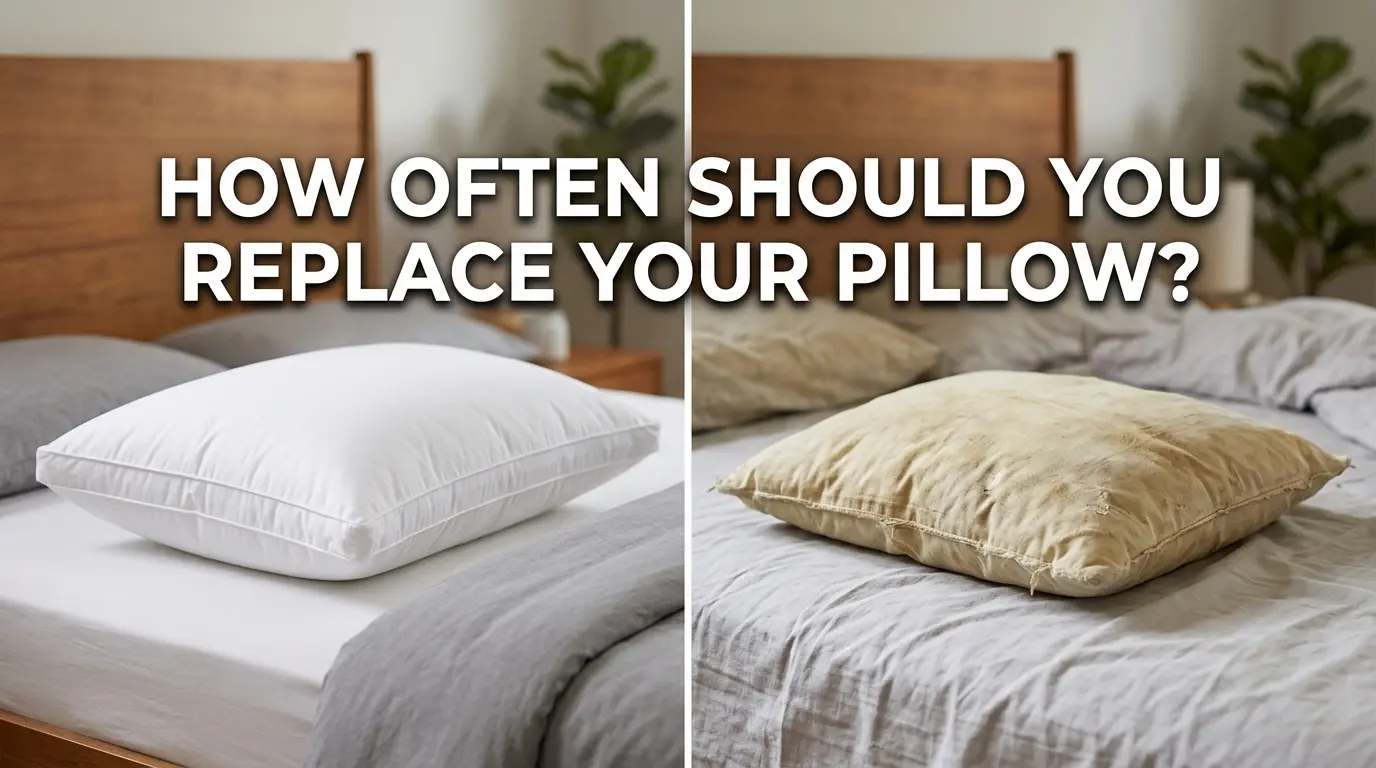
How Often Should You Replace Your Pillow? A Reviewed Guide
You should replace your pillow every one to two years for most pillow types. This general guideline exists because pillows lose their shape and support over time, no matter how good the quality or how often you wash them. What you rest your head on each night directly affects spinal alignment, sleep quality, and even allergy symptoms, which makes knowing the right replacement schedule more important than most people realize.
Many people hold on to the same pillow for five or more years without thinking twice. That habit can silently contribute to neck stiffness, poor sleep, and worsening allergies. This guide breaks down exactly how often you should replace your pillow based on pillow type, signs to watch for, and practical steps to get more life out of the pillow you already have.
How Often Should You Replace Your Pillow by Type
The right replacement schedule depends on the fill material inside your pillow. Some materials break down faster than others, which means a one size fits all rule does not apply to every sleeper.
Pillow Type | Recommended Replacement Timeline |
Polyester or Synthetic Fill | Every 1 to 2 years |
Down or Feather | Every 1 to 3 years |
Down Alternative | Every 1 to 2 years |
Memory Foam (solid) | Every 2 to 3 years |
Shredded Memory Foam | Every 1 to 2 years |
Latex Pillow (natural) | Every 3 to 4 years |
Latex Pillow (synthetic) | Every 2 to 3 years |
Buckwheat Fill | Every 3 years (refill hulls every 1 to 2 years) |
Wool Fill | Every 2 to 3 years |
Bamboo Fill (shredded) | Every 1 to 2 years |
Natural latex pillows tend to last the longest because the material resists compression and stays resilient over time. Memory foam and solid foam pillows sit in the middle range, while polyester and down alternative options break down the fastest under daily use.
No matter which type you use, the materials inside begin to compact, lose loft, and collect buildup that even regular washing cannot fully remove. Tracking your pillow type and purchase date is the simplest way to stay on a healthy replacement schedule.
7 Signs Your Pillow Needs Replacing Right Now
You do not always need to wait for a date on the calendar. Your pillow will show clear physical and health signals that it has reached the end of its useful life.
1. It Fails the Fold Test
Fold your pillow in half and release it. A pillow that still has proper support will spring back to its original flat shape within a few seconds. If it stays folded, creases in the middle, or barely moves, it no longer has enough structural integrity to support your head and neck properly.
2. You Wake Up With Neck or Shoulder Pain
A worn out pillow cannot maintain proper spinal alignment through the night. If you consistently wake up with a stiff neck, shoulder tension, or upper back discomfort that eases after you get up and move around, your pillow may be the cause. You can also review whether the wrong pillow is causing your headaches, which is a related issue that goes overlooked for years.
3. It Has Yellow Stains or Permanent Discoloration
Yellow or brown staining occurs when sweat, skin oils, saliva, and body moisture absorb through the pillowcase into the fill over time. Washing can reduce the appearance of new stains, but deep discoloration that remains after washing is a sign the internal fill has been saturated and degraded beyond recovery.
4. It Smells Even After Washing
Persistent odors that survive a wash cycle often indicate mold, mildew, or bacterial buildup inside the fill material. This is especially common in humid climates or for sleepers who run warm. If your pillow smells musty after drying, replace it immediately rather than continuing to sleep on it.
5. You Are Sneezing or Getting Congested at Night
Nighttime allergy symptoms like a runny nose, itchy eyes, or sneezing that improve when you leave the bedroom often point to allergens inside your pillow. Dust mites thrive in the warm, humid environment of a used pillow and are one of the most common household allergy triggers.
6. It Has Lumps, Flat Spots, or a Misshapen Fill
Clumping inside down, down alternative, or shredded foam pillows creates uneven pressure points under your head. A lumpy pillow cannot distribute weight consistently across your neck and shoulders. If fluffing and a dryer cycle do not restore the shape, the fill has broken down permanently. If you sleep on your side, check out the best options for side sleeper pillows that are designed to maintain their shape longer.
7. You Cannot Remember When You Bought It
If you cannot recall when you purchased your current pillow, that alone is a strong signal that replacement is overdue. Most experts recommend a maximum of two years for standard pillow types, and many pillows begin losing meaningful support well before that point.
What Is the 2-2-1 Pillow Rule?
The 2-2-1 pillow rule is a practical sleep hygiene guideline that helps you stay on a consistent replacement schedule. Here is what it means in practice:
● Wash your pillowcase every 2 days or at least twice a week
● Wash your actual pillow every 2 months
● Replace your pillow at least every 1 to 2 years
Following this rhythm keeps buildup manageable and extends the life of your pillow without allowing allergens and bacteria to accumulate unchecked. Most competitors focus only on the replacement timeline but skip the cleaning cadence that makes that timeline realistic.
The rule also serves as a simple memory tool. Instead of trying to track a specific date, you tie each action to a recurring interval that is easier to maintain as a habit over the course of a year.
Why Your Sleep Position Affects When You Should Replace Your Pillow
Your sleeping position changes how much pressure your pillow absorbs each night, which directly impacts how fast it wears down. Side sleepers put the most concentrated stress on a single area of the pillow, while back sleepers distribute weight more evenly.
Sleep Position | Pillow Stress Level | Suggested Check Interval |
Side Sleeper | High (concentrated pressure) | Every 12 to 18 months |
Back Sleeper | Moderate (distributed weight) | Every 18 to 24 months |
Stomach Sleeper | Low but different risk | Every 12 to 18 months |
Combination Sleeper | High (variable stress points) | Every 12 to 18 months |
Stomach sleepers typically use a very flat, thin pillow that compresses quickly, even though the weight per night is lower. Combination sleepers tend to wear down pillows faster because movement shifts stress across multiple points. Knowing how many pillows you should sleep on for your specific position can also help you spread the load and reduce how quickly any single pillow degrades.
What Really Builds Up Inside Your Pillow Over Time
One of the most compelling reasons to replace your pillow on schedule is what accumulates inside the fill, much of which is invisible to the naked eye. Understanding what is actually in an old pillow is often enough to motivate action.
Dead skin cells: You shed roughly 30,000 to 40,000 skin cells per hour. A portion of these pass through pillowcases into the fill every night.
Dust mites: These microscopic organisms feed on dead skin cells and thrive inside warm, used pillows. A two year old pillow can contain millions of dust mites and their waste particles.
Sweat and body oils: Even low perspiration sleepers transfer moisture into the fill nightly, creating conditions that promote bacterial and fungal growth over time.
Mold and mildew spores: Moisture plus organic material creates ideal conditions for mold inside pillows, especially in humid climates or poorly ventilated bedrooms.
Pet dander and pollen: These allergens settle into fill material and are not fully removed by standard washing, particularly in down or polyester pillows.
Fungal spores: Studies have found multiple species of fungal organisms inside used pillows, including types linked to respiratory irritation in sensitive individuals.
Many of these contaminants are present regardless of how clean your bedroom is or how often you wash your pillowcase. They accumulate inside the fill and cannot be fully eliminated after a certain point, which is why replacement rather than cleaning becomes necessary.
How a Pillow Protector Changes Your Replacement Timeline
A pillow protector is a zippered waterproof or allergen barrier cover that goes over the pillow itself, underneath the pillowcase. This is one of the most underused tools in sleep hygiene, and it meaningfully extends how long your pillow stays clean and supportive.
Using a pillow protector creates a physical barrier between the fill material and the moisture, skin cells, and oils your body produces every night. Protectors are washable, so the fill inside the pillow stays much cleaner for much longer.
With a pillow protector used consistently:
● Polyester and down alternative pillows can last up to 6 to 12 months longer than without one
● Memory foam and latex pillows can last closer to the upper end of their recommended lifespan
● Overall allergen buildup inside the fill is significantly reduced
● Staining and odor are greatly minimized or eliminated entirely
If you are not currently using a pillow protector, adding one is the single highest impact step you can take to extend the life of a new pillow after you replace the old one.
When You Should Replace Your Pillow Sooner: Health Conditions That Matter
Certain health situations call for replacing your pillow before the standard one to two year timeline. Waiting for a date on the calendar is the wrong approach when your health is already signaling a problem.
Allergies and Asthma
The Asthma and Allergy Foundation of America recommends replacing pillows at least every two years for allergy management. However, if your nighttime allergy symptoms are worsening, replacing your pillow sooner and pairing it with an allergen barrier cover is the more appropriate step. A quality air purifier designed for dust and allergens in your bedroom works alongside a fresh pillow to reduce total allergen exposure while you sleep.
Neck Injury or Recent Surgery
If you have experienced a neck injury, cervical surgery, or have been diagnosed with a condition affecting your cervical spine, your pillow needs to actively support proper alignment rather than just feel comfortable. A degraded pillow that no longer holds its shape can delay recovery or worsen existing pain. Replace it immediately and consult with a healthcare provider about the right fill type and loft for your specific condition.
Skin Breakouts Concentrated on One Side of Your Face
Acne or breakouts that appear primarily on the cheek or jaw you sleep on are often connected to bacteria and oil buildup in the pillowcase and underlying pillow. If consistent pillowcase washing is not resolving the issue, the pillow itself may be contributing. This is especially relevant for people who sleep on the same side consistently each night.
Worsening Snoring or Disrupted Sleep
A pillow that has lost its loft can shift the position of your head relative to your airway. For some sleepers, this contributes to snoring or increased airway restriction. While snoring has multiple causes, replacing a worn flat pillow with one that properly positions your head and neck is a low cost first step. If snoring persists or worsens, review what causes sleep apnea to understand whether a medical evaluation is appropriate.
Conclusion
Most people should replace their pillow every one to two years, though the exact timeline depends on the pillow material, how well it is maintained, and the individual health needs of the sleeper. Pillow types like natural latex can last three to four years with proper care, while polyester and synthetic fills typically reach the end of their useful life closer to the one year mark.
The clearest signals to replace your pillow sooner are failing the fold test, waking up with neck or shoulder pain, persistent staining or odors after washing, and worsening allergy symptoms at night. Combining regular washing, a pillow protector, and tracking your purchase date makes it straightforward to stay on a schedule that protects your sleep quality and overall health.
Frequently Asked Questions
What is the 2-2-1 pillow rule?
The 2-2-1 pillow rule is a simple sleep hygiene guideline. It means washing your pillowcase every two days, washing the pillow itself every two months, and replacing your pillow every one to two years. Following this rhythm keeps allergens manageable and helps your pillow last as long as possible.
When should you throw away your pillows?
You should throw away your pillow when it fails the fold test, has permanent stains or odors after washing, causes you to wake up with neck or shoulder pain, or has visible lumps and flat spots that do not respond to fluffing. Most pillows reach this point within one to two years of regular use regardless of how they look on the outside.
What is the lifespan of a pillow?
Pillow lifespan ranges from one to four years depending on the fill material. Polyester and synthetic fills typically last one to two years. Memory foam and down pillows last two to three years. Natural latex pillows have the longest lifespan at three to four years. Using a pillow protector consistently can help any pillow type reach the upper end of its range.
How do I know if my pillow needs replacing?
The fold test is the quickest check: fold your pillow in half and see if it springs back. If it stays folded, it needs replacing. Other signs include neck pain on waking, yellow staining or odors after washing, nighttime allergy symptoms, and visible lumps or flat spots in the fill material.
How often does the average person replace their pillow?
Research and surveys suggest the average person replaces their pillow every three to four years, which is longer than experts recommend. Most sleep health organizations advise replacing pillows every one to two years for standard fill types. The gap between what people do and what is recommended contributes to a significant number of sleep quality and allergy issues that go unrecognized.

- Best Heating Pads for Back Pain: Electric, Cordless, or Microwavable? - October 9, 2026
- How Do Air Purifiers Work? Inside the Filtration Process - October 9, 2026
- How to Use a Massage Gun: A Safe Guide for Beginners - October 7, 2026