How to Use a Wrist Blood Pressure Cuff for More Accurate Readings
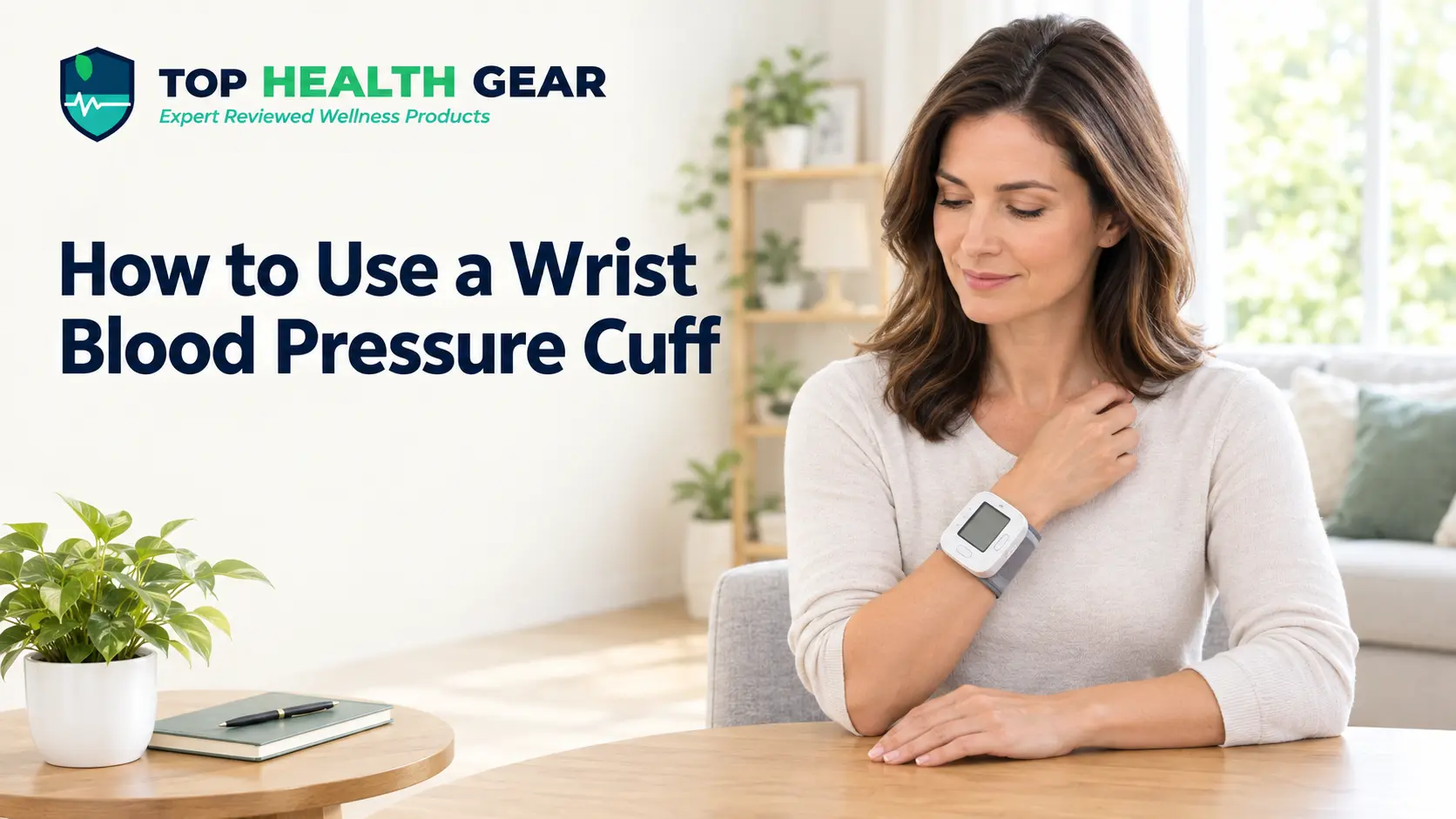
To use a wrist blood pressure cuff, sit quietly for five minutes, place the cuff on your bare wrist, and rest your elbow so the cuff sits at heart level. Stay still and silent until the reading finishes. Wrist position is one of the most common reasons for inaccurate readings.
This guide on how to use a wrist blood pressure cuff is for anyone who has one at home or is thinking about buying one and wants readings they can trust. You will learn the correct steps, common mistakes, how accurate wrist cuffs are, and when to get help. If you are still choosing a device, home blood pressure monitors tested for accuracy are worth comparing first.
What Is a Wrist Blood Pressure Cuff, and How Does It Work?
A wrist blood pressure cuff is a small automatic monitor that wraps around your wrist and measures blood pressure from the artery there. It inflates, senses your pulse, and displays two numbers: the top number (systolic) and the bottom number (diastolic).
Many people like wrist cuffs because they are small and easy to carry. Some choose them when an upper arm cuff does not fit well. However, the American Heart Association generally recommends upper arm monitors first because they tend to provide more reliable readings.
Are Wrist Blood Pressure Cuffs Accurate?
Wrist cuffs can be accurate when used exactly as directed, but they are usually less reliable than upper arm cuffs. Small mistakes, such as holding your wrist below heart level, can affect the results and may make your blood pressure appear higher.
Feature | Wrist cuff | Upper arm cuff |
Size and travel | Small and easy to carry | Larger and bulkier |
Sensitivity to position | High because the wrist must be at heart level | Requires proper arm support and positioning |
Reliability at home | Can be less reliable if positioning is incorrect | Generally the preferred choice |
Best for | People who cannot use a suitable upper arm cuff | Most adults |
Smart tip | Choose a validated model and have it checked at your doctor’s office | Make sure the cuff fits your upper arm correctly |
The most important factors are choosing a validated monitor, following the manufacturer’s instructions, and keeping the cuff at heart level throughout the measurement. If possible, take your device to a healthcare appointment to compare its readings with the office equipment.
How To Use a Wrist Blood Pressure Cuff Step by Step?
You can use a wrist blood pressure cuff by preparing your body, placing the cuff on your bare wrist, holding it at heart level, and staying still during the reading. Always follow your monitor’s manual because instructions can vary slightly between models.
- Avoid stimulants and exercise. Avoid caffeine, smoking, and exercise for at least 30 minutes before measuring. Use the bathroom first if needed.
- Sit in the correct position. Sit in a chair with your back supported and your feet flat on the floor. A small lumbar support pillow may help if your chair leaves a gap behind your lower back.
- Rest for five minutes. Sit quietly without talking, using your phone, or doing anything that could affect your reading.
- Put on the cuff correctly. Remove watches and bracelets. Check that your wrist size falls within the range specified by the manufacturer. Place the cuff on your bare wrist, snug but not too tight, with the display facing you.
- Hold your wrist at heart level. Rest your elbow on a table and bend your arm so the cuff is approximately level with the middle of your chest. Keep your wrist straight and your hand relaxed.
- Start the measurement. Press the start button and remain still and silent until the monitor finishes.
- Record your results. Write down both blood pressure numbers, your pulse, the date, and the time. Wait about one minute, or follow the interval recommended in your manual, and take a second reading.
A practical tip is to measure at the same times each day, use the same wrist, and follow a consistent routine. This makes it easier to compare your readings over time.
What Mistakes Make Wrist Cuff Readings Wrong?
The most common mistake is holding the wrist above or below heart level. Several other errors can also affect your results.
- Resting your wrist on a table or your lap instead of holding it at heart level.
- Bending your wrist during the measurement.
- Wearing the cuff over clothing or a watch strap.
- Talking, moving, or tensing your hand while the cuff inflates.
- Sitting with crossed legs or without back support.
- Measuring immediately after coffee, smoking, or exercise.
- Wearing the cuff too loosely or placing it incorrectly near the wrist crease.
- Repeating measurements continuously because you feel worried about the results.
A calm, consistent routine matters as much as correct positioning. If your monitor has a position guide or an alert for incorrect placement, follow the instructions provided.
How Can You Check That Your Wrist Cuff Gives Reliable Numbers?
The best way to check your wrist cuff is to take it to your next healthcare appointment and compare its readings with the office equipment. Your clinician can also observe your technique and correct any positioning mistakes.
If you own an upper arm monitor, you may compare the two devices after resting, provided both are used correctly. However, differences between devices do not automatically mean one is faulty. A healthcare professional can help determine whether your wrist monitor is suitable for you. This is true of other home health devices too, such as a pulse oximeter, which can read differently at home than in a hospital.
Keep a simple log that includes the date, time, systolic and diastolic readings, and pulse. Recording your results helps you and your clinician identify patterns instead of relying on a single measurement.
What Should You Do If Your Wrist Cuff Shows an Error?
Rest briefly, then try again with the cuff at heart level and your arm supported. Many error messages are caused by movement, a loose cuff, or incorrect positioning.
Try these quick checks:
- Make sure the cuff is snug and positioned according to your manual.
- Keep your wrist straight, and do not talk or move.
- Replace the batteries if the display is weak or the monitor indicates low battery.
- Check the error code in your manual.
If error messages continue, contact the manufacturer or consult a healthcare professional. If your readings seem unusual or inconsistent, ask your clinician to check your device and technique.
Who Should Be Cautious With a Wrist Blood Pressure Cuff?
Anyone with a health condition that affects blood pressure, heart rhythm, or the wrist should ask a healthcare professional whether a wrist monitor is appropriate.
- Injured or treated wrist: Avoid using the cuff on an injured wrist or one undergoing medical treatment unless your clinician advises otherwise.
- High blood pressure or heart conditions: Use a monitor recommended by your clinician, and never change your medication based on home readings alone.
- Irregular heartbeat: Some automatic monitors may give less reliable readings when the heartbeat is irregular, and a smartwatch alert about a possible irregular rhythm is not the same as a medical ECG.
- Pregnancy: Ask your healthcare professional which monitor and measurement schedule are appropriate for you.
- Children: Do not use an adult home blood pressure monitor on a child unless a healthcare professional recommends a suitable device and cuff.
When Should You Talk to a Healthcare Professional?
Talk to a healthcare professional if your readings remain higher than recommended, vary considerably, or do not match measurements taken at a clinic. Bring your monitor and blood pressure log to your appointment so the clinician can check both your technique and the device.
Seek urgent medical help if a very high reading, such as 180/120 mmHg or higher, is accompanied by chest pain, shortness of breath, severe headache, vision changes, weakness, or difficulty speaking. Do not wait for the reading to improve. Call your local emergency number.
If your reading is 180/120 mmHg or higher without these symptoms, wait at least one minute and measure again. If it remains that high, contact a healthcare professional immediately for guidance.
Frequently Asked Questions About Wrist Blood Pressure Cuffs
What Is a Normal Blood Pressure Reading on the Wrist?
A normal blood pressure reading on a wrist monitor uses the same general scale as an upper arm monitor. For adults, a reading below 120/80 mmHg is generally considered normal. However, wrist positioning can affect the result, so one reading does not tell the whole story. Ask your healthcare professional what target is appropriate for you.
Is a Wrist Cuff Blood Pressure Accurate?
A wrist cuff can give accurate readings when it is a validated model and you keep it at heart level. It is still less reliable than an upper arm cuff, because small position mistakes change the numbers. If your readings keep varying, compare it with your doctor’s equipment, or switch to one of the best home blood pressure monitors for accuracy.
How Many Points Higher Is a Wrist Blood Pressure Monitor?
There is no single number that applies to everyone. The difference depends on your positioning, the device, and your individual circumstances. Wrist readings may be higher when the wrist is held below heart level or bent. The best way to assess your monitor is to compare it with a properly taken clinical reading.
What Time of Day Is Blood Pressure Highest?
Blood pressure often rises in the morning after you wake up, and conditions such as sleep apnea can also affect your readings. It is generally lower during sleep. Measure at consistent times, such as in the morning and evening, and follow your clinician’s recommendations to make your readings easier to compare.
Is It Okay to Check Blood Pressure Three Times in a Row?
Taking two readings about one minute apart is common advice, and healthcare professionals may use the average of multiple readings. Some measurement protocols recommend three readings. Avoid repeatedly checking your blood pressure because worry and discomfort can affect the results. If a reading is high, rest quietly and follow the appropriate rechecking guidance.
Key Takeaways
- Sit quietly for five minutes, place the cuff on your bare wrist, and hold it at heart level.
- Wrist positioning is one of the most important factors affecting accuracy. Keep your wrist straight and avoid lowering or raising it during measurement.
- Wrist cuffs are generally less reliable than upper arm monitors, so have your device checked by a healthcare professional.
- Measure consistently and keep a log of your results.
- Never change your medication based on home readings alone.
- Seek urgent medical help if a very high blood pressure reading occurs with symptoms such as chest pain, breathing difficulties, weakness, or vision changes.

- How to Improve Indoor Air Quality in Winter for a Fresher Home - October 29, 2026
- What Is Lumbar Support? How to Place It for Long Sitting Comfort - October 29, 2026
- How to Use a TENS Unit for Lower Back Pain: Beyond Just Turning It On - October 29, 2026