Best Lumbar Support Pillows: Which Ones Really Help?
The Everlasting Comfort Original Lumbar Support Pillow is the best lumbar support pillow for most desk workers, because its strap-on memory foam design fills the gap behind your lower back and stays put. Sitting for hours in a chair that leaves that gap gets uncomfortable fast, and a lumbar pillow may help you sit more upright. If you drive a lot or sit on a soft couch, you’ll need a different shape and firmness, and we cover those too.
Quick Comparison: Best Lumbar Support Pillows
Product | Best For | Key Feature | Price |
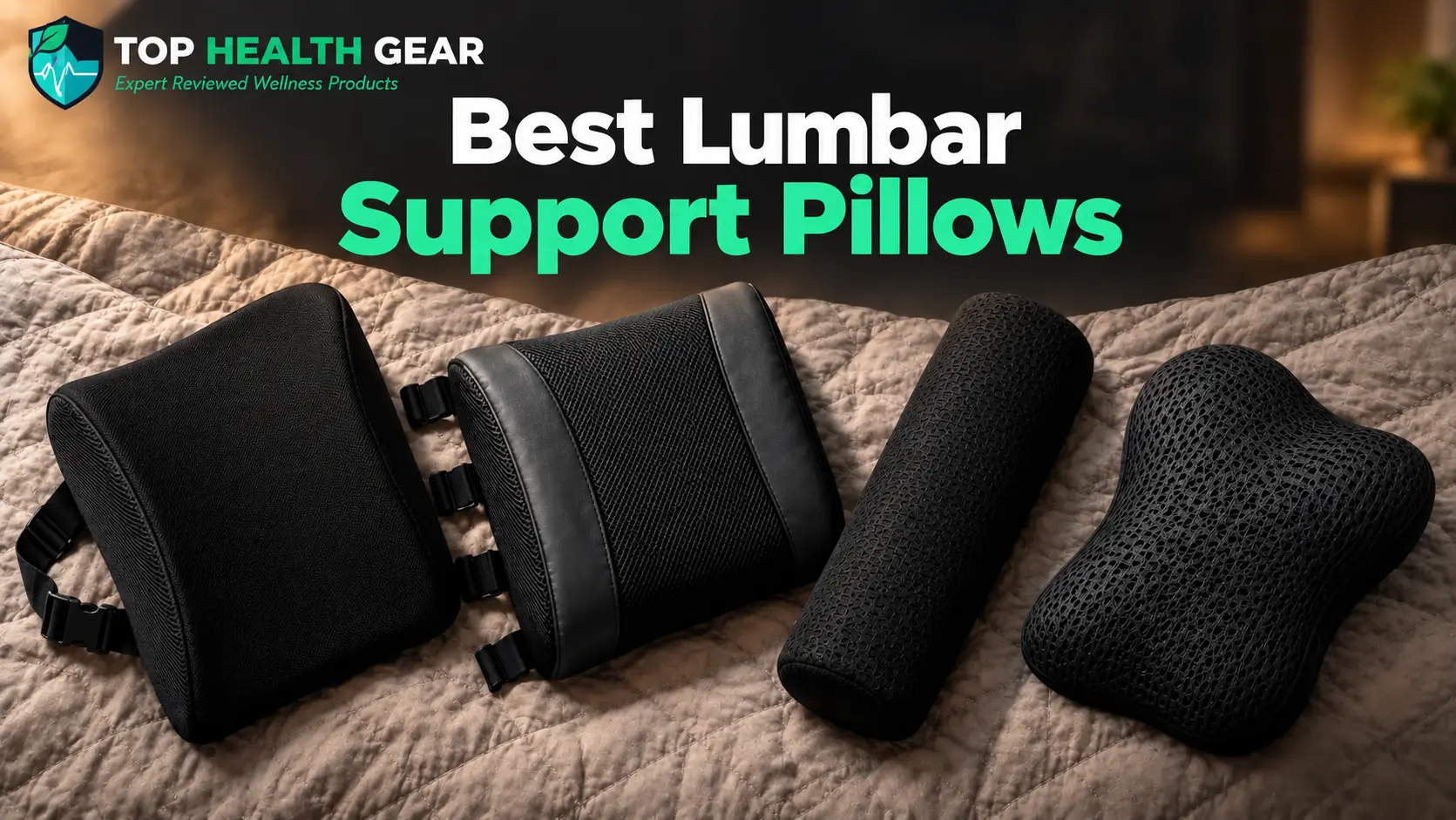
Everlasting Comfort The Original Lumbar Support Pillow | Best Overall (office chairs) | Memory foam core, adjustable chair strap | |
ComfiLife Lumbar Support Pillow | Best for Secure Fit (office and car) | 3-strap system, mesh + leatherette cover | |
OPTP Original McKenzie Signature Lumbar Roll | Best for Firm Support | Firm roll, removable adjustable strap | |
Niceeday Memory Foam Lumbar Support Pillow | Best for Wide Coverage (office and car) | Contoured memory foam, breathable 3D mesh cover |
Who This Guide Is For
Lower back support pillows help when your seat leaves a gap behind your lower back. That’s common in office chairs without adjustable lumbar support, car seats, and sofas. This guide is for adults who sit for long stretches and want a more comfortable seated position. We did not look at anything meant to treat a medical condition.
In-Depth Reviews: Best Lumbar Support Pillows
Everlasting Comfort The Original Lumbar Support Pillow
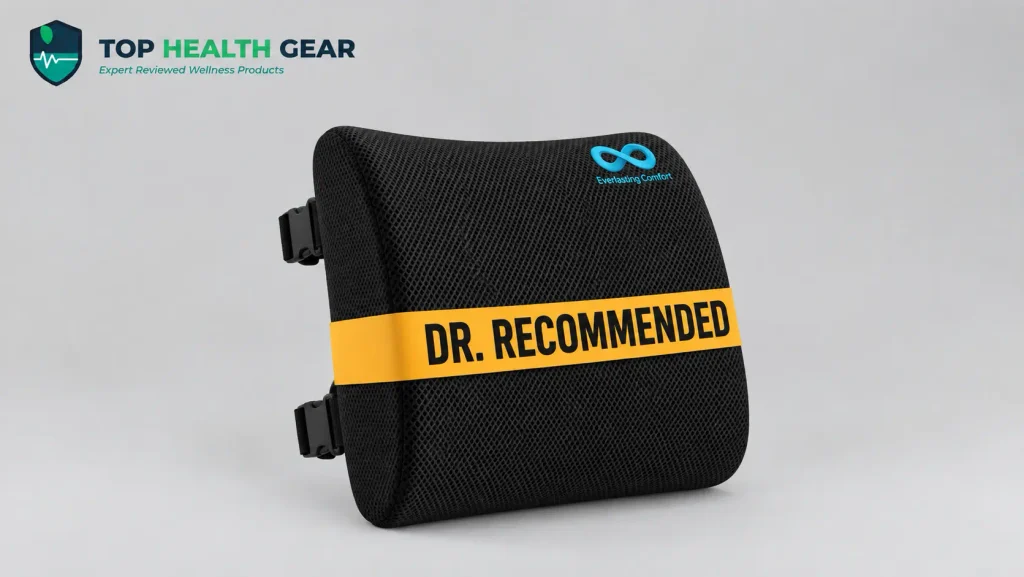
This strap-on cushion has a dense memory foam core that holds its shape under body weight instead of flattening out, which is why it suits a standard office chair so well. Two adjustable straps with extension pieces hold it on wider chairs, and the mesh cover lets air through. Its compact size also lets you move it to a car seat, recliner, or couch.
Why We Picked It:
A simple strap-on design that suits the most common situation, a standard office chair with no adjustable lumbar support.
Pros:
- Dense memory foam holds its shape through a full workday
- Adjustable straps keep it from slipping
Cons:
- Memory foam can still feel warm over a long day, even with the mesh cover
- May push into the mid-back on shorter sitters, or feel unnecessary on a chair with a deep built-in lumbar curve
ComfiLife Lumbar Support Pillow
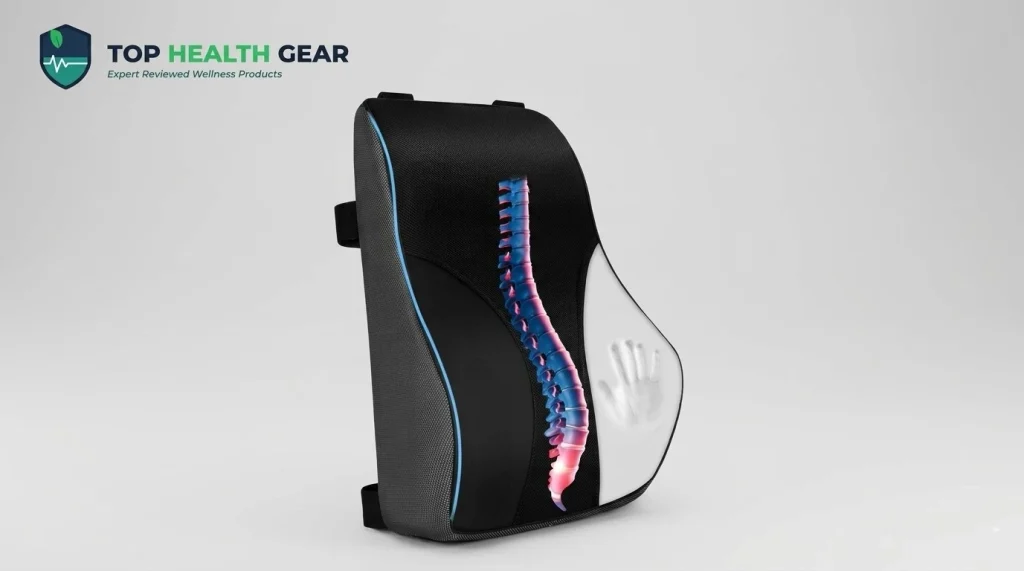
A three-strap system holds this pillow in place on office chairs, car seats, recliners, and gaming chairs, which makes it the better fit if cushions tend to slide on you. The memory foam core follows the curve of your lower back and gives steady support through a long sitting session.
Why We Picked It:
The extra straps give it a more secure hold than a basic single-strap cushion, which matters for chairs and car seats where pillows tend to slip.
Pros:
- Three straps keep it from shifting on most seats
- Memory foam core follows the curve of your lower back
Cons:
- Some buyers report the straps don’t fit heavily contoured seats or very large chairs
- The firm memory foam may feel less plush than softer cushions
OPTP Original McKenzie Signature Lumbar Roll
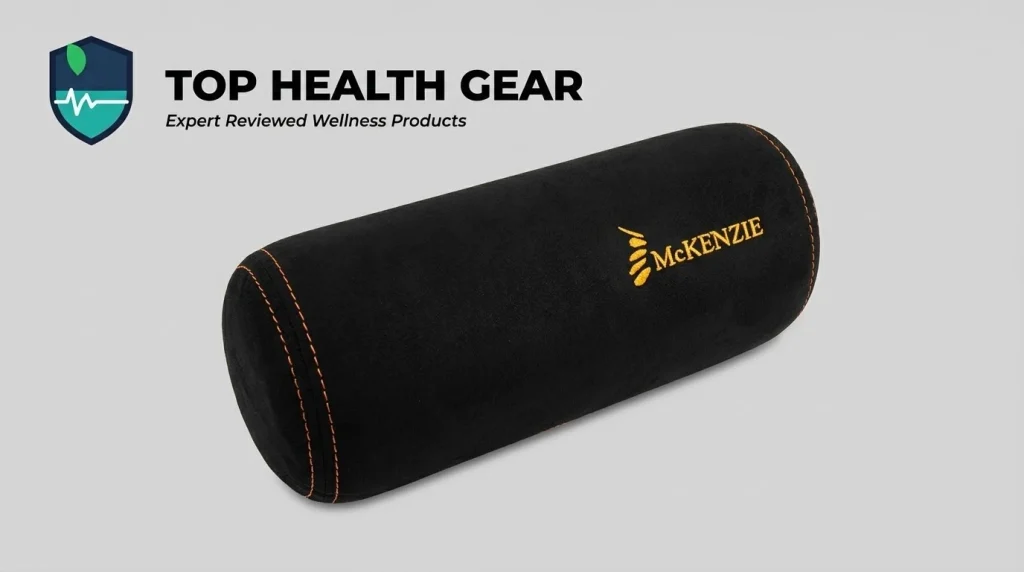
This is a firm foam roll, about 11 inches long and 4.75 inches across, with a suede-type cover and removable adjustable straps. Unlike a wide cushion, a roll puts support in one spot, so you can place it right at the curve of your lower back. It works in a home chair, an office chair, or a car seat.
Why We Picked It:
It’s the simplest option here for people who prefer a defined, firm push at one spot over a wide cushion.
Pros:
- Firm, defined support exactly where you place it
- Simple design with nothing to adjust inside
Cons:
- A firm roll can feel too aggressive for some people
- Needs repositioning if you move between seats
- If you have a latex sensitivity, check the strap material before buying
Niceeday Memory Foam Lumbar Support Pillow
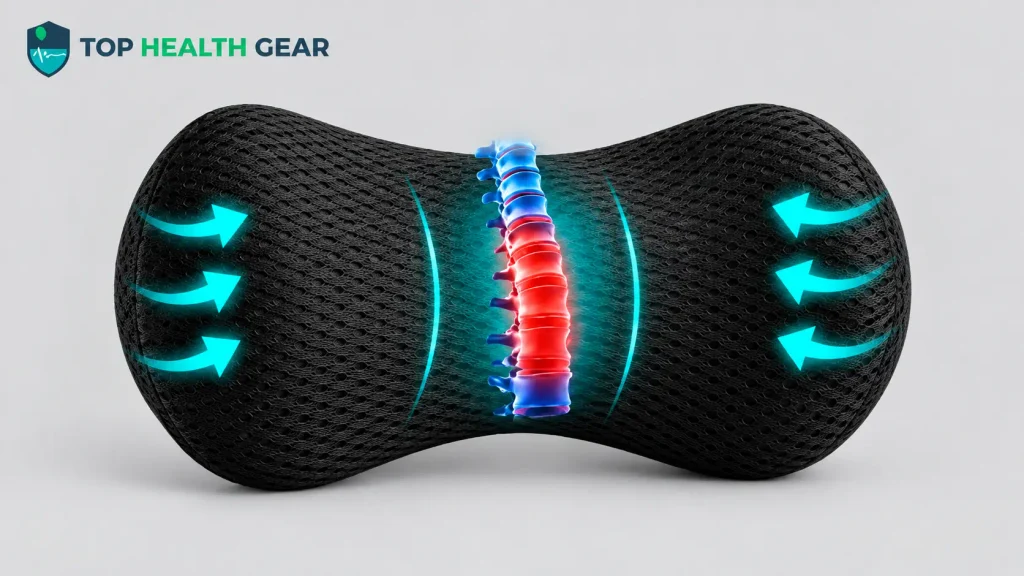
This is a wide, contoured memory foam pillow, about 18.5 inches across and 9 inches tall, with a breathable 3D mesh cover. Where the roll above puts support in one spot, this pillow spreads it across the whole lower back. The curved, wing-shaped profile is made to fit the natural curve of your lumbar area, and it works on an office chair or a car seat. The mesh cover lets air through, so the surface is less likely to get warm during long sitting sessions.
Why We Picked It:
It’s the best option here for people who want soft, wide coverage instead of a firm push at a single point.
Pros:
- Wide, contoured shape supports more of the lower back
- Breathable 3D mesh cover helps keep the surface cooler
Cons:
- Soft foam may feel too gentle if you want firm support
- At 18.5 inches wide, it may not fit smaller chairs or narrow car seats
How to Choose the Right Lumbar Support Pillow
Factor | What to Look For |
Your Seat | A flat office chair, a bucket car seat and a soft sofa each need a different shape and firmness. A pillow that works in one can feel wrong in another. |
Lumbar Curve | Sit tall and find the inward curve of your lower back, usually around belt height. The thickest part of the pillow should land there. Too high pushes into your mid-back, too low presses on your tailbone. |
Firmness | Firm cushions hold their shape under body weight but can feel stiff. Softer ones feel good at first but may flatten over a long session. If you can’t decide, choose medium-firm with a return window. |
Body Build | A shorter torso needs a lower, smaller pillow. A taller torso needs more height or a position that can be raised. |
Material | Memory foam molds to the back but can hold heat. Mesh covers help airflow. Gel or ventilated designs help on hot days. |
Straps | An adjustable strap keeps the pillow in place. A loose pillow slides and defeats the purpose. |
How to Position a Lumbar Pillow Correctly
1. Sit all the way back in the seat so your hips touch the backrest.
2. Place the pillow at the curve of your lower back, around belt height.
3. Fasten the strap snugly around the chair so it can’t slide.
4. Adjust your seat so your feet rest flat and your knees are about hip height.
5. Sit for a few minutes. If it pushes you forward or feels too aggressive, lower it or try a softer pillow.
6. Stand up and move every 30 to 60 minutes. Support helps, but staying still for hours doesn’t.
Lumbar Pillow vs. Lumbar Roll vs. Ergonomic Chair Upgrade
Lumbar Pillow vs. Lumbar Roll vs. Ergonomic Chair Upgrade
A pillow is the cheapest fix, a roll gives firmer targeted support, and a better chair solves the problem at the source.
A lumbar pillow is wider and softer. It works across most backrests and suits people who want gentle support. A lumbar roll is narrower and firmer. It concentrates support in one spot and suits people who like a definite push at the curve of the back. An ergonomic chair with built-in adjustable lumbar support can fit your body better than any add-on. If your chair is the main problem, a good ergonomic chair for back pain will do more than any cushion.
A posture corrector is a different tool. It pulls your shoulders back rather than supporting your lower back, so it doesn’t replace a lumbar pillow.
Who Should NOT Buy a Lumbar Support Pillow?
- If you have sharp, worsening, or radiating pain, see a clinician before buying anything.
- If your chair already has good adjustable lumbar support, you may not need one.
- If you’re looking for a sleeping solution, side sleepers often get more from a knee pillow made for side sleepers than from a lumbar pillow.
- If you expect it to fix your back pain, you’ll likely be disappointed.
Common Mistakes
Buying on Price Alone: A cheap pillow in the wrong shape is worse than a fair-priced one that fits.
Putting It Too High: The curve is at your belt line, not your shoulder blades.
Skipping the Strap: A pillow that slides ends up behind your tailbone.
Using the Same Pillow Everywhere: A car seat and an office chair rarely need the same shape.
Sitting Still: No pillow replaces getting up regularly. If your lower back is tight after a long day, a back massager built for lower back pain can be a useful add-on.
Frequently Asked Questions
Do lumbar support pillows actually work?
They can make a seat more comfortable by filling the gap between your lower back and the chair, which may help you sit in a more upright position. Evidence for back pain relief is limited and mixed, according to the NIAMS back pain overview, so think of them as a comfort aid, not a fix. Fit matters more than price.
What is the best pillow for lumbar back support?
For desk chairs and car seats, a strap-on memory foam lumbar cushion is the safest starting point because it stays in place and fills the curve at your belt line. If your chair already has some contour, a firmer lumbar roll gives more targeted support.
What is the best pillow to sleep on for lumbar support?
Lying down usually doesn’t need a lumbar pillow. Side sleepers are often more comfortable with a pillow between the knees, and back sleepers with a small pillow under the knees. Some people try a thin rolled towel under the waist. Stop if it adds discomfort.
What pillow do chiropractors recommend for back pain?
No single pillow is universally recommended. Clinicians usually look at how you sit or sleep, then suggest support that keeps your spine in a comfortable, neutral position. Because needs vary, ask your own chiropractor or physical therapist before buying. Persistent pain deserves an exam first.
How do I choose a lumbar support pillow?
Match three things: your seat (flat office chair, bucket car seat, or soft couch), the firmness you need, and where the curve of your lower back sits. Pick adjustable straps or a height-adjustable design if several people use the seat, and check the return policy.
Is it good to sleep with a lumbar support pillow?
Not usually necessary, and a thick pillow under the low back may feel awkward for some sleepers. If you want to try one, choose a thin, soft roll and stop if it increases discomfort. Persistent night pain is worth raising with a clinician.
Final Verdict
Best Overall: Everlasting Comfort The Original Lumbar Support Pillow A strap-on memory foam cushion that suits the most common setup, a standard office chair.
Best for Secure Fit: ComfiLife Lumbar Support Pillow The 3-strap design is the better pick if cushions tend to slip on your chair or car seat.
Best for Firm Support: OPTP Original McKenzie Signature Lumbar Roll A firm, targeted roll for people who want a definite push at the curve of the lower back.
Best for Wide Coverage: Niceeday Memory Foam Lumbar Support Pillow A wide, contoured memory foam pillow for people who want soft support across the whole lower back, in an office chair or a car seat.
If your chair is the real problem, our guide to the best ergonomic chairs for back pain covers the options that fix it at the source.

- Best Lumbar Support Pillows: Which Ones Really Help? - October 14, 2026
- Best Heating Pads for Back Pain: Electric, Cordless, or Microwavable? - October 9, 2026
- How Do Air Purifiers Work? Inside the Filtration Process - October 9, 2026