How to Use a TENS Unit for Lower Back Pain: Beyond Just Turning It On
To use a TENS unit for lower back pain, place clean pads on the muscles beside your spine, start on the lowest setting, and slowly raise it until you feel a strong but comfortable tingle. Many manuals suggest sessions of about 15 to 30 minutes. Stop if it hurts or your skin looks irritated.
This applies to adults who already own a unit or are comparing the best TENS units for back pain before buying, and it covers pad placement, settings, and safety rules in plain steps.
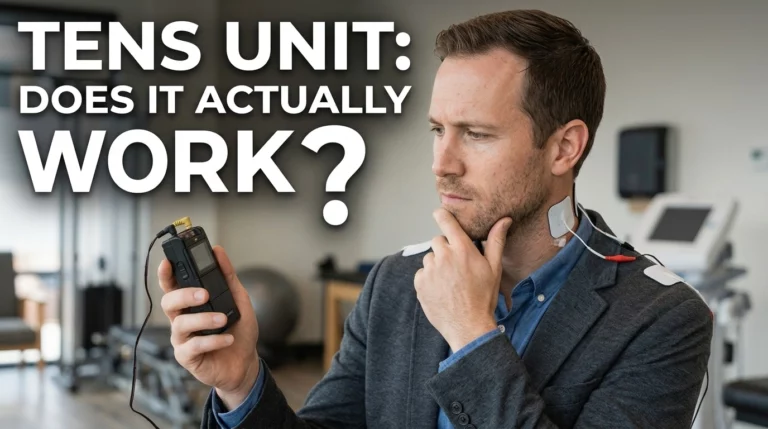
Before you buy, it helps to know whether a TENS unit actually works, since results vary from person to person.
What does a TENS unit do for lower back pain?
A TENS unit sends small, gentle electrical pulses through pads on your skin, which may help you feel less pain for a short time. TENS stands for transcutaneous electrical nerve stimulation. In plain words, it means nerve stimulation through the skin.
Two ideas are commonly used to explain how it works. The pulses may crowd out pain signals on their way to the brain. They may also encourage the body to release its own natural pain relievers.
A TENS unit is best seen as a comfort tool. It does not fix the cause of back pain. Many people find it easier to move and stay active when their pain feels lower.
TENS uses electrical pulses, while a back massager for lower back pain uses pressure or vibration. Many people try both at different times of the day, and it helps to know how often to use a back massager so the muscles are not overworked.
How to use a TENS unit for lower back pain, step by step?
You can use a TENS unit for lower back pain safely by following these eight steps in order.
- Read your manual and the cautions. Make sure the unit is off and set to zero.
- Wash the skin with mild soap and water, then dry it fully. Skip lotion and oil.
- Get comfortable. Sit back or lie down so your back muscles can relax.
- Place the pads on the muscles beside your spine, around the sore area, at least one inch apart. Connect the leads.
- Choose a continuous or normal mode.
- Turn the unit on and raise the level slowly until you feel a strong but comfortable tingle.
- Rest for about 15 to 30 minutes, or follow your manual. Lower the level if anything feels sharp or hot.
- Turn the unit off before you remove the pads. Peel them off gently, check your skin, and store the pads on their plastic liner.
Where do you place TENS pads on your lower back?
Place the pads on the muscles on each side of your spine, around the sore area, and keep them off the spine bones themselves. Keep every pad at least one inch away from the others so they never touch. Pads that touch can make the feeling uneven or sharp.
Setup | Best for | Where the pads go |
Two pads | A small sore spot | One pad on each side of the spine, level with the sore area. |
Four pads | A wider, spread out ache | Two pads on each side of the spine, one above the other, covering the sore area. |
Pain on one side | Pain mostly on one side | Pads above and below the sore spot on that side, at least one inch apart. |
A practical tip is to use a mirror or ask someone to help, since the lower back is hard to reach. Your manual may also show its own placement chart, so check it first.
Which TENS settings are best for lower back pain?
There is no single best setting for everyone, but many people start with a continuous or normal mode at a low level. Mode names change from brand to brand, so check your manual. Begin with a preset program and change only one setting at a time.
Mode (names vary) | What it usually feels like | Why people choose it |
Continuous or normal | Steady, light tingling | A common starting point for general, achy pain. |
Burst or pulse | Waves or gentle taps | Some people like the change when steady tingling stops feeling noticeable. |
Massage or kneading | A rhythmic pressing feeling | People who want a massage like feel. |
Muscle stimulation (EMS) | Muscles tighten and release | This is different from TENS. Use it only if your manual and healthcare professional agree. |
Aim for a strong but comfortable tingle. It should never feel sharp, hot, or painful. If your back muscles jump or twitch hard, lower the level.
Your body can get used to the feeling over a few minutes. If the tingle fades, you may raise the level a little. Stay below the point of discomfort.
How long and how often should you use a TENS unit?
Many device manuals suggest sessions of about 15 to 30 minutes, but your own manual sets the limit for your unit. Some people use several short sessions in one day. Do not go past the daily limit in your manual.
Give your skin a break if it looks red or feels sore. Check the area after each session. Wait until the skin looks normal before the next one.
It also helps to keep a short note after each session. Write down your pain level before and after, the mode, and the level you used. This shows what works for you and gives your healthcare professional clear details.
If you notice no change after several sessions, do not keep turning the level up. Check your pad placement first. Then ask a professional if using a TENS unit for back pain still makes sense for you.
What mistakes should you avoid, and what practical tips help?
The most common mistakes are starting too high, placing pads on the spine, and using worn out pads. Here is the full list to watch for:
- Starting at a high level instead of the lowest one.
- Placing pads on the spine or letting pads touch each other.
- Putting pads on oily, damp, or lotioned skin.
- Keeping old pads that no longer stick well.
- Pulling pads off while the unit is still on.
- Falling asleep with the unit running.
- Skipping gentle movement and relying on the unit alone.
Replace your pads when they stop sticking well, because loose pads can make the feeling uneven or sharp. Check that any new pads fit your unit’s connector.
Some people like gentle heat for a sore back. Use heat and TENS at different times, not together, unless your manual allows it. Heating pads for back pain come in electric, cordless, and microwavable types, so you can pick the style that fits your routine.
Who should be cautious with a TENS unit?
People with a pacemaker or another implanted electrical device should not use a TENS unit unless their doctor says it is safe. Many other people should ask a healthcare professional first. Check with one if any of these apply to you:
- You are pregnant, or you think you might be.
- You have epilepsy or a seizure disorder.
- You have a heart condition or an irregular heartbeat.
- You have numb skin or reduced feeling in your back, for example from nerve damage or diabetes. You may not notice a skin burn.
- You have a history of blood clots.
- You have cancer, or a lump or growth near the pad area.
- Your skin has a rash, wound, infection, or sunburn where the pads would go.
- Your back pain started after a fall or injury, or you do not know the cause.
- The unit is for a child.
Never use a TENS unit while driving, sleeping, in the shower or bath, or near water. These situations can raise the risk of an accident or a skin burn.
Where should you never put TENS pads?
Never place TENS pads on the front or sides of your neck, on your head or face, or across your chest. Also avoid these areas:
- Open wounds, rashes, swollen skin, or infected skin.
- Skin that feels numb.
- The spine bones themselves.
- The belly or lower back during pregnancy, unless a healthcare professional approves.
When should you talk to a healthcare professional?
Talk to a healthcare professional before you start if you have a health condition listed above, or if your back pain is new, severe, or unexplained. Stop using the unit and call one if your pain gets worse or your skin reacts.
Seek urgent medical care if back pain comes with leg weakness, numbness around your groin or buttocks, or trouble controlling your bladder or bowels. Do the same if you have a fever with back pain, or if the pain began after a fall or injury. These can be signs of a serious problem.
Also check in if pain lasts more than a few weeks, keeps coming back, or limits your daily tasks. A physical therapist can show you pad placement that fits your body, review your settings, and build a plan with movement and strengthening.
FAQs About Using a TENS Unit for Lower Back Pain
How to use a TENS unit for lower back pain at home?
Place clean pads on the muscles beside your spine, choose a continuous or normal mode, and raise the level slowly to a strong but comfortable tingle. Use it for about 15 to 30 minutes, or as your manual says. Stop if you feel pain, burning, or skin irritation.
Is it safe to use a TENS unit on your lower back?
Many healthy adults use a TENS unit on the lower back without problems when they follow the directions. It is not safe for everyone, including people with a pacemaker, and pregnancy needs a healthcare professional’s approval. Check your manual and the cautions above first.
Does a TENS unit loosen tight muscles?
Not directly, because a TENS unit mainly targets pain signals rather than the muscle itself. Some people feel their back relax as the pain eases, but a TENS unit is not a muscle relaxer. Gentle stretching and movement still matter.
Can a TENS machine make back pain worse?
Yes, it can feel worse if the level is too high, the pads sit too close together, or the skin becomes irritated. Lower the level, check your pad placement, and stop if pain lasts after a session. Talk to a healthcare professional if your pain keeps getting worse.
Where should you never put a TENS unit?
Never place pads on the front or sides of your neck, your head or face, across your chest, or on open wounds and irritated skin. Also avoid numb skin and the spine bones themselves. If you are pregnant, ask a healthcare professional before using one on your belly or lower back.
Key Takeaways
- Place pads on the muscles beside your spine, not on the spine, and keep them at least one inch apart.
- Start at the lowest level and raise it slowly to a strong but comfortable tingle.
- Many manuals suggest about 15 to 30 minutes per session, but always follow your own manual.
- People with a pacemaker, pregnancy, epilepsy, numb skin, or unexplained back pain should talk to a healthcare professional first.
- A TENS unit is a comfort tool, not a cure, so pair it with gentle movement and good posture habits.

- How to Improve Indoor Air Quality in Winter for a Fresher Home - October 29, 2026
- What Is Lumbar Support? How to Place It for Long Sitting Comfort - October 29, 2026
- How to Use a TENS Unit for Lower Back Pain: Beyond Just Turning It On - October 29, 2026