The Science of Sound Healing: Why Your Recovery Routine Needs More Than Gear
Most people building a wellness routine think in terms of products — the weighted blanket, the sleep tracker, the ergonomic pillow. These tools genuinely help, and the clinical research backs them. But there is a gap in how most people approach stress recovery: they focus entirely on what they put on or around their body, and skip what their nervous system actually needs to reset.
Sound healing fills that gap. It is not a trend and it is not fringe wellness. A 2023 randomized controlled trial found that Tibetan singing bowl sessions produced stronger physiological relaxation results than established clinical methods — measurable in brain activity, not just self-reported calm. When you pair that kind of practice with the right gear, recovery stops being a patchwork of individual products and becomes a system.
How Sound Shifts Your Brain State
Your brain runs in a beta state during most of your waking hours — alert, reactive, processing. The problem is that chronic stress locks people into beta even when they stop working. That is what makes it hard to fall asleep with a weighted blanket already on you, or why a sunrise alarm clock helps your mornings but does nothing for 11pm anxiety.
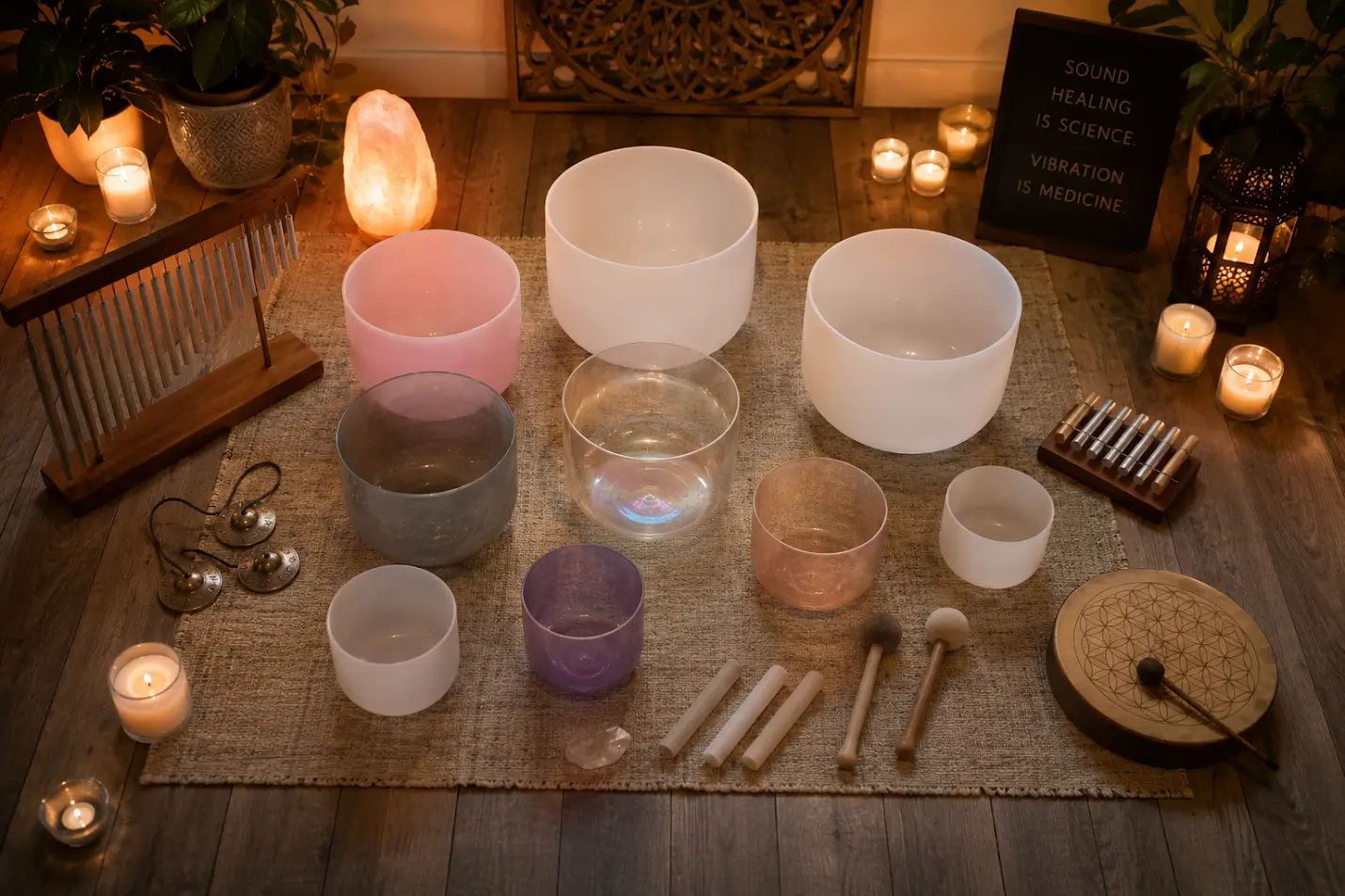
Sound healing works differently. Instruments like crystal singing bowls, gongs, and Tibetan bowls produce layered frequencies that guide the brain toward alpha (calm focus), theta (the dreamy pre-sleep state), and in longer sessions, delta — the same brainwave pattern associated with deep, restorative sleep. This is not a metaphor; it is measurable using EEG. A 2020 NIH study confirmed that participants who experienced Tibetan singing bowl meditation reported significantly less tension, anger, and fatigue compared to controls.
The mechanism that makes this clinically relevant is the same one your weighted blanket targets: the parasympathetic nervous system. Both deep pressure stimulation and sustained sound exposure activate the “rest and digest” pathway, reducing cortisol and signalling the body that it is safe to slow down.
What the Research Actually Shows
The evidence base for sound healing has grown considerably in the last five years. Psychology Today confirmed in 2024 that specific sound wave frequencies reduce stress markers. The Cleveland Clinic published on the therapeutic benefits of sound baths in 2022. And in 2025, the International Wound Journal documented sound’s role in physical healing — a signal that researchers are moving past mood effects and looking at systemic outcomes.
A particularly important data point: in the 2023 RCT mentioned above, singing bowls were not compared to doing nothing — they were compared to progressive muscle relaxation, one of the most established clinical relaxation protocols in existence. Sound healing outperformed it on both subjective measures and physiological ones. That is a meaningful bar to clear.
For anyone who has tried meditation apps without success, or who finds breathwork frustrating rather than calming, sound healing offers a passive entry point. You do not need to do anything except lie down. The practice does the work, which makes it unusually accessible as a clinical intervention.
The Recovery Gap Most Routines Miss
Consider how a standard home recovery setup manages your stress across a 24-hour cycle. You might use a specialized sunrise alarm clock to prevent a jarring morning cortisol spike, and a weighted blanket at night to stimulate serotonin production. While these are excellent, highly valid interventions, they only target the bookends of your day.
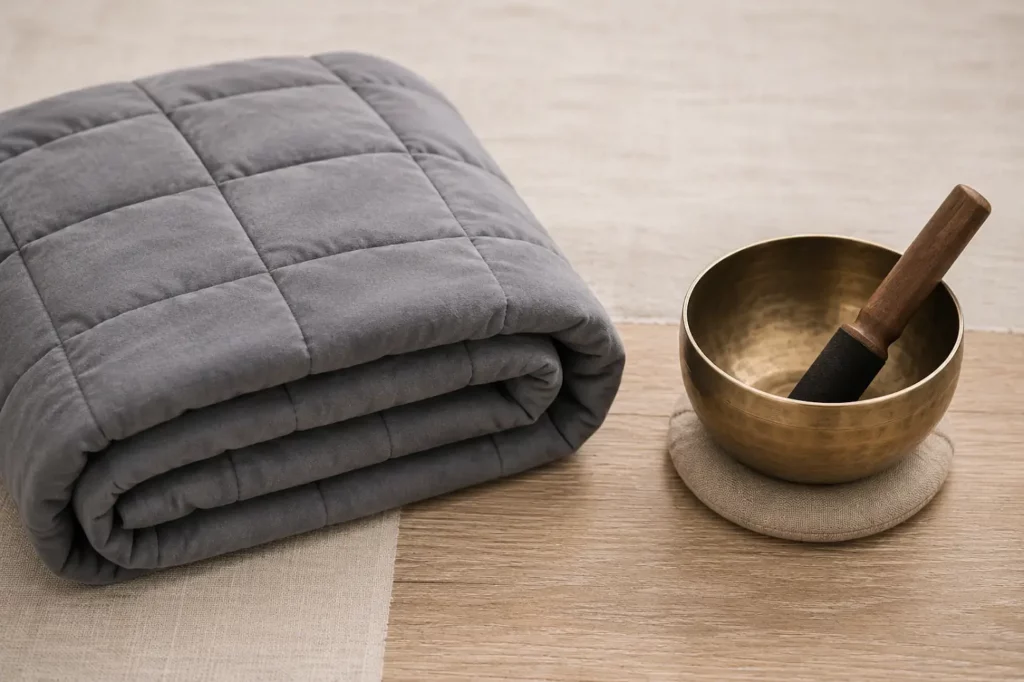
What they do not address is the middle — the accumulated nervous system load that builds through meetings, screens, decision fatigue, and noise. This is where sound healing earns its place in a real recovery routine. A 60 or 90-minute session mid-week creates what practitioners describe as a system reset — not relaxation in the passive sense, but an active shift in neurological state that makes your gear work better when you return to it.
This is the practical case for combining both approaches. The gear manages your environment; the practice changes your internal state. Neither one fully substitutes for the other.
Finding the Right Session Format
Not all acoustic sessions are structured identically, and selecting the correct format modifies your clinical outcomes:
1. Intimate Candlelit Sound Baths
Typically running for 90 minutes, these sessions leverage low-light visual cues and social safety triggers. This extended duration is ideal for downshifting the nervous system entirely into deep Delta brainwave states.
2. Mid-Week Express Sessions
60-minute daytime or post-work formats are highly efficient for shifting the brain out of active Beta loops into relaxing Alpha and Theta states, providing an immediate mental reset without disrupting a busy calendar.
3. Integrated Sound and Yin Yoga
Yin postures place connective tissues under gentle, passive tension for three to five minutes at a time, which independently stimulates parasympathetic vagal pathways. Combining this bodywork with live acoustic instruments creates a compounding therapeutic effect that neither modality achieves quite as efficiently on its own.
Locals looking to experience these modalities can book professional Fremantle sound bath sessions that offer all three formats across dedicated, trauma-informed community spaces.
Building It Into a Weekly Routine
The most common mistake people make with sound healing is treating it as occasional. The practitioners and researchers who study this consistently find that regular sessions — even twice a month — produce cumulative benefits that single sessions do not replicate. Stress regulation, sleep quality, and emotional resilience all improve with frequency.
A practical weekly structure might look like: Monday and Thursday use your weighted blanket for 20 minutes of passive decompression before bed. Saturday or Sunday, attend a sound bath. Use your sunrise clock every morning to protect circadian rhythm. That is a coherent nervous system protocol, not a collection of unrelated wellness habits.
Conclusion
Sound healing works through the same physiological pathways that your wellness gear targets — the parasympathetic nervous system, brainwave regulation, cortisol reduction. The research is real, the outcomes are measurable, and the practice is accessible enough that it does not require skill or sustained effort. When it is built into a routine alongside high-quality sleep tools and recovery gear, it addresses the part of the stress cycle that products alone cannot reach. A complete recovery routine is not just what you own — it is how consistently you give your nervous system the conditions it needs to actually reset.
Frequently Asked Questions
Is sound healing scientifically proven?
The evidence is growing and credible. A 2023 randomized controlled trial showed sound healing outperformed progressive muscle relaxation — one of the most validated clinical relaxation methods — on both self-reported and physiological measures. Earlier NIH studies confirmed reduced tension, anger, and fatigue. It is not a cure for clinical conditions, but as a stress regulation and sleep support tool, the research base is solid.
How is a sound bath different from white noise or sleep music?
White noise and sleep playlists create ambient masking — they block out disruptive sounds. Sound healing works differently. Instruments like singing bowls and gongs produce complex, layered frequencies that actively shift brainwave states. The goal is not masking distraction but guiding the nervous system into a different state entirely. Most people notice the difference in the first session.
How often do you need to go to see results?
Single sessions produce noticeable relaxation, but cumulative benefits — better sleep, lower baseline anxiety, improved stress resilience — tend to emerge after regular attendance. Twice a month is a commonly cited minimum for lasting effects. Weekly or fortnightly sessions are where most practitioners and participants report the clearest changes.
Can you do sound healing at home?
Basic sound tools like singing bowl apps or recorded sessions exist, but they do not replicate the experience of being physically immersed in live acoustic instruments. The resonance and air pressure from a live gong or crystal bowl in a room is a different physiological input than audio through a speaker. Home practice has value for maintenance, but the clinical benefits documented in research are from live, in-person sessions.
Who should not attend a sound bath?
Sound baths are broadly accessible, but there are contraindications. People with cardiac pacemakers, artificial heart valves, or cardiac arrhythmia should consult a doctor first. The same applies to pregnant women (especially first and last trimester), those who are post-surgery within three months, and people with epilepsy. Children under 10 and anyone with acute sound sensitivity should also check with the practitioner before booking.

- Best Pillows for Ear Cartilage Pain to Make Side Sleeping More Comfortable - October 22, 2026
- How to Release a Shoulder Knot: 7 Simple Fixes That Work - October 22, 2026
- Best TENS Unit for Back Pain: The Right Pick for Your Pain, Budget, and Routine - October 20, 2026