How to Release a Shoulder Knot: 7 Simple Fixes That Work
To get rid of knots in your shoulder, apply heat from a heating pad or warm towel for 15 to 20 minutes, press the spot gently with a ball against a wall, then stretch and keep the area moving. Most shoulder knots are tight, irritated muscle that often eases with simple home care.
The 7 fixes below go in the order to try them, followed by the daily habits that help stop knots from coming back. If the pain comes with numbness or tingling, or started after an injury, see a clinician.
What Is a Knot in Your Shoulder?
A muscle knot is a tight, tender spot in a muscle. Doctors call these myofascial trigger points. They aren’t actual tangles. The muscle fibers in that spot stay tense, so the area feels like a small bump or a ropey band that hurts when pressed.
In the shoulder area, knots usually form in four places:
- Top of the shoulder (upper trapezius)
- Between the shoulder blade and spine (rhomboids)
- Along the neck down to the shoulder blade (levator scapulae)
- On the back of the shoulder blade (infraspinatus)
A knot can cause a dull ache, stiffness, or pain that spreads to your neck or head.
What Causes a Knot on Your Shoulder?
Shoulder knots usually come from muscles being held in one position too long or worked harder than they are ready for. In most cases, several everyday habits add up rather than one single cause.
Common Causes
Long hours of sitting. Sitting for long periods, especially with your head pushed forward over a screen, keeps your neck and shoulder muscles tense all day. Raising your screen with a laptop stand takes a lot of that strain off your neck and shoulders.
Overuse. Lifting, painting overhead, or starting a new workout can overload the muscles around your shoulder blade faster than they can recover.
Carrying a heavy bag on one side. Using the same shoulder every day makes that side work harder, and it tightens up over time.
Stress. Many people lift their shoulders toward their ears without noticing when they feel tense. Over hours and days, this constant tightening can lead to a knot.
Poor sleep support. The wrong pillow often leaves your neck and shoulders tight in the morning, which sets you up for a stiff day.
Muscle imbalance. When some muscles are weak, others do extra work to make up for them. The overworked muscles tighten and become knot-prone.
Neck problems. Tightness in the neck can show up as a knot near the shoulder blade, so the cause is not always where it hurts.
Why Am I So Prone to Knots?
Usually because several of these happen every day, such as a desk job, stress, and not much upper-back strength. The good news is that fixing your daily habits tends to make knots come back less often. Small changes like adjusting your screen height, switching the side you carry your bag on, and taking short movement breaks make a real difference over time.
How to Get Rid of Knots in Shoulder: 7 Ways
1. Apply Heat
Heat helps tight muscles relax. Use a heating pad, a warm towel, or a hot shower for 15 to 20 minutes.
2. Press It Out With a Ball
1. Stand with your back to a wall and put a tennis ball between the knot and the wall.
2. Lean in gently until you find the tender spot.
3. Breathe slowly and hold light-to-moderate pressure for 30 to 60 seconds.
4. Release and repeat two or three times.
For the top of the shoulder, tilt your head toward that side to relax the muscle, then gently pinch it between your fingers and thumb for 8 to 30 seconds. For a knot on the back of the shoulder blade, lie on your side with a softer tennis ball under it, since that muscle is often very tender.
Keep the pressure comfortable. A little discomfort is normal, but sharp pain, numbness, or tingling means stop.
3. Stretch Gently
Stretching helps the tight muscle relax and improves movement around the shoulder. Hold each stretch for 20 to 30 seconds and repeat two or three times. Never bounce, because sudden movements can make the muscle tighten up instead of letting go.
Upper trap stretch. Sit tall and tilt your ear toward your shoulder. Use your hand to add light pressure, but let the weight of your head do most of the work. You should feel a gentle pull along the side of your neck.
Cross-body stretch. Pull one arm across your chest and hold it with your other hand. Keep your shoulder relaxed and down, not shrugged up toward your ear.
Doorway stretch. Place your forearm on a door frame, then gently turn your body away. This opens the chest and front of the shoulder, which often get tight from sitting.
Chin tucks. Glide your chin straight back, as if making a double chin, without tilting your head up or down. This eases the neck and the area around the shoulder blades.
Stretch only to a mild pull, never to pain. If you feel sharp pain, tingling, or numbness, stop and check with a doctor or physical therapist.
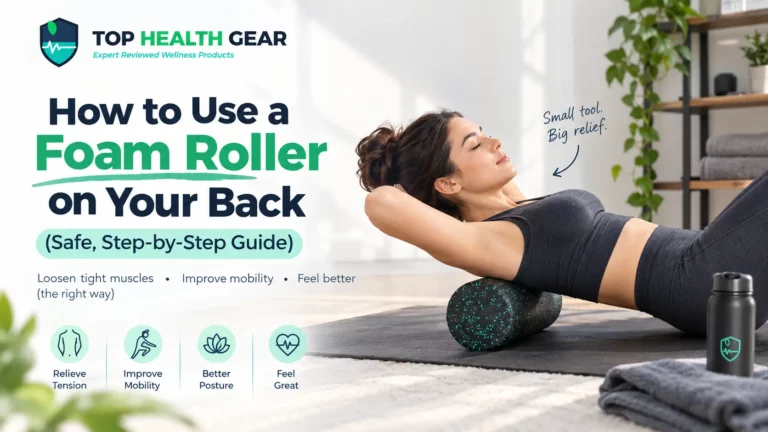
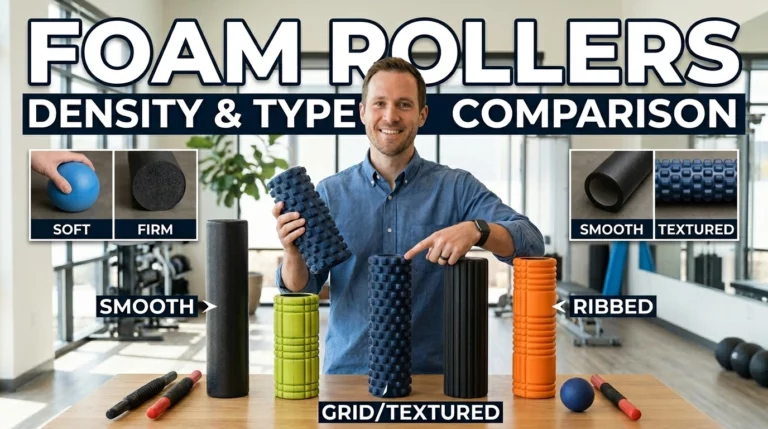
4. Use a Massager or Foam Roller
A massager can reach spots that are hard to press yourself. A neck massager built for muscle knots works well on the top of the shoulder. For knots between the blades, where your hands can’t reach, a back massager designed for knots does the job. A foam roller or a massage gun can also work, but they feel very different. The foam roller vs massage gun choice comes down to whether you want slow pressure over a wide area or targeted pressure on one spot. Keep a gun on the muscle, never on the spine or the front and sides of the neck.
5. Keep Moving
Staying still keeps muscles tight. Stand up and move every hour. Roll your shoulders, reach overhead, or take a short walk. Alternating between sitting and standing helps too.
6. Breathe and Release Stress
When you’re stressed, your upper back tightens. Take a minute to drop your shoulders and breathe slowly into your belly, in for four counts and out for six. Doing this a few times a day can help.
7. Fix Your Setup and Sleep
This is what stops knots from coming back.
- Place your screen at eye level, about an arm’s length away.
- Keep your elbows bent at about 90 degrees, with your forearms supported.
- Sit in a chair that supports your back so your shoulders don’t round forward over the day.
- Don’t count on a brace to fix this, because it’s unclear whether posture correctors actually work without strength and movement behind them.
- Use a pillow that keeps your neck level while you sleep.
- Switch bag shoulders, or use a backpack with two straps.
Do Shoulder Knots Go Away, and Can You Massage Them Out?
Yes. Most settle within a few days to a couple of weeks with heat, gentle movement, and some pressure. A knot that has been there for months usually has an ongoing cause, like posture, stress, or a neck problem.
Massage can ease the tenderness and tightness, but it doesn’t literally untie anything, and the relief can fade if the cause remains. Keep sessions short and gentle, because too much pressure can leave the area bruised and sore.
Nothing dissolves a knot, and it usually won’t pop. If you feel a click, it’s more likely a joint or tendon moving, so don’t press harder to chase one.
Why Won’t My Muscle Knot Release?
If a knot keeps coming back or refuses to ease, the problem is often in how you are treating it or in what is causing it. Check these common reasons first.
You are pressing too hard or too long. More pressure does not mean faster relief. Pressing hard irritates the muscle and makes it tighten up as a defense. Keep each session on the spot to about a minute at a time, with firm but comfortable pressure.
The cause is still there. Long hours of sitting, a poor desk setup, or ongoing stress will keep the muscle tight no matter how often you treat it. Until you change the daily habit, the knot will keep returning.
The pain is coming from your neck. Neck stiffness can show up as a knot near the shoulder blade. If you only work on the sore spot, you may be missing the real source.
You are only treating one spot. A knot rarely exists on its own. Work the muscles around it too, such as the chest and neck, so the whole area can relax.
The muscle is weak. A weak muscle tires quickly and tightens up to compensate. Once the area calms down, add light upper back exercises like rows to build strength and help prevent knots from returning.
If you have tried these steps for two weeks without any change, a physical therapist can help find the cause and build a plan that fits you.
Who Should Be Cautious With Shoulder Knot Treatments?
Take extra care with pressure, massage guns, and deep stretching if you take blood thinners, bruise easily, are pregnant, or have a nerve problem, osteoporosis, or a recent injury. Skip direct pressure over any area that is swollen, red, warm, or bruised. Use heat carefully if you have reduced feeling in your skin, and always keep a towel between the heating pad and your skin.
When to Talk to a Healthcare Professional
Get checked if you have:
- Numbness, tingling, or weakness in your arm or hand
- Pain that shoots down your arm
- A knot that keeps growing, or pain after a fall or injury
- Fever or unexplained weight loss along with the pain
Seek urgent medical care right away if shoulder or upper back pain comes with chest pain, shortness of breath, sweating, or pain spreading to your jaw or left arm.
What to Do First
Warm up the area, use gentle pressure, stretch, and keep moving. Then fix the setup and habits that caused the knot. Keeping a heating pad and a ball within reach lets you deal with tension before it builds.
Frequently Asked Questions
How long should I apply heat to a shoulder knot?
Use heat for 15 to 20 minutes at a time. Keep a towel between the heating pad and your skin, and stop if the skin gets red or sore.
Can a shoulder knot cause a headache?
Yes. Tight muscles in the upper shoulder and neck can send pain up toward the head and feel like a tension headache. If headaches are frequent or severe, see a doctor.
Is it safe to use a massage gun on a shoulder knot?
Yes, on the muscle itself, at low speed for 30 to 60 seconds. Never use it on the spine or on the front and sides of your neck.
Which sleeping position helps prevent shoulder knots?
Side or back sleeping with a pillow that keeps your neck level is usually easiest on the shoulders. Stomach sleeping twists the neck, which can tighten the upper back.
How do I know if it’s a muscle knot or something more serious?
A knot is a tender spot that hurts when pressed and often eases with heat or movement. Numbness, tingling, pain shooting down the arm, chest pain, or pain after an injury points to something else, so get checked.

- Best Pillows for Ear Cartilage Pain to Make Side Sleeping More Comfortable - October 22, 2026
- How to Release a Shoulder Knot: 7 Simple Fixes That Work - October 22, 2026
- Best TENS Unit for Back Pain: The Right Pick for Your Pain, Budget, and Routine - October 20, 2026