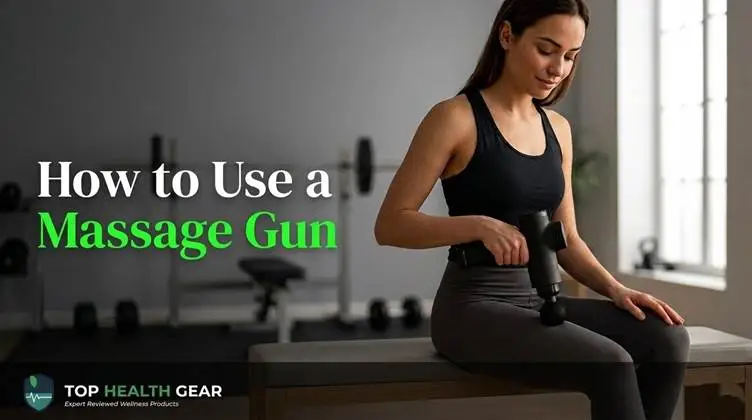
How to Use a Massage Gun: A Safe Guide for Beginners
Do you grab your massage gun the moment a muscle feels tight? These devices are popular for good reason, but I regularly see patients who use them too long, too hard, or on the wrong spot and end up sorer than when they started. The basic method is simple: start on the lowest speed, glide the gun slowly over muscle rather than bone, spend 10 to 20 seconds on each spot, and stop at about two minutes per muscle. Let the gun do the work without pressing down. This guide covers where to place it, how long to stay, which head to use, and which areas to avoid completely.
What Is a Massage Gun Used For?
How a Massage Gun Works
A massage gun delivers fast, repeated pulses deep into the muscle. The head moves back and forth in a short, rapid motion, which creates a pounding effect that a hand or a simple roller cannot easily copy. Most people use one to ease tightness and soreness, warm up before exercise, feel looser after a workout, or relax tense areas after a long day at a desk. Because the motion is so fast, you do not need to press hard for it to reach the muscle, which is why light pressure is always the right starting point.
Is a Massage Gun Good for Pain?
It can give short-term relief for tight or sore muscles. A review of 13 studies in the International Journal of Sports Physical Therapy suggests it may help muscle strength when combined with exercise. That said, a massage gun is not a treatment for injuries or ongoing pain. I tell my patients to think of it as a comfort and recovery tool, not a cure.
The relief you feel comes mostly from the muscle relaxing and from the pulses distracting your nerves from the sensation of tightness. This is useful, but it does not repair damaged tissue. If your pain is sharp, persistent, or getting worse, see a professional instead of reaching for a device.
Before You Start
Pick the Right Massage Gun Head
The head you choose changes how the pulse feels on your body. As a general rule, larger heads suit larger muscles, and smaller heads suit small or sensitive areas. Most guns come with four or five heads, but beginners rarely need more than the ball head for their first few weeks.
Head Type | Best For | Notes |
Ball (round) | Thighs, glutes, and back | The all-purpose choice. Start here. |
Flat | General, full-body use | Spreads pressure evenly. |
Bullet | Small, specific spots | Use lightly and briefly. |
Fork | Either side of the spine, or the Achilles area | Never place it on the bone itself. |
Start on the Lowest Speed
Faster does not mean better. If you tense up or brace against the pulses, the speed is too high. Most beginners do well on the lowest or second-lowest setting. You can always increase it once your muscles feel relaxed, but you cannot undo a bruise. A good test is whether you can breathe slowly and keep the muscle soft while the gun is running. If you cannot, turn the speed down.
Understand Amplitude and Stall Force
Most guns list two specs. Amplitude is how far the head travels, and a larger number feels deeper. Stall force is how much pressure it takes before the motor slows down. Beginners do not need the strongest gun on the shelf, and a gentler model is easier to use safely. A gun with high amplitude can feel harsh on small muscles, while a gun with low stall force can stop when you press too hard, which can actually protect you from overdoing it. If you are still choosing, our comparison of a Theragun vs Hyperice massage gun shows how amplitude and force differ between two popular models.
Step-by-Step: How to Use a Massage Gun
Set Up and Position
Start by getting comfortable. Sit or lie down so the muscle is fully relaxed. For example, work your thigh while seated instead of standing on one leg. A tense, braced muscle does not respond well to a massage gun, so take a moment to let your body settle. Then turn the gun on before it touches your skin, starting at the lowest speed. Turning it on first avoids a sudden jolt against the muscle.
Glide, Pause, and Limit Your Time
Rest the head on the muscle and hold it lightly with the head flat against your body. Do not press. Move slowly along the length of the muscle at about an inch per second. When you find a tight spot, pause for no more than 10 to 20 seconds, keeping the pressure light and your breathing slow. If the spot does not ease, move on and come back later rather than staying longer.
Limit your time on each muscle. Large muscles like the quads and hamstrings can handle up to about two minutes, while smaller ones like the biceps and triceps need only about a minute.
Know When to Stop
Firm pressure is fine. Sharp pain, numbness, tingling, or burning is not. If you feel any of these, turn the gun off right away. It is also a good idea to stop if the skin looks red or feels hot afterward, since this can be an early sign of irritation.
Body Area Guide
Thighs (Quads and Hamstrings)
Sit with your leg relaxed and use the ball head. Start just above the knee and work up toward the hip, then move to the back of the thigh. Skip the kneecap and the back of the knee, where nerves and blood vessels sit close to the surface. The inner thigh is more sensitive than the outer thigh, so use a lower speed there.
Calves
Work from just below the back of the knee down toward the ankle, staying on the muscle only. Keep the gun off the shin bone and do not press on the Achilles tendon. Sitting with your leg crossed over the opposite knee makes the calf easier to reach and keeps the muscle relaxed.
Glutes
Lie on your side or lean against a wall and use the ball head in slow circles. This area tolerates more pressure than most, but keep the speed low at first until you know how it feels. Avoid the tailbone and the base of the spine, and stay on the fleshy part of the muscle.
Upper Back and Shoulders
The muscles between your neck and shoulders, known as the upper traps, get tight from desk work. Glide the gun over the muscle, never over the spine. Keep the head away from the side of the neck, and use short, slow passes across the top of the shoulder. If you spend long hours seated, a standing desk vs sitting comparison can help you rethink your day.
Lower Back
Use only the thick muscles on either side of the spine, with light pressure and short passes. A partner makes this area much easier to reach. Never place the gun directly on the spine or just under the rib cage. If you prefer a device made for the job, see our guide to the best back massager with heat.
Arms and Feet
Use the ball or flat head at low speed on the biceps, triceps, and forearms, and stay gentle near the elbow and wrist. On the foot, stick to the arch muscles. If you have heel pain, learn the right approach in our guide on how to use a foot massager for plantar fasciitis before using a gun there. You can also try massaging your own foot by hand for more control.
A Simple 10-Minute Massage Gun Routine
If you want a plan you can follow without thinking, this routine covers the main muscle groups at a safe pace. Use the ball head on the lowest speed.
Muscle | Time | Tip |
Quads | 1 to 2 minutes per leg | Stay above the kneecap. |
Hamstrings | 1 to 2 minutes per leg | Avoid the back of the knee. |
Calves | 1 minute per leg | Keep off the Achilles. |
Glutes | 1 minute per side | Use slow circles. |
Upper traps | 30 to 60 seconds per side | Stay off the neck and spine. |
Rest for a few breaths between muscles, and skip any area that feels sore or bruised.
Before or After a Workout?
Before exercise, use the gun for 30 to 60 seconds per muscle on a low speed. The aim is to wake the muscle up, not to dig into knots. Follow it with your normal warm-up, since the gun does not replace one.
After exercise, spend one to two minutes per muscle once you have cooled down, using slow, light passes. Wait until your heart rate has settled before you start. Keep in mind that recovery depends far more on sleep, food, and water than on any device, which is the heart of how to speed up muscle recovery. If you are weighing tools, choosing between a foam roller and a massage gun comes down to how each one fits your routine.
How Long and How Often Should You Use a Massage Gun?
Keep each spot to 10 to 20 seconds and each muscle to about two minutes. Most people do not need more than 10 to 15 minutes in total per session. Daily use is generally fine, but limit it to two or three short sessions at most. If an area feels bruised or very sore, give it a day or two off. Our guide on how often to use a back massager follows the same principle of short, regular sessions.
A good rule of thumb is that the muscle should feel better or the same afterward, never worse. If you feel more sore the next morning, shorten your sessions and lower the speed next time.
Advantages and Disadvantages of a Massage Gun
Advantages of a Massage Gun
A massage gun gives you quick, targeted relief at home without booking an appointment. It reaches deep into large muscles like the thighs and glutes, helps you warm up before exercise, and can make you feel looser afterward. Because you control the speed, head, and pressure, it is easy to match the session to your comfort level.
Many people also find that a few minutes of use helps them unwind after a long day. A good model can last for years, which can save money compared with frequent professional sessions, and most are small enough to keep in a gym bag or desk drawer.
Disadvantages of a Massage Gun
Decent models are not cheap, and some are loud at higher speeds, which can be a problem in a shared home or office. Pressing hard or staying too long can cause bruising and soreness. Research on long-term benefits is still thin, and a massage gun can mask pain, since feeling better is not the same as healing. It is also not right for everyone, which is why the medical checks below matter.
Where Not to Use a Massage Gun
If you are wondering which five areas to avoid, these are the ones most often advised against.
Area to Avoid | Why |
Front and sides of the neck | Major blood vessels and nerves sit close to the surface. |
Bones and joints | Includes the spine, kneecaps, shins, ankles, and elbows. |
Head and face | Delicate tissue and no muscle to target. |
Groin and abdomen | Especially important to avoid during pregnancy. |
Injured or damaged skin | Bruises, cuts, swelling, and sunburn can all get worse. |
You should also avoid fresh sprains, strains, and tears until they have healed. A massage gun can make a new injury worse.
Who Should Check With a Doctor First?
Talk to a healthcare professional before using a massage gun if you have had blood clots or DVT, or if you take blood thinners. The same goes for nerve problems such as neuropathy, which can make it hard to feel when the device is causing damage. Check first if you have osteoporosis, a recent fracture, or recent surgery, if you are pregnant, or if you have a pacemaker or other implanted device.
You should also see a professional if your pain is sharp, persistent, or getting worse. If you notice sudden swelling, warmth, or redness in one leg, stop using the gun and seek medical advice promptly. For a closer look at similar risks, read our post on whether foot massagers can be dangerous.
How to Clean and Care for Your Massage Gun
A little care keeps your gun hygienic and working well. Wipe the head with a damp cloth or an alcohol wipe after each use, especially if you use it over bare skin. Let it dry fully before you put it away. Never submerge the gun in water, and avoid using it on wet or oily skin. Charge the battery as the manufacturer recommends, and store the gun in its case so the heads do not get damaged.
Common Mistakes to Avoid
The most common mistake is pressing too hard. The gun’s own motion is enough, and extra force only raises your risk of bruising. The next is using too high a speed, so always start low. Many people also stay too long in one spot, run the gun over bone or joints, or use it on a fresh injury.
Another common mistake is using the gun on a cold, stiff muscle straight away. A short walk or a few easy movements first makes the session more comfortable. Finally, do not skip movement. A massage gun works best alongside stretching and exercise, not in place of them.
Frequently Asked Questions
Where should you not use a massage gun?
Avoid the front and sides of the neck, bones and joints, the head and face, the groin and abdomen, and injured or swollen skin.
How often should you use a massage gun?
Daily use is generally fine if it feels comfortable, but keep it to two or three short sessions at most. Spend no more than 10 to 20 seconds in one spot and about two minutes per muscle.
Is a massage gun good for pain?
It can give short-term relief from tight, sore muscles. It is not a treatment for injuries or chronic pain, so see a professional if your pain is sharp or does not ease.
What should a massage gun be used for?
Use it to warm up muscles before exercise, ease soreness after a workout, and relax tight areas like the thighs, calves, glutes, and upper back.
What are the disadvantages of a massage gun?
The main drawbacks are cost, noise, possible bruising from overuse, and limited long-term research. It also is not suitable for everyone. People with clotting problems or nerve conditions should get medical advice first.
Which massage gun head is best for beginners?
The ball head is the best starting point because it spreads pressure over a large area and suits most big muscles.
Can you use a massage gun on bare skin?
Yes, but start on a low speed and check that the skin is clean and unbroken. If it feels harsh, try it over thin clothing instead.
Should a massage gun hurt?
It should feel firm but comfortable, never sharp or burning. If it hurts, lower the speed, ease the pressure, or skip that spot.
Can you use a massage gun every day?
Most healthy people can, as long as sessions stay short and the muscles do not feel bruised or sore. Take a day or two off if an area feels tender.
Final Takeaways
Keep it simple: low speed, light pressure, slow movement, short time, and muscle only. Pair your massage gun with stretching, good sleep, and regular movement for the best results. If something feels wrong, stop, and talk to a doctor or physical therapist if you have a medical condition, an injury, or ongoing pain.

- How to Use a Massage Gun: A Safe Guide for Beginners - October 7, 2026
- How to Speed Up Muscle Recovery: Beyond Rest and Stretching - August 13, 2026
- Best Piercing Pillows: Which Ones Actually Relieve Pressure? - August 11, 2026