How Do Air Purifiers Work? Inside the Filtration Process
An air purifier uses a fan to pull air through filters that trap dust, pollen, and smoke, while carbon filters absorb odors. The cleaned air goes back into the room, and the cycle repeats until the air has passed through the machine many times. This guide explains how the filters work, what an air purifier can and can’t remove, and whether it’s worth running at home. If you’re choosing one for a bedroom, the best air purifiers for dust allergies in a small bedroom are a good place to start after reading this.
What Is an Air Purifier?
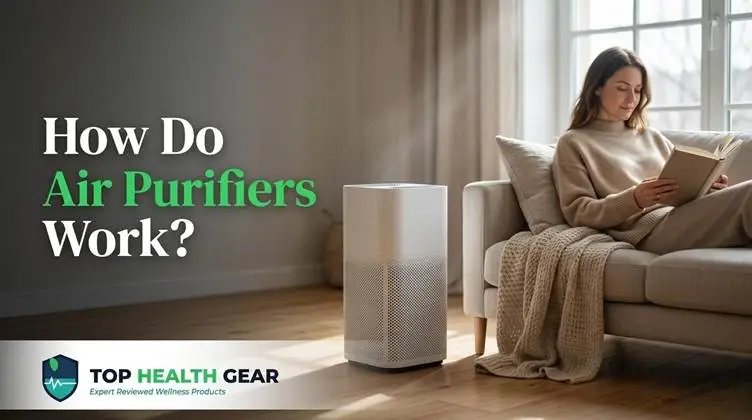
An air purifier (also called an air cleaner) is a device that removes pollutants from the air in a single room. Most home models use a fan and a filter, and some add extras like activated carbon for smells or UV light. It’s one of several tools for healthier indoor air, alongside humidifiers and ventilation.
An air purifier cleans the air that moves through it. It doesn’t clean surfaces, and it doesn’t bring in fresh air from outside.
How do Air Purifiers Work, Step by Step
An air purifier does not work by magic. It moves room air through a series of filters, one stage at a time, and sends cleaner air back out. Here is what happens inside the machine from the moment you switch it on.
1. The Fan Pulls Air In
A built-in fan draws air into the unit through vents on the front, back, or sides, depending on the model. The fan speed controls how much air passes through the filters each hour. A higher speed cleans the room faster but usually makes more noise. Many models also have a sleep mode that runs the fan slowly and quietly overnight.
2. The Pre-Filter Catches Large Debris
The first filter the air meets is the pre-filter. It stops hair, lint, pet fur, and larger dust before they reach the finer filters behind it. This matters because a clogged main filter works poorly and wears out sooner. Many pre-filters are washable or vacuumable, so a quick clean every few weeks helps protect your more expensive filters.
3. The Main Filter Traps Small Particles
Next, the air reaches the main filter, which is usually a HEPA filter. HEPA stands for high-efficiency particulate air. A true HEPA filter is made of tightly woven fibers that trap very small particles, including pollen, dust mite debris, pet dander, and mold spores. Smoke particles are also captured, though the amount depends on the filter and the model. This is the stage that does most of the cleaning, so it is the part to check first when you compare models.
4. A Carbon Filter Absorbs Odors and Gases
Some purifiers include an activated carbon filter. Carbon absorbs odors and gases such as cooking smells, smoke odor, and some household chemicals. HEPA filters cannot trap these because gases are far smaller than particles. Not every model has a carbon filter, and thin carbon layers wear out quickly, so look for a thicker one if odors are your main concern.
5. Cleaner Air Goes Back Into the Room
Finally, the filtered air is released back into your space. The machine keeps cycling, pulling in more air and cleaning it again. Particle levels drop gradually over time rather than all at once. For best results, keep doors and windows closed while it runs, and choose a unit rated for the size of your room so it can cycle the air several times an hour.
Types of Filters and Technologies
Pre-Filters
A pre-filter is a mesh or foam layer that catches pet hair and larger dust. Many can be vacuumed or rinsed, and keeping it clean helps the other filters last longer.
HEPA Filters
HEPA stands for high-efficiency particulate air. A true HEPA filter is tested to capture at least 99.97% of particles that are 0.3 microns in size. A human hair is roughly 50 to 70 microns wide, so these are particles far too small to see. HEPA filters are the standard for removing dust, pollen, mold spores, pet dander, and much of the fine particles in smoke.
Be careful with labels like “HEPA-type” or “HEPA-like.” They aren’t held to the same standard as true HEPA.
Activated Carbon Filters
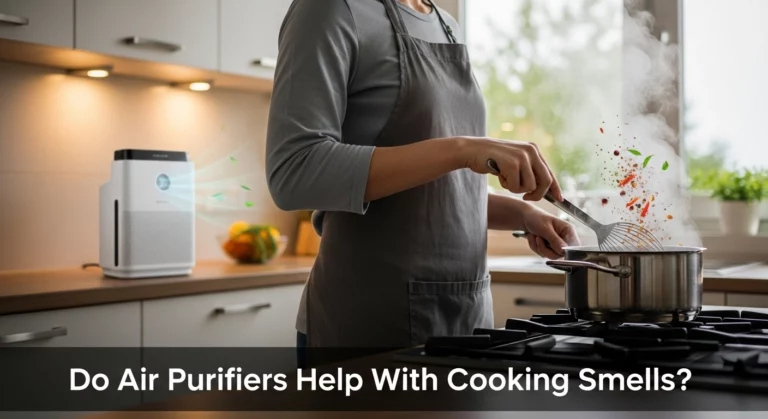
Carbon is full of tiny pores that trap gas molecules, which is how it absorbs smells and some household chemicals. The same idea is used in some water filters, such as a shower filter for hard water. The amount of carbon matters. A thick layer handles odors well, while a thin carbon-coated sheet only helps with light smells. If kitchen odors are your main concern, it’s worth knowing how well air purifiers handle cooking smells before you buy.
Ionizers and Ozone
Some purifiers release charged ions that make particles clump together and drop out of the air. They then settle on floors and surfaces instead of being trapped. Some ionizers also produce ozone, which can irritate the lungs, and ozone generators sold as “air cleaners” are best avoided. If you choose a model with an ionizer, pick one with a switch to turn it off and check for low-ozone certification, such as CARB.
UV-C Light
Some units include a UV-C lamp to kill germs. Air moves past the light quickly, so exposure is short, and its effect in real homes is limited. Treat it as a bonus feature, not a reason to buy.
How a HEPA Filter Traps Tiny Particles
A HEPA filter is a dense mat of very fine fibers. It doesn’t work like a sieve. Particles get caught in three ways:
- Impaction: larger particles can’t turn with the airflow, so they hit a fiber and stick.
- Interception: medium particles follow the airflow but brush against a fiber.
- Diffusion: the smallest particles bounce around randomly and end up hitting a fiber.
Particles around 0.3 microns are the hardest to catch, which is why HEPA filters are tested at that size. Larger and smaller particles are caught even more efficiently.
What Do Air Purifiers Remove?
An air purifier can help with:
- Dust and dust mite debris floating in the air
- Pollen that drifts in from outside
- Pet dander from cats and dogs
- Mold spores in the air
- Smoke particles, including wildfire smoke
- Some odors and gases, if the unit has a good carbon filter
An air purifier can’t fix:
- Poor ventilation
- Allergens that have already settled on carpets, bedding, and furniture
- Carbon monoxide, radon, and other gases that a standard purifier isn’t built to remove
- The cause of the problem, such as mold growing on a wall or smoking indoors
Advantages of Air Purifiers
Air purifiers also have clear benefits:
- Fewer airborne particles. True HEPA filters capture most dust, pollen, pet dander, and smoke particles from the air that passes through them.
- Allergy trigger reduction. Lowering airborne allergens may ease symptoms for some people, though results vary from person to person.
- Odor and gas reduction. Units with activated carbon filters can reduce cooking smells, smoke odors, and some household chemicals.
- Cleaner air during smoke or high-pollution days. They can help lower indoor particle levels during wildfire smoke or heavy outdoor pollution, especially with windows closed.
- Quiet sleep-friendly modes. Many models have low-speed or night settings that run quietly while still filtering.
- Easy to use. Most units just plug in and run, with filter indicators that tell you when to replace the filter.
- Targets problem rooms. You can place one in the bedroom, nursery, or home office, where you spend the most time.
- Works alongside other steps. They complement good habits like regular cleaning and ventilation, without replacing them.
Disadvantages of Air Purifiers
Air purifiers have some downsides worth knowing:
- Ongoing cost. Replacement filters can be expensive, and you’ll need to buy them regularly.
- Noise. Higher fan speeds can be loud, which matters in a bedroom.
- Limited coverage. Each unit only cleans one room, and only if it’s the right size.
- Not a full solution. They don’t remove settled allergens, most gases, or the source of pollution.
- Ozone risk. Ionizers and ozone generators can produce ozone. Stick with true HEPA and carbon filtration.
- Maintenance. Neglected filters lose effectiveness.
Should You Run an Air Purifier All Day?
In most cases, yes. New dust, dander, and other particles keep entering the air, so running the purifier continuously keeps levels down. Many models use very little power on low settings. If you want to save energy or filters, run it while you’re home, and turn it up during cooking, cleaning, or high-pollen days.
Is It Safe to Sleep Near an Air Purifier?
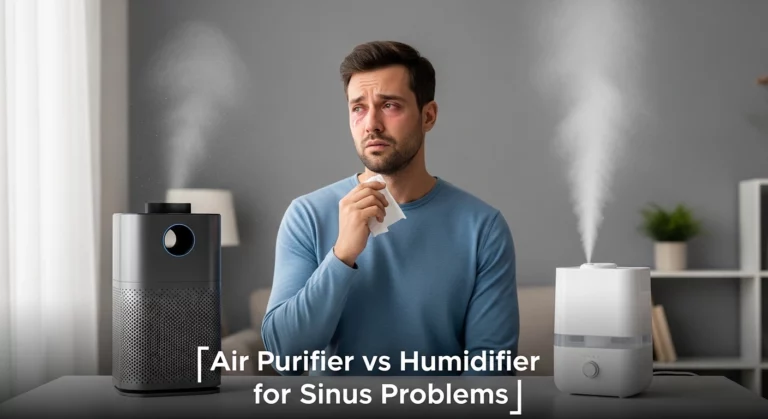
It’s generally safe, and many people find it helpful, as long as the unit doesn’t produce ozone. Choose a HEPA model with a quiet sleep mode, and place it a few feet from your bed so the airflow doesn’t blow directly on you. Turn off any ionizer function if you’re unsure about ozone.If you’re mainly dealing with a stuffy nose or sinus irritation at night, see whether an air purifier or humidifier is better for sinus problems before you buy.
Air Purifier vs AC: Which Is Better?
They do different jobs, so it isn’t an either/or choice. An air conditioner cools the air and removes some humidity, and its filter is usually basic, meant to protect the equipment. An air purifier is built to clean the air of particles. Neither replaces the other.
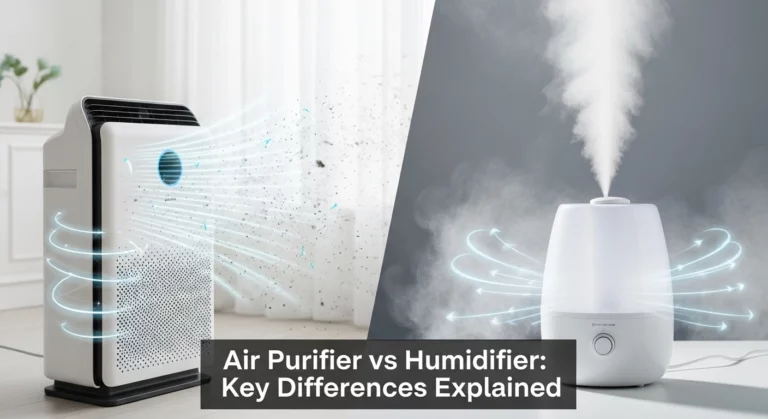
If your problem is dry air in winter, that’s a third tool. Purifiers don’t add moisture, and this is where a humidifier comes in. A humidifier for dry skin in a winter bedroom is a good example of when one is the better pick. Knowing the differences between air purifiers and humidifiers tells you when you need which.
Ratings That Tell You if It Will Work in Your Room
CADR (Clean Air Delivery Rate)
CADR shows how much filtered air a unit delivers per minute, with separate numbers for smoke, pollen, and dust. Higher is better. A common rule of thumb is a CADR of at least two-thirds of your room’s area in square feet, so a 300 sq ft room needs about 200.
Air Changes per Hour (ACH)
ACH is how many times per hour the unit can clean the full volume of air in the room. For allergies, four to five air changes per hour is often suggested.
Room Size
Every unit lists a maximum room size. Choose one rated for a room a little larger than yours. In a small bedroom, noise level matters as much as power, which is why a quiet model is worth looking for.
Tips to Get Better Results
Deal with the source. Vacuum with a HEPA vacuum, wash your bedding every week, and fix damp spots before mold can grow. A purifier works best when there are fewer particles to catch.
Keep it running. Leave the purifier on a low or medium setting all day, since new dust and pollen keep entering the room.
Give it breathing room. Place it at least a foot or two away from walls, corners, and furniture so air can flow in freely.
Close doors and windows. The purifier only cleans the air in the room, so fewer drafts from outside means cleaner air for longer.
Change filters on time. True HEPA filters usually last 6 to 12 months, while carbon filters often need replacing sooner. A clogged filter cleans less and puts more strain on the fan.
Final Thoughts
An air purifier is a fan plus filters. A true HEPA filter handles fine particles, carbon helps with odors, and the unit needs to match your room size. It won’t replace cleaning or fresh air, but it can noticeably reduce what floats around your home.
Frequently Asked Questions
What are the disadvantages of an air purifier?
The main ones are filter replacement costs, noise at higher speeds, and coverage limited to one room. They also don’t remove allergens that have settled on surfaces, and ionizer models can produce ozone.
Does an air purifier really work?
Yes, for airborne particles like dust, pollen, pet dander, and smoke, provided it has a true HEPA filter and is the right size for your room. It doesn’t replace cleaning, and it isn’t a medical treatment.
Should you leave an air purifier on all day?
In most cases, yes. New particles keep entering the air, so continuous use on a low setting keeps levels down. Many models use little electricity.
Is sleeping with an air purifier good, and is it safe?
It’s generally safe and can help if you have dust or pet allergies. Choose a HEPA model without ozone output, use a quiet sleep mode, and place it a few feet from your bed.
Which is better, an AC or an air purifier?
They do different jobs. An AC cools the air and has only a basic filter, while an air purifier removes particles. One doesn’t replace the other.

- Best Heating Pads for Back Pain: Electric, Cordless, or Microwavable? - October 9, 2026
- How Do Air Purifiers Work? Inside the Filtration Process - October 9, 2026
- How to Use a Massage Gun: A Safe Guide for Beginners - October 7, 2026