Best Treadmills for Apartments Built Around Small-Space Living
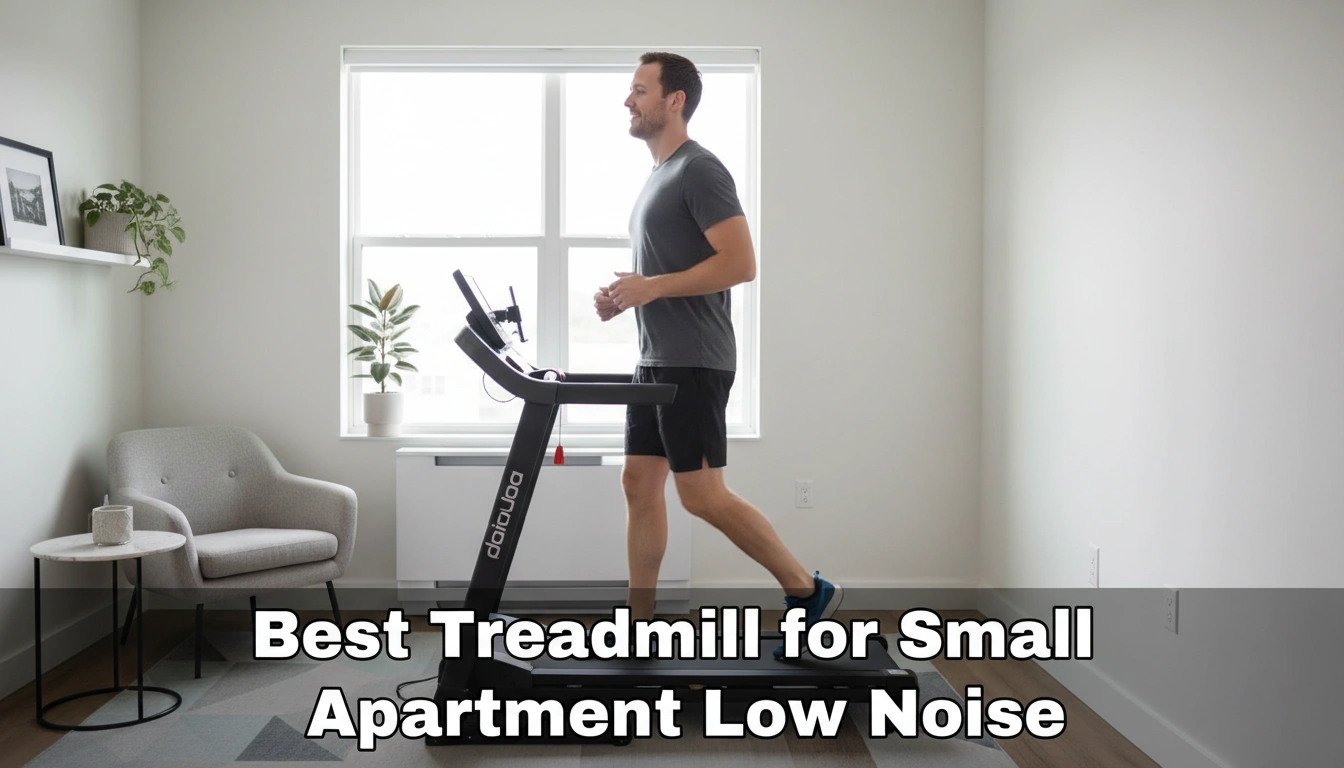
Finding the best treadmill for small apartment low noise use means choosing a model that combines quiet performance, compact size, and reliable cushioning for comfortable daily workouts. After reviewing the top options, the KASSADIN 3.0HP Treadmill is our best overall pick for its excellent shock absorption, stable design, and smooth, low-noise operation. Below, we’ll compare the top 3 treadmills to help you find the right option for your apartment, fitness goals, and budget.
Product Name | Key Clinical Feature | Best For | Price |
|---|---|---|---|
1. KASSADIN 3.0HP Treadmill | Layered shock absorption | Overall joint protection | |
2. Buztrio Walking Pad | Honeycomb impact cushioning | Gait and posture correction | |
3. THERUN Under Desk Pad | Silicone shock absorbers | Lumbar spine safety |
1. KASSADIN Walking Pad with Handle Bar
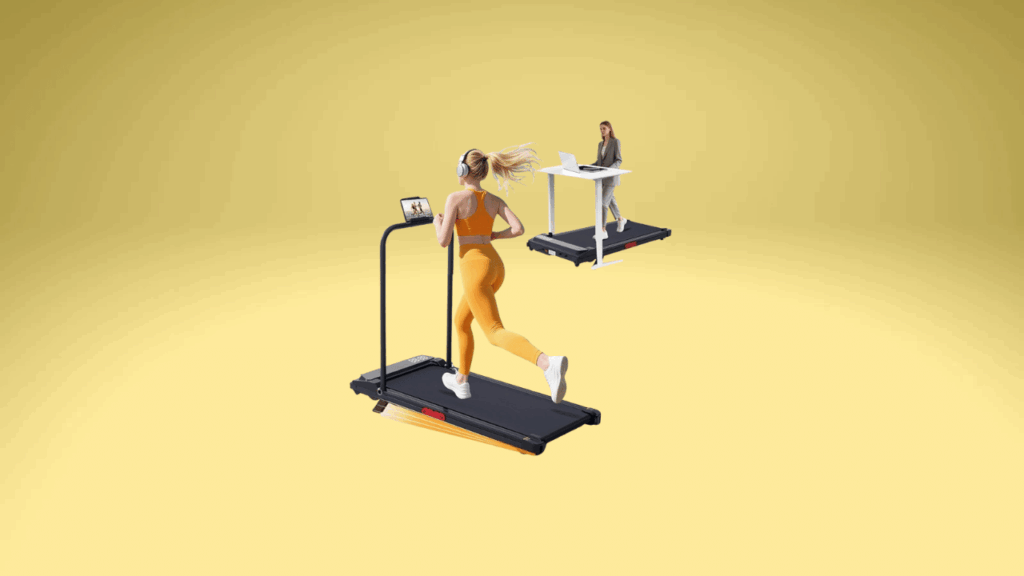
The KASSADIN pairs a rigid steel handlebar with a 3.0HP brushless motor, giving you a stable platform where the belt pulls evenly and your pace stays controlled without fighting the machine. A multi-layer shock-absorbing deck compresses on heel strike, cutting the impact load that causes knee and ankle problems on harder surfaces. As a compact treadmill for apartment use, it covers structured daily cardio without demanding a large footprint.
Why We Picked It:
The handlebar and layered deck together create a controlled, low-impact environment that protects joints while building aerobic consistency from day one.
Pros:
Stable handlebar prevents overstriding; heavy internal shock absorption protects knees; 3.0HP motor runs smoothly at all walking speeds without audible strain.
Cons:
Walking track is narrower than full-size treadmills; handlebar height sits lower than ideal for taller users; minor speed readout inaccuracies at the lowest settings.
2. Buztrio Walking Pad Treadmill for Home
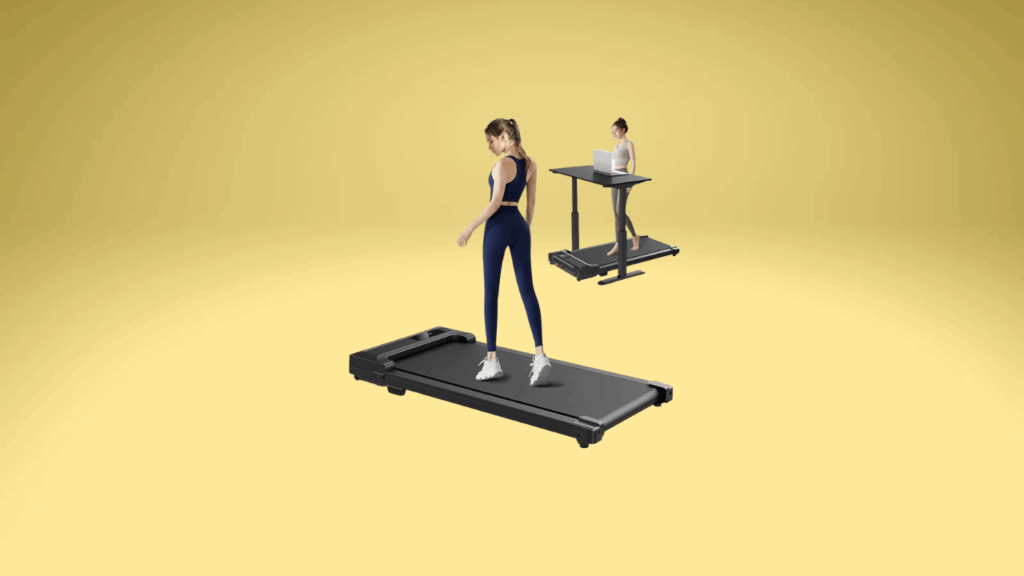
The Buztrio stores flat under a sofa or bed when not in use, solving the footprint problem full-size machines never address. Its motor stays capped below 4 mph, keeping floor vibration low enough for shared apartment buildings, while the honeycomb cushioning distributes body weight evenly across the belt. If you are deciding between a walking pad vs treadmill with a handlebar, this is the pick when storage space wins.
Why We Picked It:
A genuinely quiet motor paired with a fold-flat frame makes this the most apartment-friendly option for users who prioritize discretion and storage over speed range.
Pros:
Ultra-compact frame stores completely flat; motor noise stays low enough for video calls; honeycomb cushioning absorbs repetitive impact effectively.
Cons:
Short belt limits stride length for users over 5’10”; no safety handrails; belt requires periodic manual realignment.
3. THERUN Walking Pad Treadmill Under Desk
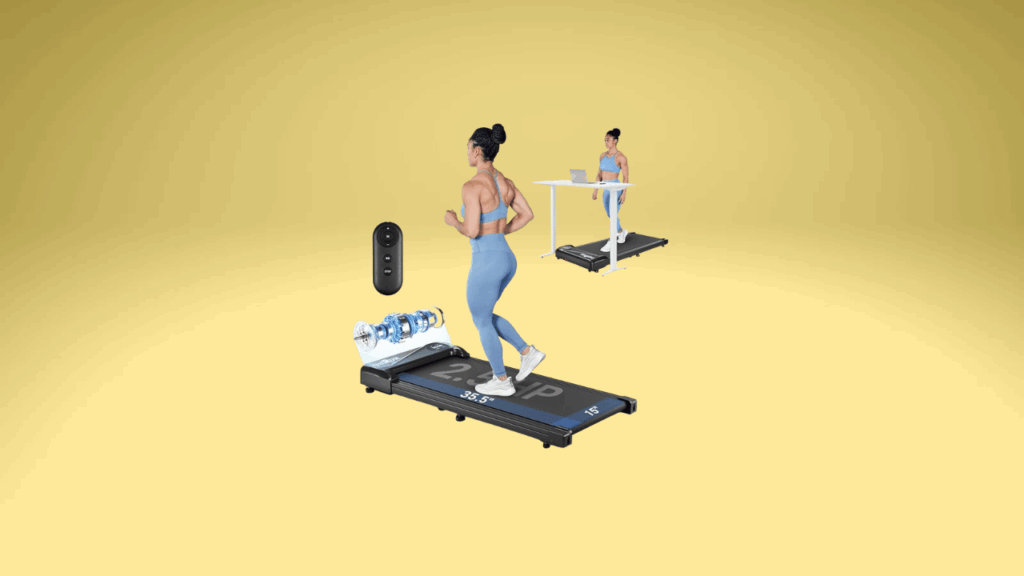
Six silicone shock absorbers beneath a five-layer belt make the THERUN built for hours of daily low-speed walking, not just occasional sessions. The motor disappears into background noise during calls, and the slim profile fits cleanly under a standing desk without protruding. As a dedicated walking pad under desk solution, it handles continuous 1-2 mph use more reliably than general-purpose pads repurposed for that role.
Why We Picked It:
Six silicone absorbers and a five-layer belt specifically address the repetitive low-speed impact pattern of all-day desk walking, where most pads wear prematurely.
Pros:
Silicone shock absorbers handle extended daily sessions; low motor noise disappears under ambient sound; slim profile fits under standard standing desks without clearance issues.
Cons:
Short power cord limits desk placement flexibility; belt can shift slightly at maximum speed; not suitable for jogging or running pace.
Why Noise and Vibration Matter More in Apartments Than You Think
A treadmill for small apartment use faces a constraint that gym equipment never does: the floor transmits everything to the unit below you. Impact noise travels through concrete and wood-frame construction at frequencies that are harder to block than airborne sound. A machine that registers 60 dB on a spec sheet can still generate enough structural vibration to disturb a neighbor through the floor. The practical fix is a combination of a brushless motor, thick rubberized stabilizing feet, and a cushioned deck, all three working together. A vibration plate workout generates a very different vibration signature than a treadmill motor, but the same principle applies: mass and damping material between the machine and the floor determine how much of that energy transfers downward.
Running a treadmill on a thick rubber mat adds meaningful damping without modifying the machine itself. For carpeted floors, a rigid board beneath the mat prevents the belt rollers from sinking unevenly, which causes premature motor strain and audible scraping. Small treadmills for home use perform significantly longer when the surface they sit on is level and firm.
How to Build a Real Cardio Routine Around a Compact Treadmill
Start with Consistency, Not Speed
Twenty minutes of daily walking at 2.5 mph builds more sustainable cardiovascular base than three weekly sessions at 4 mph because the former becomes automatic while the latter requires motivation every time. Treadmills for apartment use work best when they are placed somewhere visible rather than stored away, because a machine you have to retrieve is a machine you will use less often.
Add Resistance When Walking Feels Easy
Once flat walking no longer elevates your heart rate noticeably, adding light handheld weight creates cardiovascular demand without requiring a faster belt speed. Pairing adjustable dumbbells with a walking session produces an upper-body conditioning stimulus that a treadmill alone cannot deliver, and the combined workout fits in the same floor space as the machine itself.
Cross-Train to Protect the Hip Flexors
Walking the same pattern daily tightens the hip flexors over time, which pulls the pelvis anterior and loads the lumbar spine. Alternating treadmill days with a low-impact alternative breaks that pattern. A rowing machine works the posterior chain that treadmill walking underloads – glutes, hamstrings, and upper back – making the combination more complete than either tool alone.
Treadmill Maintenance Habits That Prevent Noise Problems
Most of the scraping, squeaking, and motor strain that apartment treadmill owners complain about after six months traces back to two neglected tasks: belt lubrication and roller tension. A dry belt generates friction against the deck that escalates into audible scraping, which transmits through the floor as a rhythmic thud. Applying silicone belt lubricant every three months takes under five minutes and extends both belt and motor life substantially.
Belt tension drift is the second culprit. As the belt stretches slightly with use, it begins to track off-center, creating uneven roller wear and a subtle lateral slapping noise. Most compact treadmills include a hex key in the package specifically for roller bolt adjustment. Checking and correcting belt tracking monthly prevents the kind of mechanical deterioration that generates noise complaints in apartment settings.
Quick Buying Guide: What to Prioritize for Apartment Treadmills
Feature | What to Look For |
Shock Absorption | Silicone elastomers or multi-layer decking protect knees and ankles from impact |
Motor Type | Brushless motors run significantly quieter; essential for apartment walls and floors |
Belt / Deck Length | Minimum 40″ for a natural walking stride; short belts alter gait and cause joint stress |
Folding Mechanism | Fold-flat or under-desk profile determines whether the machine fits your floor plan |
Speed Range | 0.5-4 mph covers walking and light jogging; higher speeds matter only for runners |
Weight Capacity | Choose a machine rated at least 50 lbs above your body weight for motor longevity |
Noise and shock absorption should rank above speed range and incline for most apartment buyers. A machine rated for 8 mph is not useful if running at 5 mph shakes the ceiling below you. Prioritize the mechanical fundamentals first and add features only once those are confirmed.
Frequently Asked Questions
What is the best treadmill for an apartment?
The best apartment treadmill balances noise output, floor footprint, and shock absorption. The KASSADIN 3.0HP is the strongest all-around option when you want a full walking workout with handlebar support. The THERUN is the better pick if you plan to walk while working. Both use brushless motors and cushioned decks that handle the noise and vibration constraints apartments impose.
What is the best small treadmill for an apartment?
The Buztrio Walking Pad is the most compact option reviewed here, storing flat under furniture when not in use. Its honeycomb cushioning and sub-4 mph motor keep noise low enough for shared walls. For a slightly more capable machine in a similar footprint, the THERUN adds silicone absorbers that hold up better under extended daily sessions.
What is the best compact treadmill for small spaces?
Under-desk walking pads are the most space-efficient category. The THERUN edges out the competition in this category because its silicone shock system handles the repetitive low-speed impact of all-day use, where other compact pads generate increasing noise as the belt wears. Any small treadmill for apartment use should be placed on a rubber mat to further reduce floor vibration transfer.
Will I lose weight if I walk on the treadmill 30 minutes every day?
Walking 30 minutes daily creates a consistent caloric deficit that supports gradual fat loss when paired with appropriate dietary intake. The rate depends on body weight and walking pace, but most adults burn 100-200 calories per 30-minute session at moderate walking speed. The larger benefit is metabolic: daily movement improves insulin sensitivity and reduces the cardiovascular risk that accumulates from sedentary work habits.
Are treadmills OK in apartments?
Yes, with the right machine and setup. A brushless motor, cushioned deck, rubber isolation mat, and a speed limit of 4 mph or below keeps noise and vibration at levels that are generally compatible with apartment living. Running pace on any treadmill generates structural vibration that most apartment buildings will transmit to adjacent units – walking pace is the practical ceiling for most apartment treadmill use.

- Best Heating Pads for Back Pain: Electric, Cordless, or Microwavable? - October 9, 2026
- How Do Air Purifiers Work? Inside the Filtration Process - October 9, 2026
- How to Use a Massage Gun: A Safe Guide for Beginners - October 7, 2026