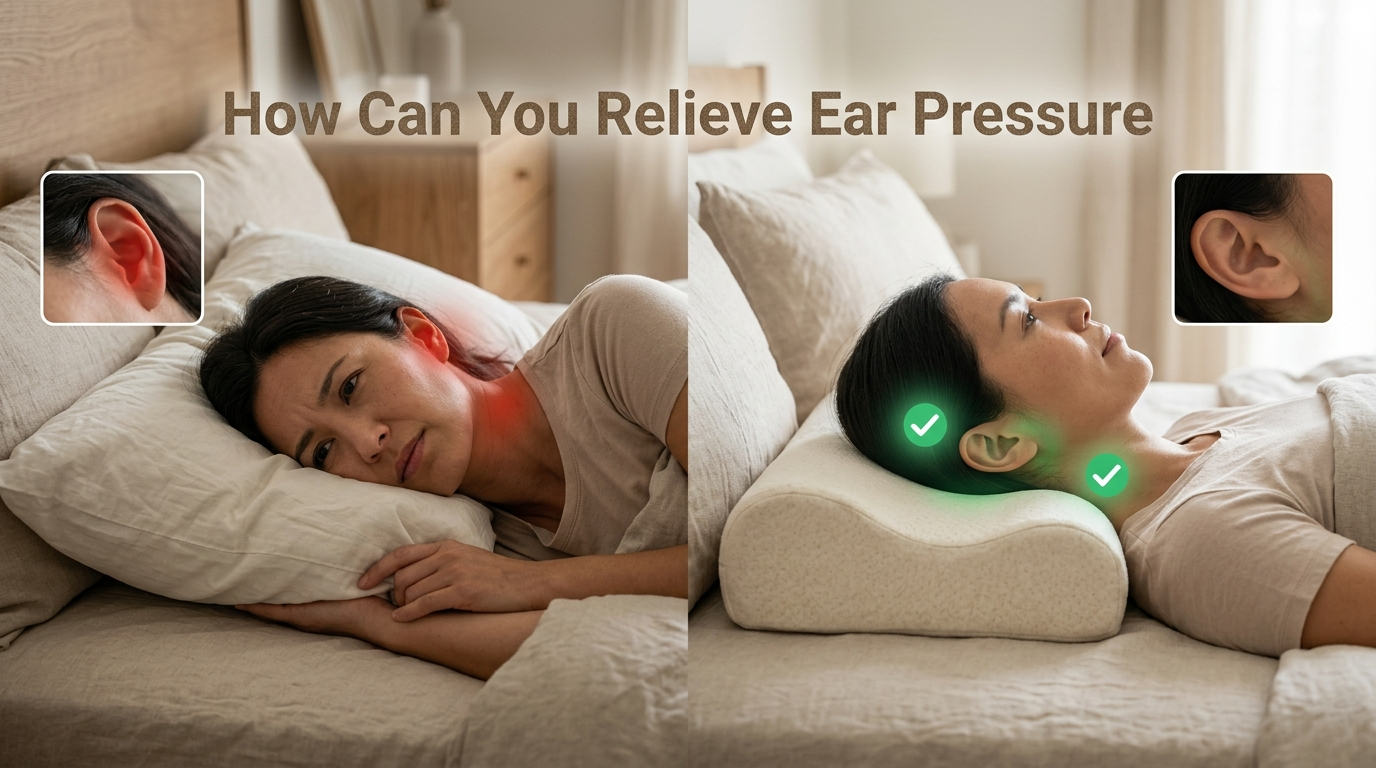
How Can You Relieve Ear Pressure When Your Ear Feels Blocked?
To relieve ear pressure, try the Valsalva maneuver (pinch your nose, close your mouth, and gently blow). Swallowing, yawning, chewing gum, steam inhalation, and nasal saline rinses also help open the Eustachian tube. For pressure that worsens at night, adjusting your sleep position and switching to a pressure-relieving pillow can make a significant difference.
This guide covers the most effective ways to relieve ear pressure, including some sleep and pillow-related factors that most articles overlook entirely.
What Causes Ear Pressure to Build Up?
Understanding the source helps you pick the right fix. The Eustachian tube is normally closed and opens briefly when you swallow or yawn. When something stops it from opening properly, pressure builds on one or both sides of the eardrum.
Common triggers include:
- Sinus congestion from a cold, flu, or allergies
- Altitude changes during flights, mountain drives, or diving
- Fluid buildup from an ear infection
- Jaw tension or TMJ dysfunction compressing nearby structures
- External pressure from sleeping on a hard or flat surface
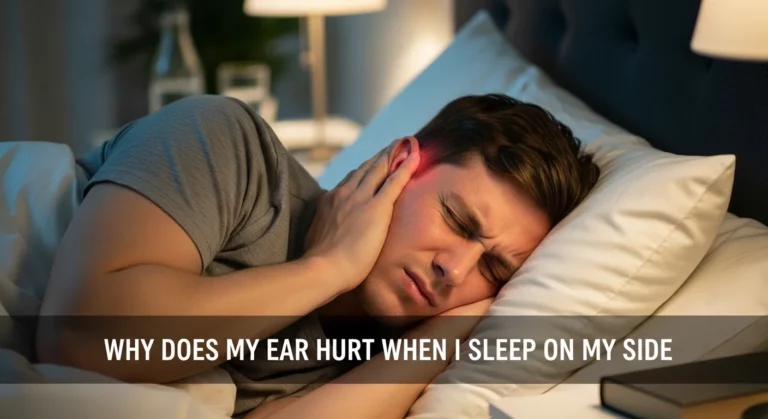
That last point is worth highlighting. Side sleepers often compress the outer ear and the surrounding cartilage against a pillow, which can worsen the feeling of fullness, especially overnight.
How to Relieve Ear Pressure Fast: Methods That Actually Work
1. The Valsalva Maneuver
This is the standard technique recommended by ENT specialists for pressure caused by altitude or congestion.
- Pinch both nostrils shut with your fingers
- Close your mouth tightly
- Blow gently through your nose, as if blowing into a tissue
- You should feel or hear a small pop as the tube opens
Do not blow too hard. Forced pressure can strain the eardrum and make things worse. This works best for altitude-related ear pressure rather than infection-based blockages.
2. The Toynbee Maneuver (Swallowing Method)
If the Valsalva method feels too forceful, the Toynbee maneuver creates gentle negative pressure instead of pushing air through.
- Pinch your nose shut
- Swallow at the same time (take a sip of water if needed)
The muscle action of swallowing combined with the closed nasal passage creates a vacuum that pulls the Eustachian tube open. This is especially useful for sinus congestion and is gentler on the eardrum.
3. Chewing and Jaw Movement
Your Eustachian tubes are controlled partly by a muscle called the Tensor Veli Palatini, which is activated every time you chew. Chewing gum during a flight descent or when pressure builds up stimulates this muscle repeatedly, helping the tube open on its own.
If you have no gum, try exaggerated jaw movements: open wide and move your jaw side to side. This is also useful for people whose ear pressure is connected to jaw tightness or TMJ issues.
4. Steam Inhalation
Thick mucus is often the reason the Eustachian tube stays shut. Steam thins the mucus, allowing it to drain and restoring normal airflow through the tube.
- Sit in a hot shower and breathe through your nose for 10 to 15 minutes
- Or fill a bowl with hot water, lean over it with a towel over your head, and inhale slowly
This works best when ear pressure is caused by a cold, flu, or sinus congestion. It is less effective for pressure from altitude or jaw tension.
5. Nasal Saline Rinse
A saline rinse (Neti pot or saline spray) flushes allergens and thick mucus from the nasal passages. By clearing the back of the nasal cavity near the Eustachian tube opening, it restores the airflow needed for natural pressure equalization.
This method is particularly effective for allergy-related ear pressure and recurring congestion. It is also one of the safest options because it involves no medication.
6. Warm Compress
Applying heat to the ear and the area behind the jaw improves blood flow and reduces inflammation in the surrounding tissue. Soak a washcloth in warm water, wring it out, and hold it against the ear for 10 minutes. The warmth also helps loosen mucus near the tube opening.
How to Relieve Ear Pressure While Sleeping
Nighttime is when ear pressure often feels worse. Lying flat removes the benefit of gravity-assisted drainage, and side sleeping can introduce a second problem: external compression.
Elevate Your Head
Keeping your head above your heart angle encourages the Eustachian tube to drain naturally downward into the throat. A wedge pillow or two stacked standard pillows can create enough of an incline to make a noticeable difference.
For people experiencing ear pain from sleeping on their side, elevation often reduces both the internal pressure and the external discomfort at the same time.
Switch to a Pressure-Relieving Pillow
Standard flat pillows press directly against the outer ear, compressing the cartilage and the ear canal. This external pressure compounds the internal feeling of fullness and can make it harder for the tube to equalize.
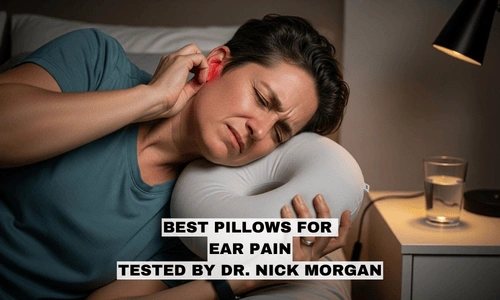
A pillow with a hole suspends the ear inside a hollow cavity, removing all contact pressure while you sleep. This keeps the surrounding tissue decompressed and unobstructed throughout the night, something a regular pillow cannot do regardless of its material.
The same concept applies to pillows designed specifically for ear pain, which use a cut-out or contoured cavity to float the ear rather than flatten it.
Sleep on the Unaffected Side
If only one ear is blocked, try sleeping with that ear facing upward. Gravity will encourage drainage toward the throat rather than allowing fluid to pool near the blocked tube. Avoid sleeping with the affected ear pressed against the pillow.
For a full breakdown of how position affects ear symptoms overnight, sleeping position and ear pain explores this in more detail.
How to Relieve Sinus Pressure in Ears
Sinus-related ear pressure has one root cause: inflammation in the nasal passages blocks the opening of the Eustachian tube. The most effective approach targets that inflammation directly.
- Use a nasal saline rinse morning and night during allergy or cold season
- Inhale steam before bed to thin overnight mucus buildup
- Run an air purifier with a HEPA filter to reduce airborne allergens in your bedroom
- Stay well hydrated, because thin mucus drains more easily than thick mucus
- Elevate your head while sleeping to prevent fluid pooling near the tube
Short-term use of a decongestant containing pseudoephedrine can also shrink the swollen blood vessels in the nasal passages, creating space for the tube to function normally. However, nasal decongestant sprays should not be used for more than three consecutive days because they can cause rebound congestion that is worse than the original blockage.
Why Won’t the Pressure in My Ear Go Away?
Most ear pressure resolves within a few hours to a few days. When it persists beyond two weeks, or when it is accompanied by hearing loss, fluid drainage, fever, or dizziness, there is usually an underlying reason.
Common reasons pressure does not clear on its own:
- Eustachian tube dysfunction: the tube itself is structurally impaired and does not open reliably
- Chronic fluid in the middle ear (otitis media with effusion): fluid that does not drain on its own
- Jaw or TMJ dysfunction: tight jaw muscles physically compress the tube
- Enlarged adenoids: tissue at the back of the nasal cavity blocks the tube opening
- Perforated eardrum: pressure cannot equalize because the eardrum has a hole in it
If home remedies have not worked after two weeks, see an ENT specialist. A doctor can perform a tympanometry test to measure pressure inside the middle ear and identify whether you need a prescription decongestant, physical therapy for TMJ, or a minor procedure like ear tube insertion.
Why Do I Feel Pressure in Only One Ear?
Pressure in one ear only is more common than bilateral pressure. The Eustachian tubes are separate structures that open and close independently, so one can become blocked while the other functions normally.
Single-ear pressure is most often caused by:
- Sleeping consistently on one side: the same ear gets repeatedly compressed night after night
- A localized infection or fluid pocket in one ear
- Wax buildup narrowing one ear canal specifically
- Noise exposure or barotrauma affecting one ear more than the other
If you consistently experience pressure in one ear, pay attention to which side you sleep on. Alternating sleep positions and using a pillow that reduces direct ear contact can sometimes resolve low-grade single-ear pressure without any other treatment.
Home Remedies for Ear Pressure from Infection
Ear infections can produce significant pressure because fluid accumulates behind the eardrum and has no outlet. Home remedies help manage symptoms, but they do not treat the underlying infection. For a detailed approach to this scenario, home remedies for ear infections covers the full range of options.
What helps with infection-related pressure:
- Warm compress held against the ear for 10 to 15 minutes: reduces inflammation and mild pain
- Head elevation while sleeping: prevents fluid from pooling in the middle ear
- OTC pain relief like ibuprofen or acetaminophen: addresses inflammation and discomfort
- Avoiding pressure-equalizing maneuvers: do not try the Valsalva maneuver if you suspect an infection, as forcing air into an infected ear can push bacteria deeper
Bacterial ear infections generally require antibiotic treatment from a doctor. Do not delay if you have fever, severe pain, or fluid draining from the ear.
Conclusion
Relieving ear pressure almost always comes down to one question: what is blocking the Eustachian tube? Once you identify whether the cause is altitude, congestion, infection, jaw tension, or external sleep pressure, you can match the right technique to the problem instead of guessing.
For immediate relief, mechanical methods like the Valsalva maneuver, jaw movement, and swallowing work fastest. For congestion and sinus-related pressure, steam and saline address the root cause. For overnight discomfort, elevating your head and reducing direct pressure against the ear are often the two changes that make the biggest difference.
If pressure persists beyond two weeks or comes with other symptoms, see an ENT. Most cases resolve with simple interventions, but persistent blockage deserves professional attention.
Frequently Asked Questions
How can I clear blocked ear pressure quickly?
Pinching your nose and blowing gently (the Valsalva maneuver) is the fastest option for altitude-related blockage. For congestion-related pressure, steam inhalation or a saline rinse works faster than other methods because it targets the mucus directly.
How to get rid of ear pressure fast at home?
Chew gum, yawn, or swallow repeatedly to activate the muscles that open the Eustachian tube. If those do not work, try steam for 10 minutes followed by a saline rinse. Most mild cases of ear pressure resolve within 30 to 60 minutes of consistent effort.
What can I do if my ears won’t unpop?
If standard maneuvers are not working, the blockage may be caused by swelling rather than pressure imbalance. A nasal decongestant (used short-term) combined with steam therapy and jaw exercises addresses swollen tissue. If your ears have not popped after 24 to 48 hours, consult a doctor.
Why can’t I depressurize my ears?
When the Eustachian tube is swollen or physically obstructed, no amount of blowing or swallowing can force it open. Underlying causes include severe sinus congestion, Eustachian tube dysfunction, or TMJ compression. An ENT can assess whether medical or procedural intervention is needed.
Does sleeping position affect ear pressure?
Yes, significantly. Lying flat removes gravity-assisted drainage and allows fluid to pool near the tube opening. Side sleeping adds external compression against the ear. Elevating your head and sleeping with the affected ear facing upward are the two most practical nighttime adjustments.
How do I relieve sinus pressure in my ears?
Target the nasal passages first. A saline rinse flushes out the congestion blocking the tube opening. Steam thins the remaining mucus. Sleep elevated to encourage overnight drainage. During allergy season, an antihistamine can reduce baseline inflammation before pressure has a chance to build.

- Best Lumbar Support Pillows: Which Ones Really Help? - October 14, 2026
- Best Heating Pads for Back Pain: Electric, Cordless, or Microwavable? - October 9, 2026
- How Do Air Purifiers Work? Inside the Filtration Process - October 9, 2026