Best Hand Massagers: Beyond Heat and Simple Compression
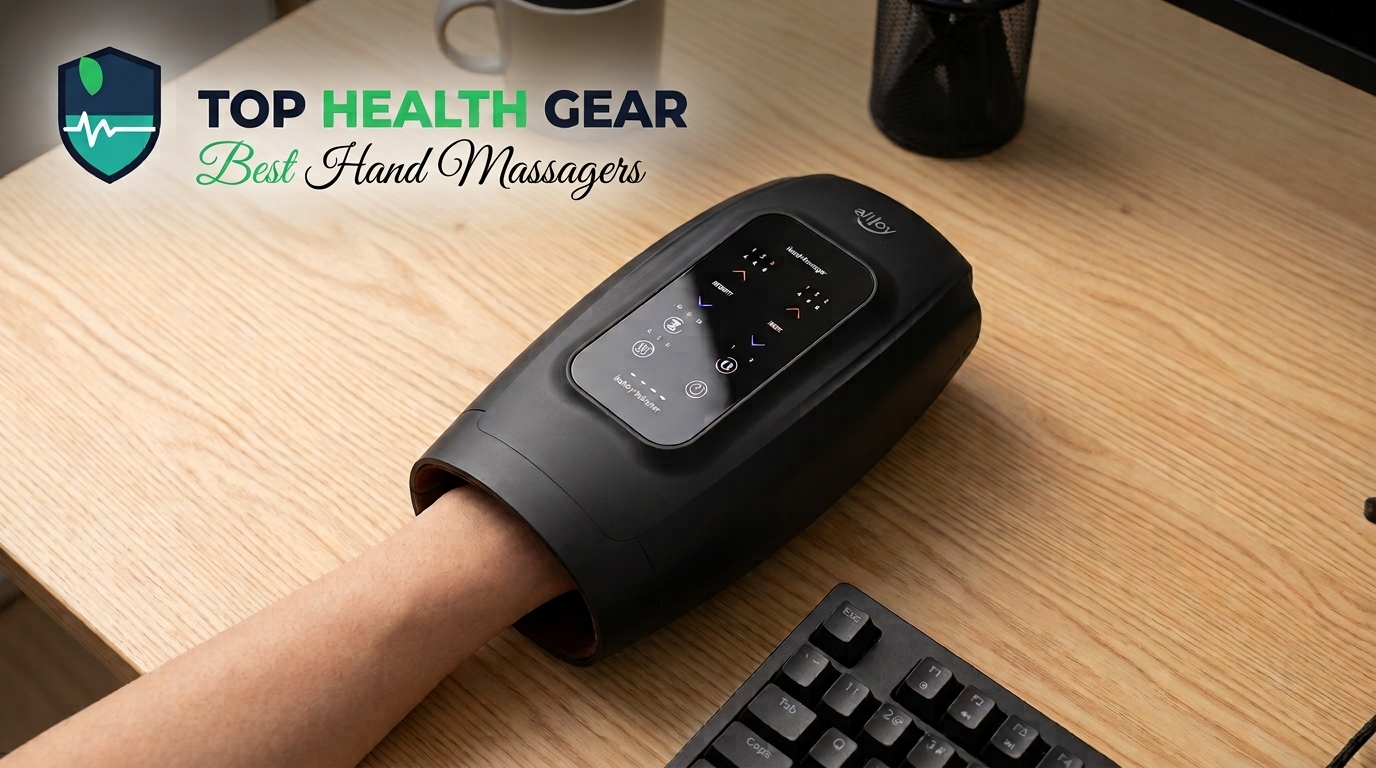
Whether you spend hours typing, gaming, crafting, or doing manual work, the best hand massager can help reduce stiffness, improve circulation, and relieve everyday hand fatigue. Among the models we tested, the ALLJOY Touchscreen Hand Massager earned our top recommendation for its customizable compression, soothing heat therapy, and user-friendly controls. Explore our top 3 picks below to find the hand massager that best matches your recovery needs and budget.
Product Name | Key Clinical Feature | Best For | Price |
|---|---|---|---|
1. ALLJOY Touchscreen | Intuitive LCD Control | Daily Hand Fatigue | |
2. Lunix LX7 Massager | Premium Air Compression | Severe Wrist Pain | |
3. ALLJOY Knuckle Stretch | Active Knuckle Stretching | Deep Joint Stiffness |
1. ALLJOY Hand Massager for Arthritis and Carpal Tunnel
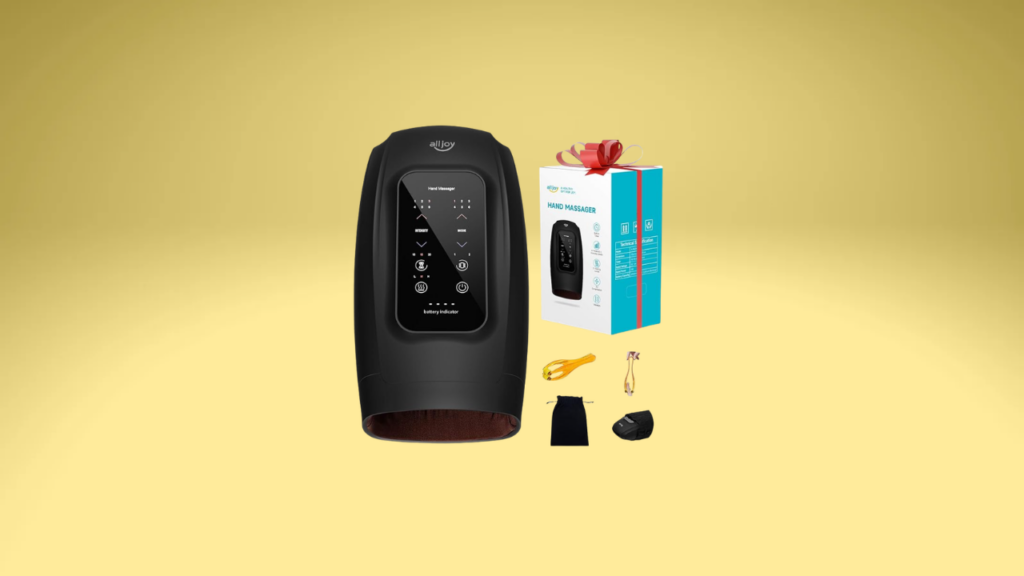
The touchscreen is the reason this one stays in daily rotation. You can see the mode and intensity on screen instead of cycling blind through button presses, which matters when your knuckles are already sore and you want a light setting first. Six pressure levels give you room to start gentle on inflamed joints and build up as the hand loosens, while the heat setting warms the palm enough that the airbags stop feeling like a pinch. It runs cordless, so a fifteen minute session happens on the sofa rather than next to an outlet.
Pros:
- Large touchscreen simplifies daily use
- Six intensity levels customize therapy
- Cordless design allows easy travel
Cons:
- Battery drains quickly on high
- Vibration feels slightly weak
Why choose it:
Pick this if you want clear controls and a wide intensity range for everyday hand fatigue rather than clinical grade pressure.
2. Lunix LX7 FSA LCD Touchscreen Hand Massager
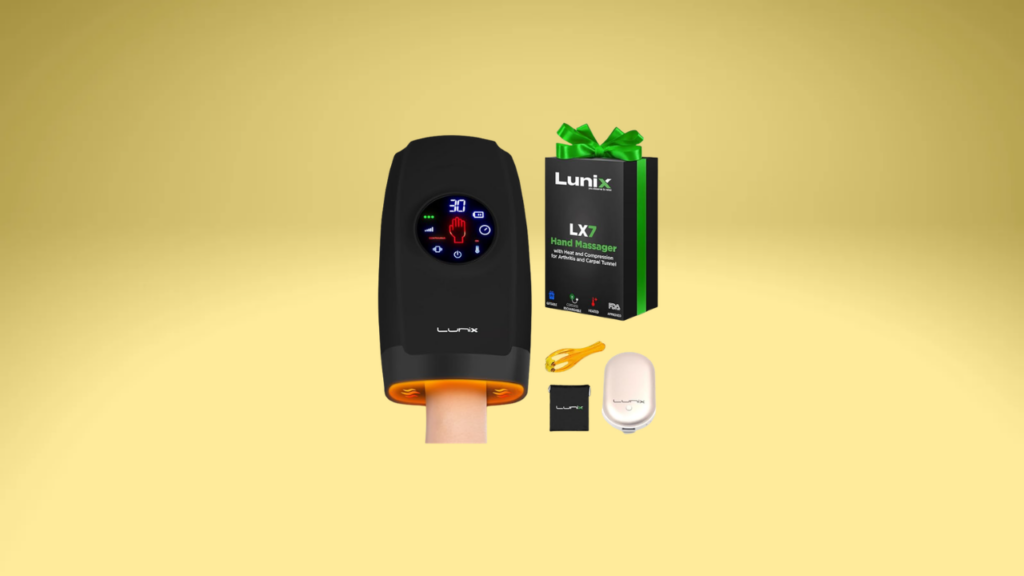
The Lunix is the one to reach for when light compression has stopped doing anything. Its pneumatic system wraps further up the wrist, so pressure lands on the carpal tunnel area instead of stopping at the palm, and four modes let you switch between a broad squeeze and a narrower point press. It is FSA eligible, which is worth checking if you have funds sitting in a health spending account. The included hand warmer is a small extra that gets used more than expected on cold mornings.
Pros:
- Strong compression reaches the wrist
- FSA eligible for health spending accounts
- Included hand warmer adds value
Cons:
- Glossy finish shows fingerprints
- Battery needs frequent charging
Why choose it:
Choose the LX7 if your pain sits in the wrist rather than the fingers and you need pressure that reaches past the palm.
3. ALLJOY Hand Massager with Knuckle Stretching
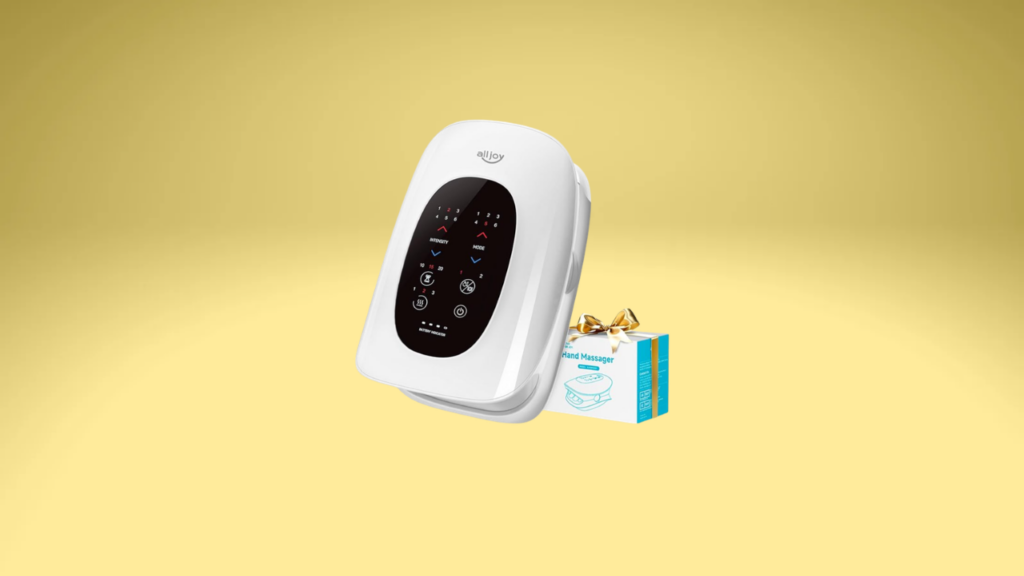
Most compact massagers just flatten the hand, which does nothing for fingers that have been curled around a phone or a steering wheel all day. This model adds a stretching action across the knuckles, so the joints open rather than only compress. The open end means long or wide hands sit inside without the fingertips getting crushed against a closed wall, and three heat levels let you soften stiff tissue before the pressure builds. The trade off is a firm first squeeze that takes a session or two to get used to.
Pros:
- Knuckle stretching targets stiff joints
- Three heat levels to choose from
- Open end fits larger hands
Cons:
- Finger holes feel awkward at first
- Compression squeezes hard on level one
Why choose it:
Go with this one if your main complaint is locked, stiff fingers and standard flat compression has not helped.
What Air Compression Actually Does to a Sore Hand
The airbags inflate in sequence, hold, then release, and it is the release that does most of the work. Blood rushes back into tissue that was briefly starved of it, carrying oxygen into the tendons that have been under load all day. Heat added on top widens those vessels before the pressure starts, which is why a warmed hand tolerates a higher intensity than a cold one. The mechanism is close to what happens with a percussion or kneading device, and the explanation of how deep tissue massagers work applies to the hand in the same way, just at lower force.
Arthritis Hands Need Lower Pressure, Not More
Osteoarthritis and rheumatoid arthritis respond differently to compression, and the mistake most people make is turning the intensity up during a flare. Swollen joints need gentle rhythmic pressure with heat, and a dedicated hand massager for rheumatoid arthritis will usually cap its top setting lower for exactly that reason. The same principle carries to other joints, which is why a knee massager for arthritis leans on warmth and slow cycles rather than raw force. If your symptoms are more tingling than aching, the pain is likely nerve driven, and it is worth reading whether a TENS unit actually works before spending on more compression.
Fix the Setup That Is Causing the Pain
A massager treats the symptom every evening while the desk keeps creating it every morning. Keyboard height, wrist angle and screen position all decide how much load your flexor tendons carry across an eight hour day, and correcting them cuts how often you need a session at all. Raising the screen usually starts the chain, and the same adjustment that solves a laptop stand and neck pain problem also pulls the wrists into a flatter, safer position. Pair that with a two minute stretch every hour and the massager becomes recovery rather than damage control.
Short Buying Guide
Compression strength and adjustability
Look for at least three pressure levels. A single fixed setting is either too weak to reach the deep palm muscles or too strong for a flare day.
Heat
Integrated heat is not a luxury feature here. Cold joints resist compression and can spasm, so warmth first makes the pressure both safer and more effective.
Open end design
Hands vary in length. A closed front crushes long fingertips and leaves short fingers massaging air, so an open chamber is the safer buy if you are not sure.
Cordless operation and timer
A rechargeable battery lets you use it when the stiffness actually hits. An auto shut off timer prevents the overuse that causes bruising.
Frequently Asked Questions
What is the best hand massager for hand pain?
For general hand pain from typing or gripping, the ALLJOY Touchscreen model was our top pick because it combines heat with six adjustable pressure levels. If the pain sits in the wrist rather than the fingers, the Lunix LX7 delivers stronger compression higher up the arm.
Does a hand massager really work?
For stiffness, circulation and muscle fatigue, yes. Compression and heat increase blood flow and relax tight tendons, and most users feel looser within one session. It does not repair structural damage such as a torn tendon or a badly compressed nerve.
How do I choose the right hand massager?
Match it to your symptom. Adjustable low pressure with heat for arthritis, deeper wrist compression for carpal tunnel, knuckle stretching for locked fingers. Then check that the chamber fits your hand size and that it runs on battery if you want to use it away from a desk.
Do hand massagers really help arthritis?
They help with the stiffness and swelling around arthritic joints, especially when heat is used. They do not slow cartilage loss or treat the underlying disease, and during an active rheumatoid flare you should keep the intensity low or skip the session.
How many times a day should you use a hand massager?
Two to three sessions of about fifteen minutes is a sensible ceiling for most people. Start on the lowest setting, and stop if you see redness or feel numbness rather than relief.

- Best Pillows for Ear Cartilage Pain to Make Side Sleeping More Comfortable - October 22, 2026
- How to Release a Shoulder Knot: 7 Simple Fixes That Work - October 22, 2026
- Best TENS Unit for Back Pain: The Right Pick for Your Pain, Budget, and Routine - October 20, 2026