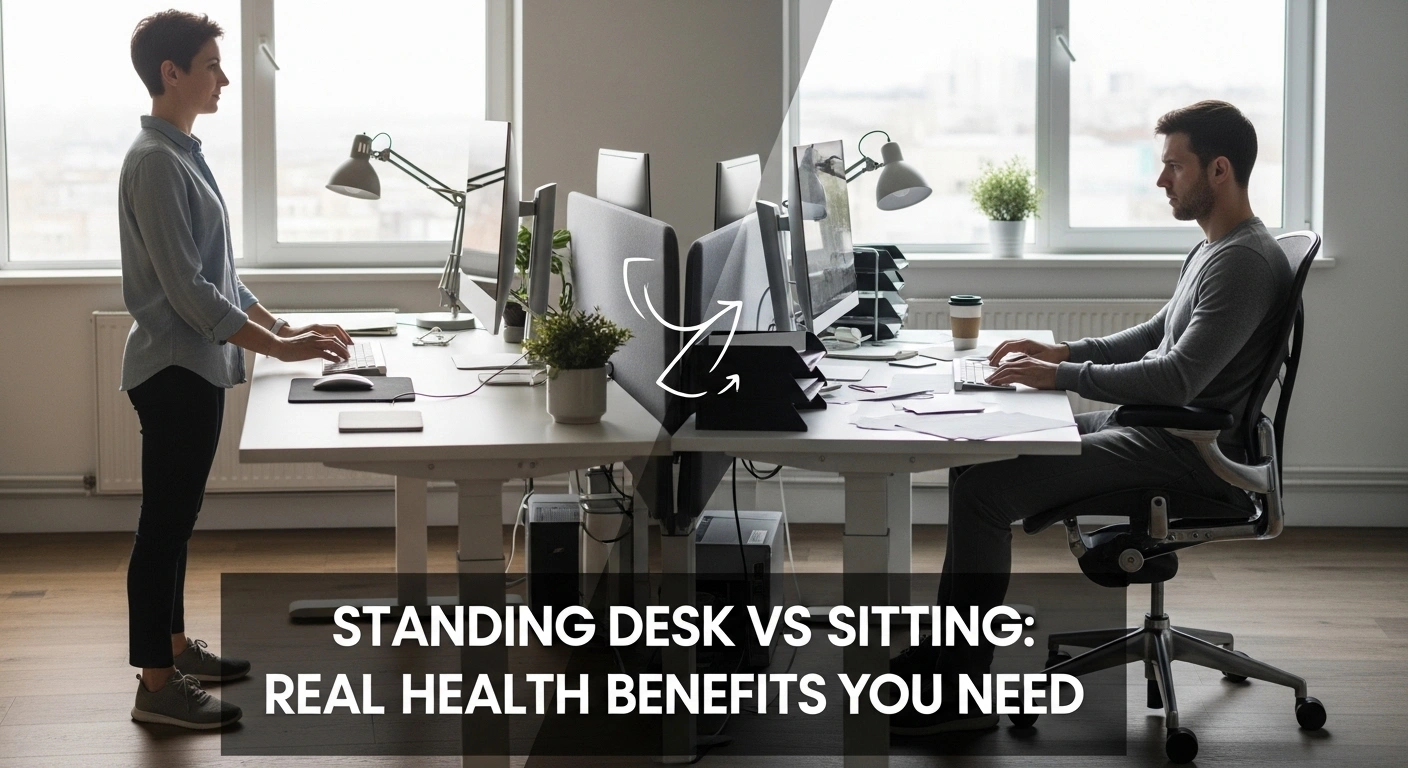
Standing Desk vs Sitting: Real Health Benefits You Need
We spend a massive chunk of our human lives glued to office chairs. It feels terrible when your lower back aches loudly by noon. You might feel totally drained before the work shift even ends. This daily physical struggle makes us desperately search for better solutions.
When analyzing a standing desk vs sitting, real benefits quickly emerge for your body. Finding the right physical balance can literally save your spine. Sitting down all day slowly shuts off your active muscles. A standing workstation brings immediate, healthy movement back into your stagnant routine.
You do not have to suffer through chronic pain at work anymore. The secret lies in frequently changing your physical position throughout the day. It is time to treat your tired body with the respect it deserves. We want to help you feel vibrant and fully alive during your office hours.
The Physical Toll of Constant Sitting
How Sedentary Behavior Hurts
Your human body was born to move around constantly. Sitting behind a monitor for hours tricks your brain into a deep resting state. This sedentary behavior slows your metabolic rate down to a painful crawl. Your muscles essentially fall asleep while you type away at your keyboard.
Your energy levels crash incredibly hard during the dreaded afternoon slump. You might reach for extra cups of coffee just to stay fully awake. This happens because your inactive body genuinely thinks it is time to sleep. Pushing through this heavy fog is incredibly frustrating for busy professionals.
A severe lack of physical activity creates long-lasting health problems. Your hip flexors tighten up painfully after just a few short hours. This deep tension pulls hard on your sensitive lower back muscles continuously. We have to break this cycle to protect your future health.
The Impact on Your Lower Back
Standard office chairs place an incredible amount of pressure on your lumbar spine. Gravity pushes down heavily on your compressed spinal discs all day. This constant downward force causes dull, throbbing pain over several years. Your spine was never meant to hold a seated shape for eight hours.
Many people in pain desperately wonder if Posture Correctors Actually Work will save them. While they offer nice temporary comfort, they do not fix constant sitting. You simply cannot brace your way out of a bad chair. True healing requires you to change your primary working position entirely.
Slouching forward stretches your back ligaments way beyond their safe physical limits. This unnatural stretch leads to severe neck stiffness and deep shoulder pain. Your skeletal structure is practically begging for a healthy change of scenery. Standing up relieves this terrible compression almost instantly.
Poor Circulation and Fatigue
Blood heavily pools in your feet and legs when you sit down. Your strong leg muscles normally act like physical pumps to push blood upward. Sitting completely turns off this natural, healthy blood pumping system. Your heart has to work much harder to return blood from your feet.
This poor circulation leaves your toes feeling cold and strangely numb. It also greatly increases your risk of developing painful varicose veins later in life. Stagnant blood flow deprives your working brain of fresh, vital oxygen. This is why you feel so incredibly tired after sitting all morning.
You feel physically exhausted even though you did no heavy lifting at all. A stagnant body quickly leads to a deeply foggy, tired mind. Getting your blood moving again is the only real cure for this fatigue. Simple movements revive your tired brain much faster than caffeine ever could.
How Standing Changes Your Body
Engaging Your Core Muscles
Standing up forces your sleeping body to wake up immediately. You must actively use your core muscles just to maintain your physical balance. It is a very light, constant workout for your entire torso. Your stomach and back muscles gently contract to keep you safely upright.
This small, continuous physical effort prevents your spine from completely collapsing forward. It protects those delicate spinal discs from uneven, damaging physical pressure. You are passively building internal strength while reading emails or taking phone calls. This is a brilliant way to multitask your health and your career.
You will likely feel a pleasant muscle soreness during your first few weeks. That is just your neglected core muscles finally doing their proper job again. Building this internal strength is a wonderful investment in your daily comfort. It builds an invisible armor against future back injuries.
Increasing Your Daily Energy
An active posture naturally pumps fresh oxygen directly into your tired brain. You will likely feel a sudden, sharp spike in your mental focus. Many workers report feeling much more productive while standing up at their desks. Creative tasks actually become easier when your blood is flowing freely.
You no longer feel the desperate need for heavy afternoon sugar snacks. Your body stays highly alert because it is physically engaged with gravity. Tedious office tasks that usually bore you suddenly feel a little bit easier. You find a steady rhythm that carries you right through to five oclock.
This clean mental clarity is a huge win for stressed office workers. You can tackle complex problems without feeling incredibly sleepy or distracted. Standing acts like a natural, healthy cup of coffee for your tired mind. It gives you your precious afternoons back.
Burning a Few Extra Calories
You actually do burn slightly more calories while standing than while sitting. It is not a massive cardiovascular workout that replaces the local gym. However, every single physical movement counts toward your overall human health. Small changes always add up to create massive differences in your body.
This small increase in energy expenditure really helps over a long time. It helps kickstart your sleeping metabolic rate during a slow workday. Your body actually processes blood sugar much better when you stand up after eating. This prevents those terrible sugar crashes from ruining your focus.
You feel physically lighter and much less bloated after eating a big lunch. Human digestion improves greatly when your stomach is not completely squished. Just standing for an hour after lunch makes your body feel incredibly happy. Small daily health choices always create the most lasting physical changes.
Finding the Perfect Balance at Work
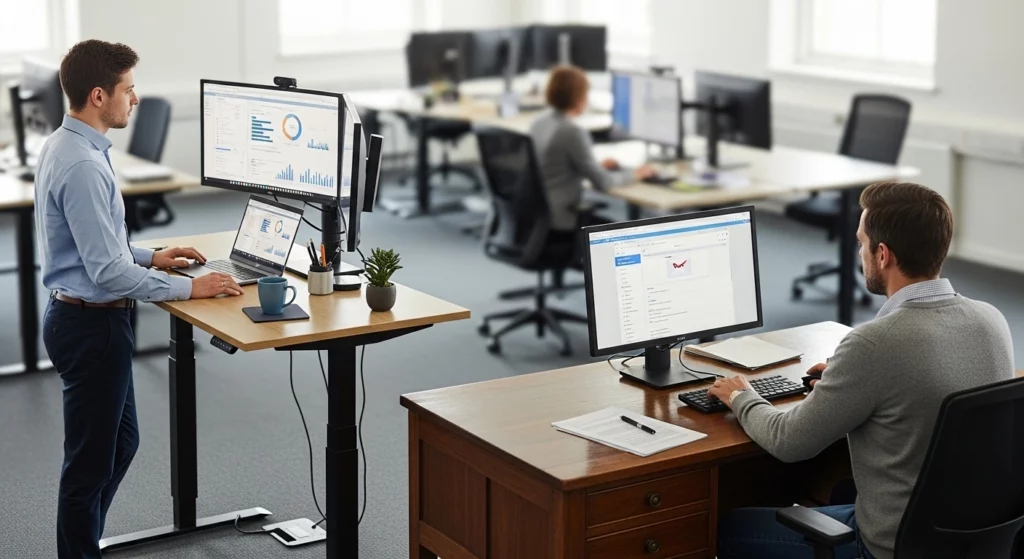
Creating a Sit-Stand Schedule
You should never stand up for eight straight hours either. Prolonged standing causes severe foot pain and swollen, aching ankles by the evening. The real physical magic happens when you alternate between the two different positions. You need to find a healthy, comfortable rhythm for your unique body.
Try standing up for just fifteen minutes every single hour at first. You can gradually increase this time as your leg muscles grow much stronger. Listen closely to your joints and sit down immediately when you feel tired. Do not try to be a hero and stand through actual physical pain.
Here are some easy ways to split your daily work time smoothly:
- Stand up while answering all your quick morning emails.
- Sit down when doing heavy, focused computer coding or writing.
- Stand back up during phone calls or casual virtual team meetings.
Setting Up Your Ergonomic Space
Your desk workstation setup matters just as much as your physical posture. Your computer monitor needs to be at eye level to prevent neck strain. A low screen forces you to drop your heavy head forward constantly. This ruins your cervical spine and causes massive tension headaches.
You might be wondering if Simple Laptop Stands Fix Stubborn Neck Pain is true. Elevating your flat screen is a massive step toward real physical comfort. It keeps your neck perfectly straight while you type away at the keyboard.
Your keyboard should rest comfortably right at your natural elbow height. Your wrists must stay perfectly flat to avoid painful repetitive strain injuries. Take the extra time to adjust your desk every single time you move. Proper ergonomics act as a shield against daily physical wear and tear.
Listening to Your Tired Joints
Your body will clearly tell you exactly when it needs a break. Never ignore sharp, shooting pain in your knees or your lower back. You can safely push through mild muscle soreness, but always respect sharp joint pain. Pain is your body asking for an immediate change in behavior.
If your heels start burning deeply, it is time to sit down right away. Transitioning too quickly is the most common mistake beginners always make. Your body genuinely needs several weeks to adapt to this new standing routine. Be very gentle with yourself during this highly sensitive transition period.
Stretch your legs gently before you switch back to sitting in your chair. Small calf raises can easily push pooled blood out of your feet quickly. Treat your daily work shifts like a gentle, controlled physical marathon. Pacing yourself is the only way to win in the long run.
Tools to Help You Succeed
Adding an Anti-Fatigue Mat
Standing on hard concrete or wood floors will destroy your feet very quickly. An anti-fatigue mat is absolutely essential for any standing desk setup. It provides a soft, highly supportive cushion for your tired foot arches. This completely changes how you feel at the end of the day.
The soft surface forces your leg muscles to make constant micro-adjustments. This tiny, invisible movement prevents your knees from locking up entirely. It keeps the blood flowing freely through your tired lower legs. You will feel far less stiffness when you finally walk away.
You will be genuinely shocked at how much longer you can stand comfortably. It actually feels like standing on a firm, supportive cloud. Do not skip this vital accessory if you want to succeed long term. It is worth every single penny for your physical comfort.
Choosing the Right Footwear
High heels and flat dress shoes are terrible choices for standing workers. You need thick, highly supportive soles to absorb your total body weight. Running shoes or dedicated walking sneakers are your very best friends here. Leave your uncomfortable fashion shoes safely tucked away in your closet.
Your two feet bear the entire burden of your physical frame all day. Give them the protective armor they truly deserve to stay healthy. You can always keep dress shoes hidden under your desk for important meetings. Slip into your comfortable sneakers the minute the meeting is totally over.
Good arch support prevents sharp pain from shooting up your tired legs. It keeps your hips properly aligned perfectly over your strong knees. Happy feet make the entire workday feel much shorter and brighter. Never compromise on the shoes you wear to work.
Upgrading Your Office Furniture
Sometimes your body just needs to sit down and rest your tired legs. When you do, your office chair needs to offer world-class physical support. A cheap plastic chair will undo all your good standing work instantly. You need a chair that actively loves your spine back.
You must invest heavily in proper seating for your seated resting periods. We highly recommend reviewing our Ergonomic Chairs for Back Pain Relief guide. A highly rated chair supports your lumbar spine flawlessly while you recover your energy.
Adjustability is the ultimate key to sharing a desk with a chair. Your chair must match the exact height of your resting desk perfectly. Make sure your feet always rest flatly and securely on the office floor. This combination guarantees maximum comfort no matter how you choose to work.
FAQs
Is it better to stand or sit at a desk all day?
Neither extreme is healthy for your physical body. The best approach is alternating frequently between sitting and standing throughout your entire workday.
How long should I stand at my standing desk?
Beginners should aim for fifteen minutes of standing for every hour of sitting. You can slowly increase this ratio as your leg muscles grow much stronger.
Do standing desks actually help with lower back pain?
Yes, they relieve the heavy, constant pressure on your lower spinal discs. This often provides massive relief for people suffering from chronic lumbar pain.
Will a standing desk help me lose weight?
You burn a few extra calories, but it will not cause massive weight loss. It is much better for boosting your energy and improving your daily posture.
What is the correct height for my standing desk?
Your desk should rest exactly at your natural elbow height. Your computer monitor must remain directly at your comfortable, natural eye level.
Final Takeaways
Transitioning to a sit-stand routine is a wonderful choice for your daily health. Your body craves constant movement and absolutely hates being locked in one position. Sitting too much drains your mental energy and causes deep, lasting physical pain. A standing desk brings vital circulation and fresh energy right back into your life.
Always remember that balance is the true secret to workplace comfort. Do not try to force yourself to stand up all day long. Listen to your tired feet and sit down when you need a break. Treat your body with deep kindness as it adapts to this new lifestyle.
Invest in good shoes and a highly supportive anti-fatigue floor mat. Make sure your monitor and keyboard are always placed at the perfect height. Small physical adjustments will save you from massive joint pain later on. You deserve to finish your workday feeling strong, capable, and totally pain-free.

- How to Speed Up Muscle Recovery: Beyond Rest and Stretching - August 13, 2026
- Best Piercing Pillows: Which Ones Actually Relieve Pressure? - August 11, 2026
- Best Red Light Therapy Panel: Expert Picks for Home Use - August 5, 2026