Patients frequently ask me can a wedge pillow help with tummy tuck recovery after abdominal surgery. The answer is an absolute yes. When you undergo an abdominoplasty, your abdominal muscles require immediate protection from physical stress. Lying flat pulls your fresh incision apart and causes severe pain. Therefore, you must use specific tools to keep your upper body elevated. Let us explore exactly how this specific recovery tool protects your healing body.
The Biomechanics of Postoperative Recovery
After an abdominoplasty, your stomach skin is incredibly tight. Your surgeon removes excess tissue and stitches the remaining skin together. This creates a highly sensitive incision site across your lower abdomen. If you lay down completely flat, you stretch this area instantly. This stretching creates dangerous tension on your new stitches. Therefore, you must modify your sleep position entirely to prevent injury.
Protecting the Healing Incision
To protect your stitches, you must maintain a slightly bent posture. Elevating your torso is medically necessary for safe and fast scar healing. A firm post-surgery pillow props up your upper body perfectly. This slight bend at the waist removes all tension from your stomach. It allows the damaged tissues to heal properly without pulling apart.
Managing Fluid Retention and Circulation
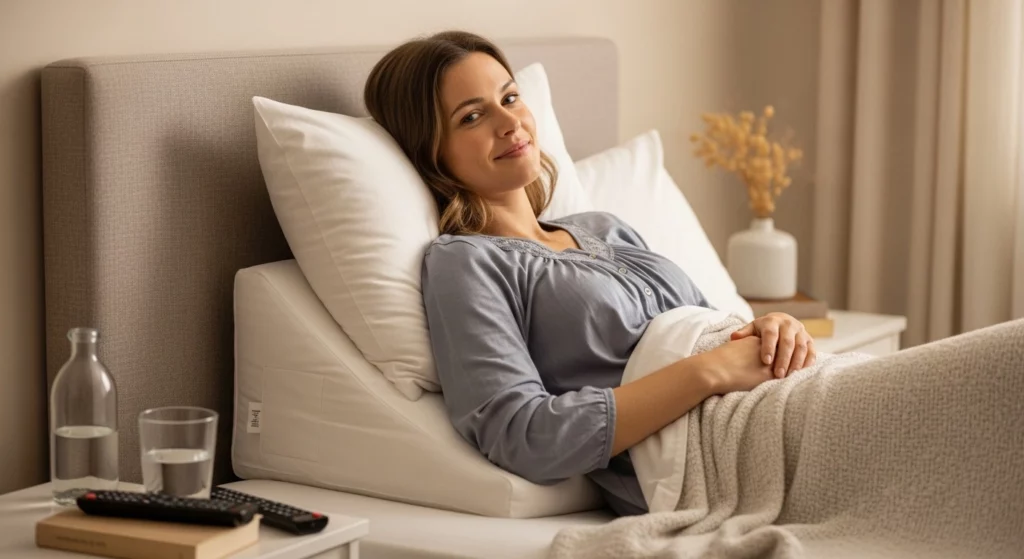
Swelling is a major challenge during your recovery timeline. Your body naturally rushes fluid to the surgical area to begin repairs. This causes postoperative swelling and intense physical discomfort around your middle. Proper upper body elevation uses gravity to your advantage completely. It helps drain excess fluid away from your midsection naturally.
Preventing Dangerous Complications
Resting comfortably in bed for weeks slows down your blood circulation. This sluggish blood flow increases your overall risk of complications. You could easily develop blood clots in your lower legs. Elevating your torso and bending your knees helps improve circulation significantly. This specific setup is highly beneficial for healing and overall surgical safety. Proper positioning limits dangerous fluid retention inside your body.
Understanding Wedge Pillow Usage for Tummy Tuck Healing
Many patients wonder how to set up their bed safely. Wedge pillow usage after tummy tuck recovery requires a very specific angle. You need an adjustable wedge pillow to create a steep incline. This angle keeps you properly elevated without straining your lower back. You can find excellent options by reviewing the best pillow for tummy tuck support systems.
Achieving the Safe Jackknife Position
Surgeons often call this bent posture the safe jackknife position. It requires both your back and your knees to be elevated together. You cannot just stack standard bed cushions to achieve this angle. Regular pillows will slip and flatten out during the night. If you want to compare different structural support shapes, a structured foam wedge always wins.
Evaluating Benefits of Using Wedge Pillow for Tummy Tuck
Using the right medical equipment accelerates healing remarkably fast. It provides comfortable support for your heavy torso and shoulders. This setup allows you to sleep safely without rolling over onto your stomach. By locking your body in place, you reduce abdominal pressure instantly. This is very similar to how a firm bolster provides support for hip and pelvic pain during regular sleep.
Transitioning Through the Recovery Process
Your specific recovery needs will change every single week. An adjustable incline lets you lower the angle gradually over time. As your skin stretches and heals, you can lay flatter safely. You will eventually ease into a normal sleeping posture comfortably. Learning exactly how to safely adjust your body angle prevents late-stage surgical tearing. Top Health Gear designs recovery pillows to support you through every stage.
Real-Time Clinical Example
A forty-year-old patient recently came to my clinic after abdominal surgery. She was using regular bed pillows to prop herself up. She complained of severe lower back pain and a pulling sensation. Her regular pillows were sinking, causing her to lay flat accidentally. I immediately prescribed a firm, multi-position wedge system.
I showed her how to elevate her torso and support her knees. The very next day, she reported a massive decrease in abdominal pain. The structural support relieved the pressure on her incision site completely. Dr. Lisa Hamilton, a board-certified plastic surgeon, emphasizes this equipment requirement often.
“Proper upper body elevation is not optional after an abdominoplasty,” Dr. Hamilton states. “A structured wedge system prevents surgical tearing and reduces severe postoperative swelling.” Therefore, you must invest in proper recovery tools to protect your surgical results.
Frequently Asked Questions
Patients always have detailed questions about their postoperative recovery journey. Here are the most common questions regarding incision care and sleep position.
Why can I not sleep flat after abdominal surgery?
Sleeping flat pulls your stomach skin tight across your body. This extreme tension can easily rip your fresh stitches apart. It also causes agonizing pain in your abdominal muscles. You must keep your body in a bent posture to relieve pressure.
How long do I need to sleep elevated?
Most surgeons recommend sleeping elevated for at least four to six weeks. However, every patient heals at a completely different physical pace. You must follow your surgeon’s specific timeline before lying flat. They will monitor your scar healing and clear you for flat sleeping.
Do I need to elevate my legs too?
Yes, elevating your knees is just as important as your torso. Bending your knees takes even more pressure off your lower abdomen. It also helps prevent dangerous blood clots in your lower legs. A complete post-surgery pillow kit usually includes a dedicated knee bolster.
Are standard bed pillows good enough for recovery?
No, standard bed pillows are far too soft for proper support. They compress under your body weight and slide apart easily. This causes you to lose your elevated position while you sleep. A dense foam wedge provides the firm, reliable support you need.
Can elevating my torso reduce swelling?
Yes, keeping your upper body elevated uses gravity to reduce swelling effectively. It helps fluid drain away from your healing incision naturally. This prevents painful fluid buildup, known medically as a seroma. Less swelling directly leads to a much faster recovery process.
How do I get out of bed using a wedge?
Getting out of bed requires careful movement to protect your stitches. You should never use your stomach muscles to sit up straight. Instead, roll gently onto your side while keeping your knees bent. Then, use your arms to push your upper body off the bed.
Can I sleep on my side after an abdominoplasty?
You must avoid sleeping on your side during the early recovery phase. Side sleeping puts uneven pressure on your incision and increases swelling. You should remain properly elevated on your back until your doctor says otherwise. Side sleeping is only safe once the incisions are fully closed.
Final Takeaways
Protecting your surgical results requires strict dedication to your sleep posture. A wedge system elevates your torso and bends your knees perfectly. This medically necessary posture reduces swelling and relieves pressure on your incision. By maintaining a bent position, you prevent dangerous complications and accelerate healing. Always follow your surgeon’s instructions and use proper tools to recover comfortably.
References
- American Society of Plastic Surgeons. (2025). Abdominoplasty Recovery Guidelines.
- Hamilton, L. (2024). Postoperative Care and Swelling Management.
- National Institutes of Health. (2025). Preventing Deep Vein Thrombosis After Surgery.
- Can a Wedge Pillow Help With Tummy Tuck Recovery? - February 24, 2026
- How Firm Should a Pillow Be for Stomach Sleepers - February 24, 2026
- When to Stop Using a Tummy Time Pillow - February 24, 2026