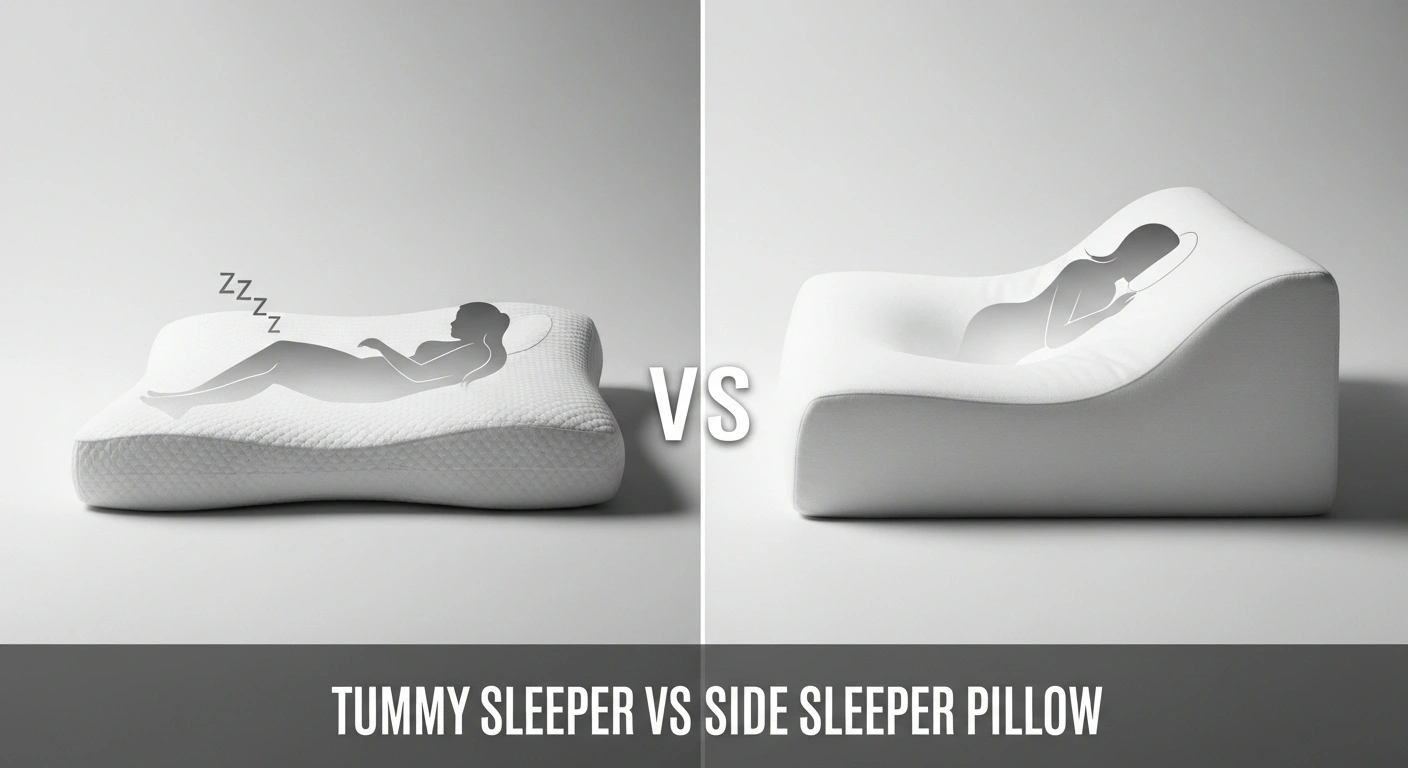
Tummy Sleeper vs Side Sleeper Pillow: Which One Suits Whom?
Waking up with a stiff neck or numb fingers is often the direct result of a mechanical mismatch between your physical anatomy and your bedding. When deciding on the right postural support, comparing a tummy sleeper vs side sleeper pillow comes down to understanding the distinct biomechanical demands of your cervical spine. Your preferred sleep position determines the exact amount of physical space that must be filled to maintain a neutral alignment between your head, neck, and shoulders. Selecting the wrong support tool forces your joints into prolonged mechanical stress, leading to chronic myofascial tension and a significant reduction in your overall sleep quality.
The Biomechanics of Sleep Position
The human spine is engineered to absorb shock and distribute physical weight through a series of natural curves. When you lie down, gravity immediately acts upon your skeleton, forcing your muscles to work unless a properly fitted support surface takes over that job. Understanding how to compare these products requires a clinical look into what happens to your joints in different resting postures.
Cervical Alignment in the Prone Position
When you sleep on your stomach, you must rotate your cervical spine nearly ninety degrees to keep your airway open for breathing. This extreme rotation already places the facet joints and surrounding ligaments under a heavy amount of physical tension. If you add a thick cushion to this posture, you introduce a vertical bend, pushing the neck into a state of forced extension.
As Dr. Michael Breus, a clinical psychologist and board-certified sleep specialist, explains, “Side sleepers require a thicker surface to bridge the gap between the ear and the shoulder, while stomach sleepers need almost no lift at all to avoid severe cervical hyperextension.” The addition of height while lying prone creates a shearing force across the intervertebral discs. This mechanical strain is the primary reason prone sleepers wake up with localized pain at the base of the skull.
Shoulder Compression in the Lateral Position
Side sleepers face an entirely different set of anatomical challenges when they go to bed. Lying on your side places the entire weight of your upper torso onto the acromioclavicular joint of a single shoulder. If the head is not supported adequately, the cervical spine collapses downward toward the mattress, pinching the nerves that exit the neck.
This downward lateral flexion compresses the brachial plexus, a network of nerves that runs through the shoulder and down the arm. A high loft structure is mechanically required to fill the wide gap between the outside of the shoulder and the side of the head. Without this thick block of support, side sleepers will inevitably experience tingling in their fingers or chronic shoulder impingement.
Tummy Sleeper Pillow vs Side Sleeper Differences
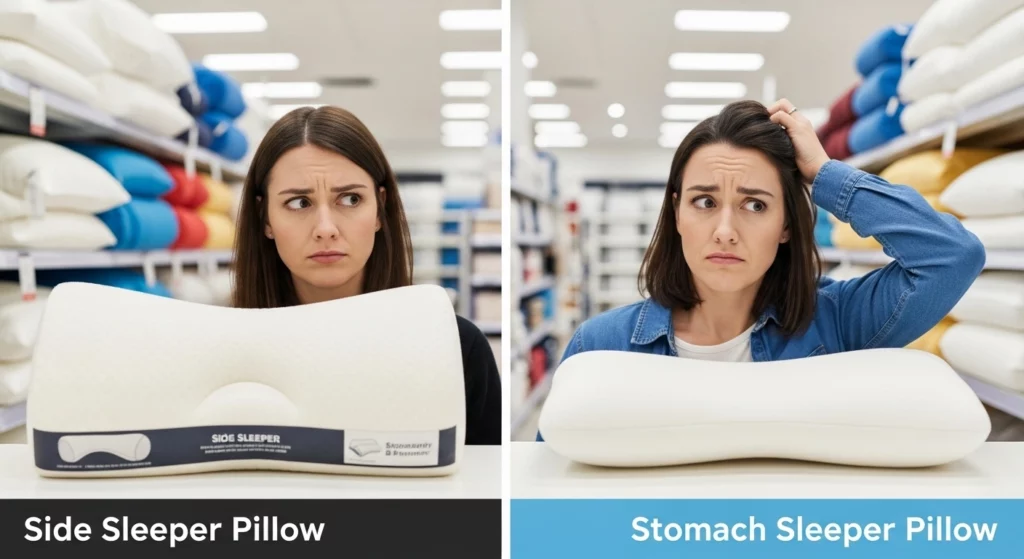
The physical architecture of your bedding must directly match the biomechanical demands of your body. A side-by-side comparison reveals that these two types of sleepers require completely opposite engineering principles to stay pain-free. You must evaluate the loft profile, the density of the filling, and the overall compression rate to make an informed buying decision.
Feature | Tummy Sleeper Profile | Side Sleeper Profile |
Loft Height | 1 to 3 inches (Low Loft) | 4 to 6 inches (High Loft) |
Firmness Level | Soft to Medium-Soft | Medium-Firm to Firm |
Primary Goal | Reduce neck extension | Relieve shoulder pressure |
Ideal Material | Down, shredded memory foam | Solid memory foam, latex |
Spinal Focus | Prevent lower back arching | Maintain lateral spine straightness |
Loft Height and Neck Support
The most significant difference between sleepers lies in the required thickness, clinically referred to as the loft height. Tummy sleepers need thinner materials that sit close to the mattress, ensuring the head is not pushed backward. When you are choosing an ideal pillow for tummy sleepers, you are actively looking for a product that allows the face to rest low and limits vertical lift.
Conversely, side sleepers require thicker materials to prevent the head from drooping toward the bed. The exact height needed will depend entirely on the broadness of the individual’s shoulders. A person with very wide shoulders will need a significantly higher loft to maintain alignment compared to someone with a narrower skeletal frame.
Fill Material and Compression Rate
The material inside the casing dictates how well it will compress under the physical weight of your skull. A soft feel provided by down alternative or shredded memory foam is highly beneficial for prone sleepers because the material compresses easily. This allows the head to sink in deeply, effectively reducing the actual loft height during the night while providing a comfortable surface for the face.
Side sleepers generally need a material that actively resists compression to maintain the necessary gap closure. Solid memory foam or natural latex provides the firm support required to keep the head elevated in a straight line with the sternum. If a side sleeper uses a product that is too soft, the material will flatten out over several hours, leading to nerve compression.
Tummy Sleeper Pillow Benefits
Using a position-specific design offers immediate relief for those who prefer to lie on their stomach. A low loft pillow reduces neck strain by allowing the cervical spine to rest in a much flatter, more natural plane. This reduction in joint pressure allows the paraspinal muscles to finally relax, preventing the protective muscle guarding that causes morning stiffness.
Furthermore, finding the best pillow for tummy sleepers ensures that your lower back does not arch painfully into the mattress. When your head is kept low, your pelvis is less likely to tilt forward into an anterior position. This mechanical adjustment relieves pressure on the lumbar discs and allows you to sleep comfortably through the entire night.
Side Sleeper Pillow Benefits
For lateral sleepers, the correct structural support acts as a bridge that completely changes the weight distribution of the upper body. A properly aligned side sleeper pillow prevents the heavy skull from acting as a lever that pulls on the neck muscles. By keeping the head perfectly level with the spine, these designs prevent the narrowing of the nerve channels in the cervical vertebrae.
A highly supportive cushion also drastically reduces pressure on the shoulder joint itself. When the head is held up mechanically, the body does not need to roll forward to find stability, which stops the sleeper from crushing their own rotator cuff.
Real-Time Clinical Example
A 42-year-old female patient presented to the clinic with severe right shoulder impingement and numbness in her right hand upon waking. She was a dedicated side sleeper using a very soft, flat down pillow that compressed to less than an inch thick. After instructing her to switch to a firm, 5-inch contoured memory foam pillow, she reported a complete cessation of the hand tingling within three days, as the new loft height successfully removed the compression on her brachial plexus.
Which Pillow Will Suit You the Best
Determining the right fit requires you to evaluate your primary sleep posture and your physical body type. If you spend the vast majority of your night on your stomach, you must end up with a low-profile, highly compressible option to protect your neck. If you favor your side, you must look for a thicker, firmer block that can support the heavy weight of your head without collapsing.
You must also factor in the firmness of your actual mattress when making a buying decision. A very soft mattress allows your heavier body to sink deeply, which means your head will naturally be closer to the mattress surface. In this scenario, both side and tummy sleepers will need a slightly thinner pillow than they would if they were sleeping on a very rigid, firm bed.
Frequently Asked Questions
Why do tummy sleepers need thinner pillows?
Tummy sleepers require thinner pillows to prevent their cervical spine from being pushed into forced extension. When lying face down, a thick pillow bends the neck backward while it is already fully rotated. Keeping the loft as flat as possible minimizes this dangerous joint stress and allows the surrounding muscles to relax.
Can I use the same pillow if I switch between my side and my stomach?
Using a single product for both positions is mechanically difficult because the physical gap between your head and the bed changes drastically when you roll over. If you are a combination sleeper, an adjustable shredded memory foam pillow is the safest choice. You can physically push the filling to the edges to create a thin center for stomach sleeping, and gather it under your neck when you roll onto your side.
How do I stop waking up with shoulder pain as a side sleeper?
Shoulder pain in the lateral position is almost always caused by a lack of proper head support. When your pillow is too thin, your upper body weight shifts downward, crushing the shoulder capsule into the mattress. Upgrading to a firmer, high-loft pillow that matches the exact width of your shoulder will lift the weight off the joint and relieve the pressure.
Final Takeaways
Sleep position determines pillow thickness, and choosing the right mechanical support is the only way to maintain a neutral spine. Tummy sleepers must prioritize low-loft, soft materials to prevent severe neck extension and lower back arching. Conversely, side sleepers require thick, firm support to fill the shoulder gap and prevent nerve compression in the cervical spine. By matching the physical dimensions of your bedding to your specific anatomical needs, you can actively reduce joint pressure and significantly improve your nightly recovery.
References
- Breus, M. (2024). The Mechanics of Sleep Posture and Pillow Selection. The Sleep Doctor.
- National Sleep Foundation. (2025). Spinal Alignment and Bedding Ergonomics.
- McAllister, S. (2025). Cervical Tension and Prone Sleeping Disadvantages. Foundation for Chiropractic Progress.
- Journal of Physical Therapy Science (2022). The effect of pillow height on the biomechanics of the head-neck complex.
- Sriram, S. (2024). Neurological Impingement in Lateral Sleepers. Forbes Health.

- Can a Wedge Pillow Help With Tummy Tuck Recovery? - February 24, 2026
- How Firm Should a Pillow Be for Stomach Sleepers - February 24, 2026
- When to Stop Using a Tummy Time Pillow - February 24, 2026