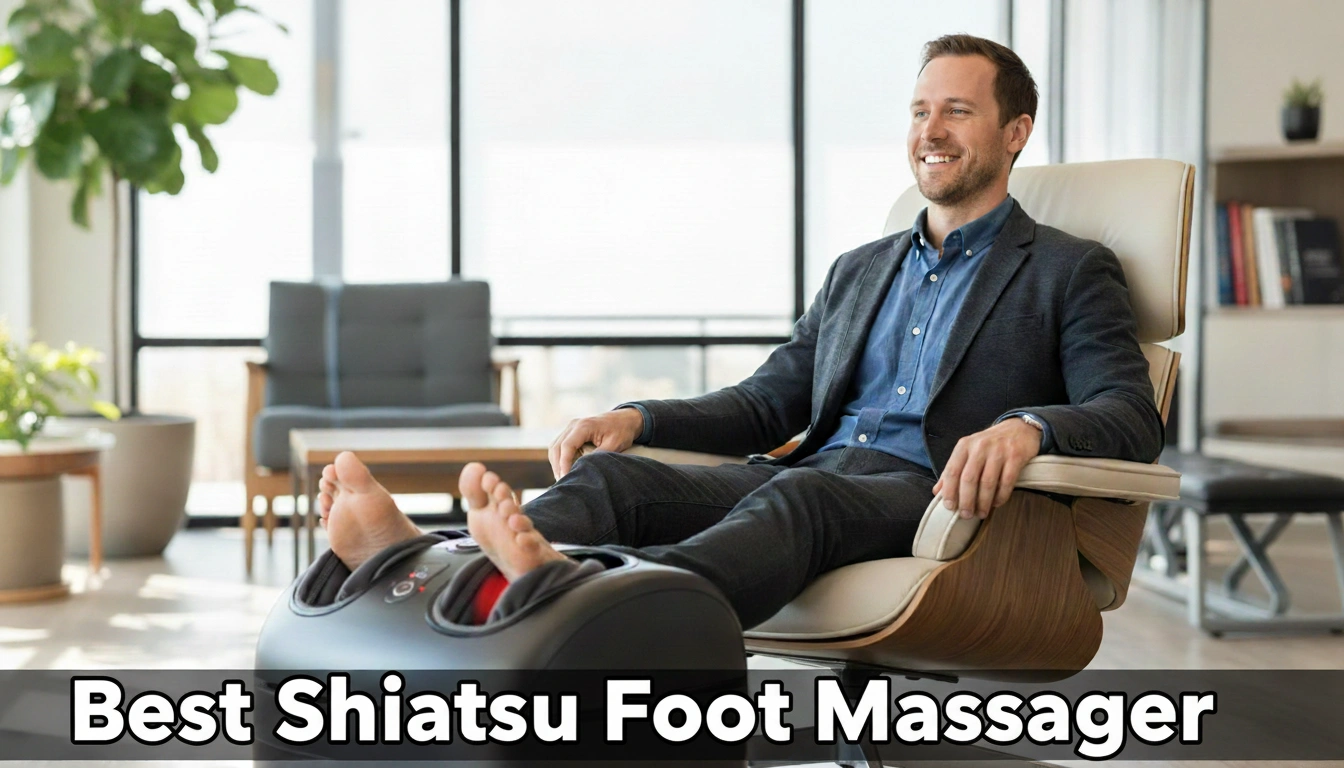
Best Shiatsu Foot Massagers: When Deep Kneading Is the Better Choice
The best shiatsu foot massager for most users is the Nekteck, which uses 54 rotating nodes and an open-platform design that accommodates high arches and large feet better than enclosed boot models. The RENPHO adds a dedicated heel percussion feature useful for users whose pain is concentrated at the heel, while the JZBRAIN extends coverage to the calf with an adjustable tilt chassis. All three include heat and air compression, so the main differentiator is the specific area of foot pain you are targeting.
Product Name | Key Clinical Feature | Best For | Price |
|---|---|---|---|
1. Nekteck Foot Massager | 54 Rotating Massage Nodes | Manual Pressure Control | |
2. RENPHO Foot Massager Machine | Heel Percussion Tapper | Aggressive Fascial Stripping | |
3. JZBRAIN Shiatsu Massager | 9 Compression Levels | Severe Circulation Deficits |
1. Nekteck Shiatsu Foot Massager with Heat
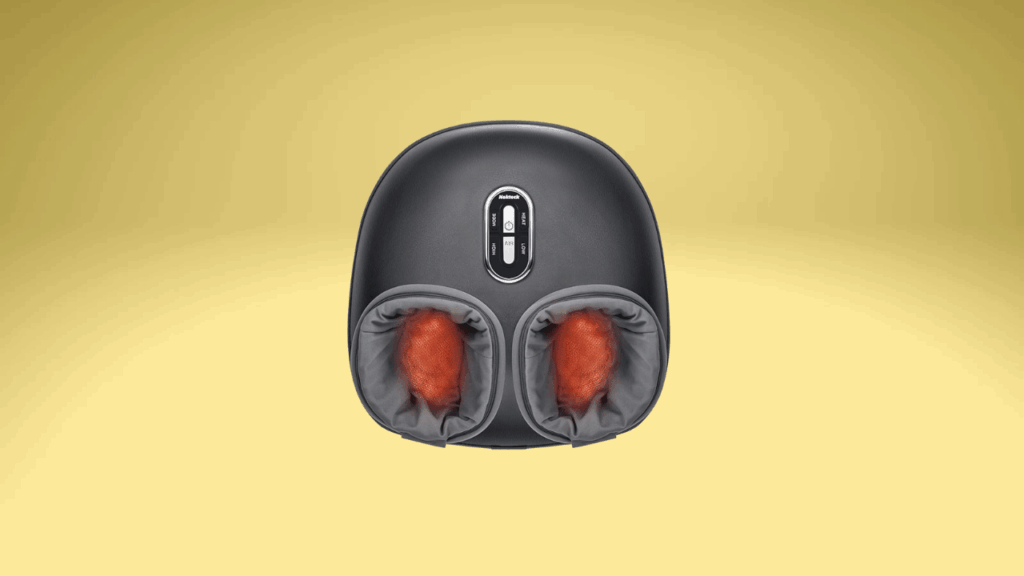
The Nekteck uses an open-platform design with 54 rotating massage nodes, an integrated heat function, and an air compression overlay, all with a 15-minute auto-timer. The open chassis is the key differentiator: because there is no enclosed boot, users with high arches or larger feet can shift their foot position to align the nodes with their specific pressure points. It is a practical, affordable entry-level option for users who want control over session intensity.
Why We Picked It: Open design accommodates all arch types and foot sizes, with enough node density to cover the full arch in a single session.
Pros:
- Fits any foot size
- 54 deep-kneading nodes
- Highly affordable price
Cons:
- Heat takes ten minutes
- Lacks wireless remote
2. RENPHO Foot Massager Machine with Heat
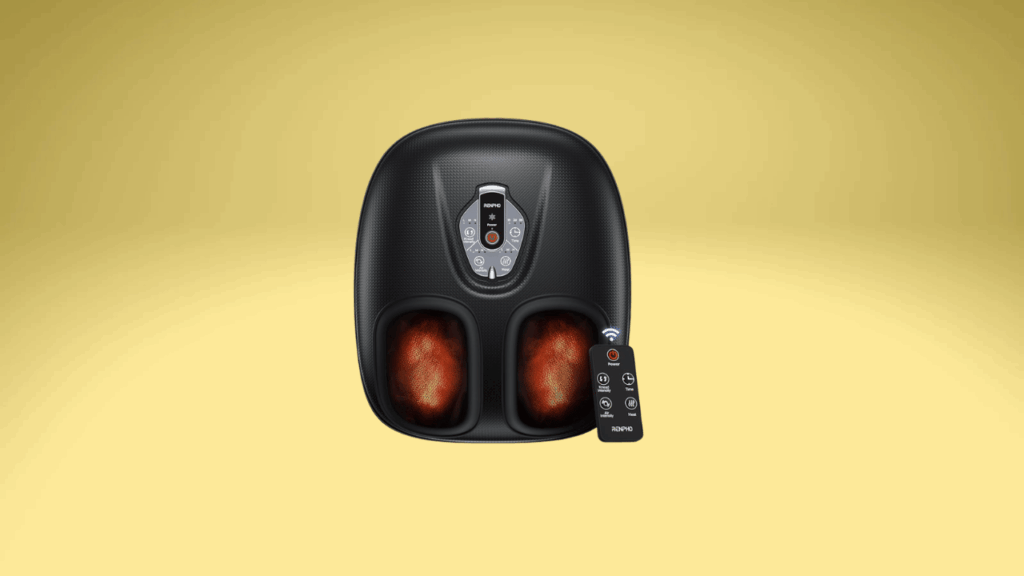
The RENPHO is an enclosed boot-style unit with a dual-roller system, three air compression levels, a dedicated heel percussion tapper, and a wireless remote control for mid-session adjustments. The heel tapper is the standout feature: it delivers targeted percussion at the posterior heel, which standard rolling-only massagers typically miss. Washable interior fabric liners keep the device hygienic with regular use.
Why We Picked It: The dedicated heel percussion tapper makes it the best choice for users whose plantar fasciitis or heel pain is concentrated under the heel bone.
Pros:
- Dedicated heel percussion tapper
- Intense pneumatic air squeezing
- Washable interior fabric liners
Cons:
- Extremely intense maximum setting
- Heat builds very slowly
3. JZBRAIN Shiatsu Foot Massager Machine
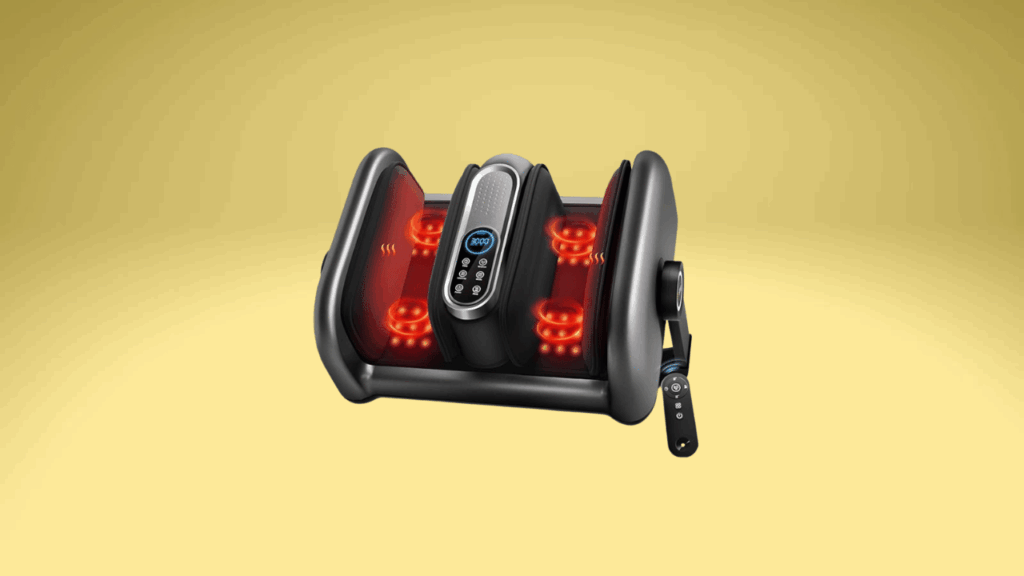
The JZBRAIN offers nine air compression levels, shiatsu rollers, independent vibration, and a 360-degree adjustable chassis that lets users angle the device to massage the calf rather than just the sole. The digital display and remote control make it easy to operate for users with limited mobility. It is the premium option in this comparison, suited to users who want to address both foot and calf tightness in the same session.
Why We Picked It: Adjustable tilt and calf coverage make it the right pick for users whose foot pain is linked to chronic calf and lower leg tightness.
Pros:
- Adjustable tilt targets calves
- Nine precise compression levels
- Soothing vibration desensitizes nerves
Cons:
- Very heavy to lift
- Premium price point
Buying Guide: Anatomy of a Clinical Shiatsu Massager
Purchasing an electric shiatsu device is a structural investment in your daily mobility. These machines vary drastically in their internal mechanics, and purchasing the wrong geometry can actually inflame your foot further. To make an educated, clinical decision, you must dissect the roller architecture, the compression systems, and the thermal integration.
Shiatsu Roller Topography
The fundamental core of a shiatsu machine is the physical shape and layout of its plastic nodes. If the nodes are too flat, they will merely tickle the superficial skin layers. You must look for machines that feature pronounced, elevated nodes specifically designed to press deeply into the concave arch of your foot.
Moreover, consider how the nodes move. Cheaper units use a single bar that simply slides back and forth. Premium clinical machines utilize dual, independently rotating spheres that grab, twist, and release the muscle tissue, identically mimicking the cross-friction techniques used by human hands. If your fascia is highly sensitive and cannot tolerate hard plastic immediately, utilizing a simple wooden foot roller to manually gauge your own pressure tolerance is a smart preliminary step before buying a high-powered electric unit.
The Role of Pneumatic Compression
Air compression does not massage your foot; it serves two entirely different physiological purposes. First, the airbags inflate over the top of your foot, physically trapping your sole against the spinning shiatsu rollers below. This forces the nodes to penetrate deeply into the tissue rather than allowing your foot to simply float away from the friction.
Secondly, severe plantar fasciitis is frequently accompanied by localized inflammatory swelling. Rhythmic pneumatic compression physically squeezes this stagnant, toxic fluid out of the foot and pushes it back up the venous system. You must ensure the machine you purchase offers at least three distinct levels of air compression, as the highest settings on medical-grade units can be intensely painful if you are not accustomed to them.
Thermal Priming and Joint Mobility
You should never apply heavy, grinding mechanical friction to a cold, contracted ligament. Attempting to force a stiff plantar fascia to stretch will result in acute micro-tearing and increased pain the following day. Therapeutic heat acts as a necessary biological primer. It rapidly dilates local blood vessels and significantly increases the elasticity of the connective tissue.
When evaluating machines, understand that safety regulations prevent these devices from becoming scorching hot. The heat is designed to safely penetrate the dermal layers over a 15-minute window. If you suffer from isolated stiffness directly around the malleolus (ankle bone) rather than the arch, a targeted ankle massager utilizing localized thermal wraps may provide more focused joint relief than a generic sole massager.
The Biomechanics of Plantar Fasciitis
To properly utilize your new machine, you must understand exactly what is happening beneath the skin of your foot. You are not just rubbing sore muscles; you are actively dismantling a pathological structure.
The Breakdown of the Collagen Matrix
Your plantar fascia is composed of dense, highly organized collagen fibers designed to stretch and recoil with every step. When you subject your feet to severe, repetitive stress on hard floors, these fibers snap. Because you rarely stay off your feet long enough for them to heal, your body panics and patches the tears with disorganized, rigid scar tissue.
This scar tissue acts like hardened glue binding the fascia together. A shiatsu massager utilizes deep cross-friction to physically break these structural adhesions apart. By deliberately causing micro-trauma to the scar tissue, you force the body’s fibroblasts to lay down fresh, organized collagen, eventually restoring the elastic bowstring mechanism of your arch.
Ischemic Pain and Toxin Flushing
When the fascia becomes thick with scar tissue, it physically strangles the microscopic blood vessels supplying oxygen to the bottom of your foot. This lack of oxygen (ischemia) forces the surrounding tissue to produce massive amounts of acidic waste just to survive. This toxic acid heavily burns your local nerve endings.
The intense pressure of the shiatsu nodes temporarily crushes the tissue, squeezing the toxic blood out. When the node rotates away, a massive surge of highly oxygenated, fresh blood violently rushes back into the area (reactive hyperemia). This biological flushing process instantly neutralizes the acidic environment, rapidly dropping your pain levels.
Clinical Application: How to Use Your Massager Safely
Haphazardly shoving your feet into a high-powered machine can severely bruise your bones. You must approach your home therapy with clinical precision.
The Morning Protocol
Plantar fasciitis is most agonizing in the morning because the fascia cools down and contracts tightly overnight. You must address this before placing your entire body weight on the damaged ligament. Keep the massager directly beside your bed. Upon waking, place your feet in the machine on the highest heat setting, but turn the shiatsu rollers completely off or to their lowest speed. Let the heat melt the rigid tissue for five minutes to restore elasticity before you stand up.
Finding the Tolerance Threshold
When you first activate the shiatsu rollers, you should feel a “good pain”—a deep, intense pressure that feels highly productive. If you find yourself holding your breath, gritting your teeth, or tensing your shoulders, the pressure is entirely too high. Your nervous system will reflexively lock the foot muscles to protect them from the plastic nodes, completely negating the therapy. Always begin on the lowest air compression setting to minimize the downward force until your tissue adapts over several weeks.
Frequently Asked Questions
Can a shiatsu massager cure my bone spurs?
This is a highly dangerous medical misconception. A mechanical massager absolutely cannot dissolve, break apart, or cure a calcified bone spur on your heel. A bone spur is a skeletal deformation resulting from long-term fascial pulling. Pressing hard plastic nodes aggressively against a bone spur will only severely inflame the surrounding bursa sac, drastically increasing your daily pain. Shiatsu machines are strictly designed to treat the soft connective tissue (fascia and muscle) attached to the bone, not the bone itself.
Why do my feet throb after using the massager?
Experiencing a dull, throbbing sensation for an hour after a deep tissue session is perfectly normal. The heavy mechanical shearing forces a massive amount of fresh blood to violently rush into the previously starved tissues. This intense vasodilation creates a temporary throbbing feeling. However, if the pain is sharp or causes you to limp the following morning, you applied too much compressive force and must reduce the machine’s intensity for the next session.
Should I wear socks while using the machine?
Yes, you must always wear clean, thick cotton socks while utilizing an enclosed shiatsu massager. Your feet produce massive amounts of sweat during a heated session. Inserting bare feet into a shared mechanical boot creates a highly unsanitary environment, drastically increasing your risk of contracting severe fungal infections like athlete’s foot. Furthermore, the socks provide a necessary layer of dermal protection against the intense friction of the spinning plastic nodes.
Final Takeaways
Dismantling the rigid, calcified scar tissue causing your plantar fasciitis requires a proactive, aggressive approach to daily home rehabilitation. A clinical-grade shiatsu foot massager provides the exact mechanical cross-friction necessary to physically strip the damaged fascia and artificially restore vital blood flow. You must prioritize sophisticated devices featuring bi-directional rotating nodes, variable air compression, and removable hygienic sleeves.
Strictly speaking, you must remember that a mechanical massager cannot permanently outwork unsupportive footwear or a fundamentally flawed walking gait. Always properly combine your new home percussive therapy with highly supportive, custom orthotic insoles and daily, active calf stretching. If your severe foot pain actively worsens or presents with sudden, severe swelling and skin discoloration, bypass the massager entirely and consult your podiatrist immediately. Treating your localized fascial injuries consistently and intelligently at home yields the absolute best long-term structural mobility.

- Best Pillows for Ear Cartilage Pain to Make Side Sleeping More Comfortable - October 22, 2026
- How to Release a Shoulder Knot: 7 Simple Fixes That Work - October 22, 2026
- Best TENS Unit for Back Pain: The Right Pick for Your Pain, Budget, and Routine - October 20, 2026