Can the Wrong Pillow Cause Headaches? Warning Signs, Root Causes, and How to Fix It
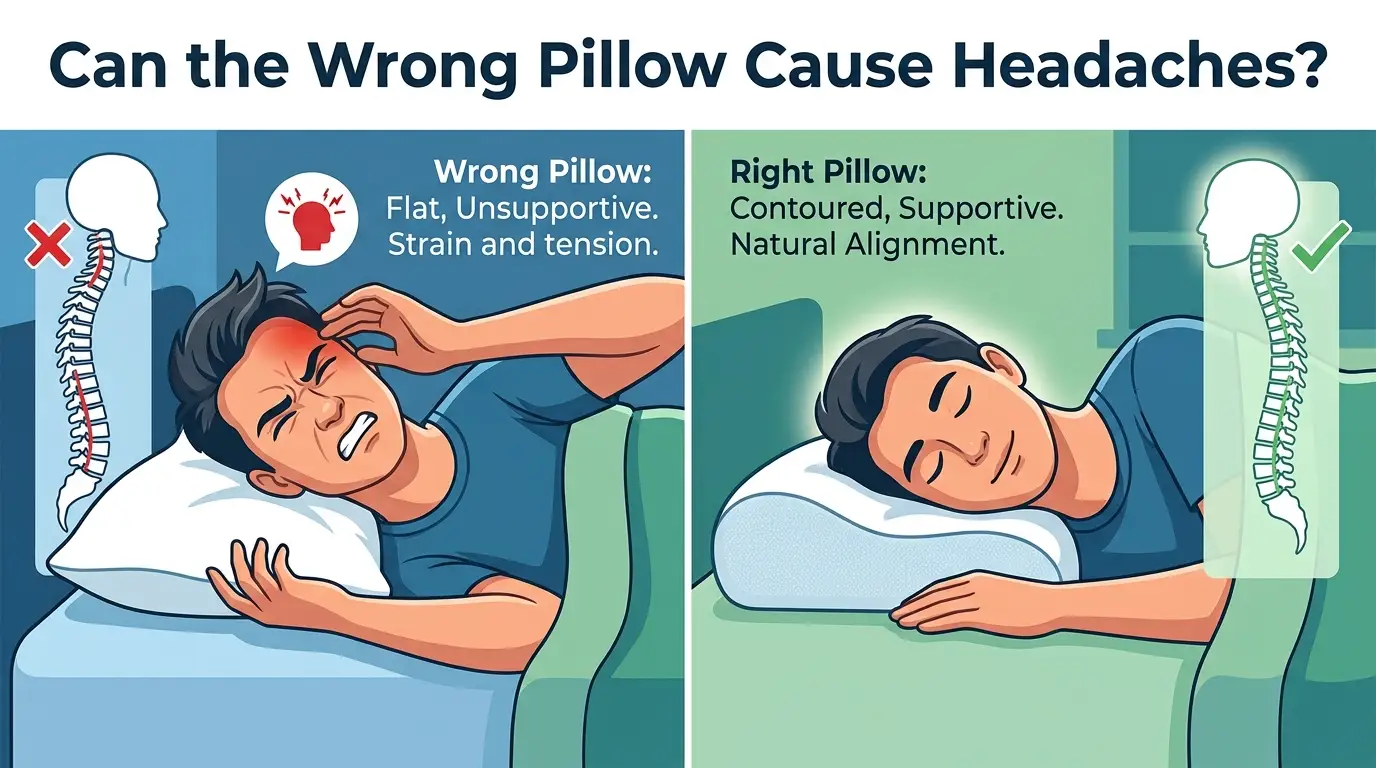
Yes, the wrong pillow can absolutely cause headaches. When your pillow fails to support the natural curve of your neck, the muscles and joints in your cervical spine come under unnecessary strain overnight. This strain often triggers what sleep specialists call a cervicogenic headache, a head pain that originates in the neck and radiates upward. Many people blame stress, dehydration, or screen time for their morning headaches without ever suspecting that the surface they sleep on every night is the real problem.
This article explains exactly how pillow problems lead to headaches, the warning signs to watch for, and what to look for when choosing a more supportive option.
How a Pillow Actually Causes Headaches
The direct answer is spinal misalignment. When your head sits too high or too low, your cervical vertebrae are pulled out of their natural position for hours at a time, creating muscle tension that travels directly to the base of your skull and temples.
Your neck houses a network of muscles, nerves, and joints that are closely connected to the structures inside your skull. When these tissues are chronically strained overnight, they can activate pain pathways that produce a real, measurable headache. This type of pain is known as a cervicogenic headache, and it is frequently misdiagnosed as tension or migraine pain because the sensation feels similar.
The key difference is location of origin. Cervicogenic headaches start at the back of the head or upper neck and move forward, whereas typical tension headaches often feel like pressure across the forehead. Recognizing this pattern is the first step toward addressing the source rather than just masking symptoms.
Signs Your Pillow Is Causing Your Headaches
Your pillow is likely the culprit when the headache pattern follows a specific sleep-related rhythm. Look for these warning signs:
- Headaches appear within 30 to 90 minutes of waking up and ease as the day progresses
- Neck stiffness or soreness accompanies the headache most mornings
- The pain starts at the base of the skull or upper neck before spreading forward
- Headaches are less frequent or absent on mornings after sleeping in a different bed or on a travel pillow
- Your pillow is older than 18 months, visibly flattened, or no longer springs back when you press it
- You wake up with shoulder tension or numbness in your arm alongside the headache
If your headache is sudden, severe, or accompanied by vision changes, nausea, or fever, seek medical attention immediately. These symptoms are not related to your pillow and require urgent evaluation.
Why Your Sleep Position Changes Everything
The right pillow height depends entirely on how you sleep. A pillow that works well for a side sleeper will create severe neck flexion for a back sleeper, and vice versa.
Side Sleepers
Side sleepers need a thicker, firmer pillow to fill the gap between their shoulder and their head. Without enough loft, the head drops toward the mattress, pulling the neck sideways for hours. This lateral strain is a leading cause of one-sided morning headaches and shoulder stiffness.
If you are a side sleeper searching for the right support level, reviewing options for best pillow for side sleepers can help you narrow down the correct loft and firmness for your body type.
Back Sleepers
Back sleepers need a medium-loft pillow that maintains the natural inward curve of the cervical spine. A pillow that is too thick pushes the chin toward the chest, forcing the neck into extended flexion all night. A pillow that is too flat leaves the head with no support at all, straining the posterior neck muscles.
Stomach Sleepers
Stomach sleeping is the most problematic position for the neck. It forces the head to rotate to one side for the entire night, placing asymmetrical stress on the cervical joints. If switching position is not an option, a very thin pillow or no pillow under the head (with a pillow under the abdomen instead) reduces some of the rotational strain.
You can also find useful guidance in our article on how many pillows you should sleep on to understand stacking habits that may worsen neck alignment.
Pillow Material and Its Role in Headaches
Pillow fill material affects both firmness consistency and heat retention, two factors that directly influence how well your neck stays supported and how comfortably you sleep through the night.
Pillow Type | Support Level | Headache Risk Factor |
|---|---|---|
Memory Foam | High, conforms to neck curve | Low if loft matches sleep position |
Down or Feather | Low, compresses quickly | High, loses loft within hours of sleep |
Latex | Medium to high, responsive | Low, maintains consistent height |
Polyester Fill | Variable, flattens over time | Medium to high depending on age |
Buckwheat | High, adjustable and firm | Low, fully customizable loft |
To understand how fill materials compare in real-world use, our detailed breakdown of memory foam pillow vs regular pillow walks through the practical differences in neck support and durability.
How to Tell if Your Pillow Is Too High or Too Low
Pillow loft is the single most correctable factor in sleep-related headaches. Here is how to evaluate your current pillow at home:
Step 1: Lie down in your normal sleep position and have someone check whether your head and spine form a straight line from a front or back view.
Step 2: Check your chin position. If your chin is pushed toward your chest, the pillow is too thick. If your head tilts back, it is too flat.
Step 3: Press down on your pillow in the morning after waking. If it stays flat, it has lost its support capacity and should be replaced.
Step 4: Notice whether your headaches change when you use an airplane neck pillow or a rolled towel under your neck instead. Improvement is a strong signal that loft is your issue.
What to Look for in a Headache-Friendly Pillow
The best pillow for avoiding headaches is not necessarily the most expensive or the most heavily marketed. It is the one that keeps your spine neutral throughout the night for your specific sleep position and body size.
- Correct loft for your sleep position (higher for side, medium for back, very low for stomach)
- Consistent firmness that does not flatten within hours, memory foam or latex tend to perform best
- Adjustable fill if you are unsure of your ideal height, so you can customize over a few nights
- Breathable materials to prevent overheating, which can independently trigger headaches in some people
- Cervical or contoured design if your headaches are specifically associated with neck tension
For those who travel frequently and notice headaches worsen on trips, finding a portable option matters just as much. Our guide to best travel pillows for neck support covers compact options that maintain cervical alignment away from home.
How Long Until Headaches Improve After Switching Pillows
Most people notice a reduction in morning headaches within three to seven days of switching to a properly fitting pillow. Full improvement may take two to four weeks as the neck muscles decompress and return to their natural resting tension.
If headaches persist beyond four weeks after making a supported change, or if they worsen at any point, consult a healthcare professional. The cause may involve additional factors such as cervical disc issues, tension, or other medical conditions that a pillow change alone cannot address.
If morning neck and upper back tension continues even after adjusting your pillow, adding targeted muscle relief through tools like a handheld massager for neck and back can help manage residual muscle tightness during the adjustment period.
When to See a Doctor About Sleep-Related Headaches
A pillow change is appropriate when headaches follow a clear sleep-related pattern and are mild to moderate in intensity. See a doctor promptly if you experience any of the following:
- Headaches that are sudden, severe, or described as the worst of your life
- Head pain accompanied by fever, stiff neck, vision changes, or confusion
- Headaches that wake you from sleep in the middle of the night rather than only appearing on waking
- Persistent daily headaches that do not respond to any sleep or lifestyle adjustment
- Neurological symptoms such as weakness, numbness, or coordination problems alongside head pain
This article provides general wellness information only. It is not a substitute for professional medical advice, diagnosis, or treatment. Always consult a qualified healthcare provider for persistent or worsening headaches.
Conclusion
The wrong pillow can cause headaches by misaligning your cervical spine during sleep and creating overnight muscle tension that radiates into your head by morning. If your headaches consistently appear on waking and ease throughout the day, your pillow deserves serious attention as a contributing factor.
Matching pillow loft to your sleep position, choosing a material that maintains consistent support, and replacing pillows that have lost their shape are practical, low-cost steps that can meaningfully reduce sleep-related headache frequency. Start with your pillow, give it two to three weeks, and track whether mornings feel different. If symptoms persist or worsen, a healthcare provider can help identify any additional underlying causes.
Frequently Asked Questions
How to get rid of a pillow headache?
Switch to a pillow with the correct loft for your sleep position and apply gentle heat or an ice pack to the base of your skull for 15 minutes after waking. Stretching the neck slowly side to side can relieve residual muscle tension. If the headache is moderate, an over-the-counter pain reliever used as directed may help in the short term, but addressing the pillow is the root solution.
How to tell if a headache is from sleep?
A sleep-related headache is typically present on waking or appears within the first hour of being awake, improves as you move and stretch throughout the day, and is accompanied by neck stiffness or shoulder tightness. It tends to follow a consistent pattern tied to sleep duration and position, unlike headaches triggered by stress or dehydration, which appear more unpredictably.
Can sleeping with the wrong pillow give you a headache?
Yes. Sleeping with the wrong pillow creates cervical misalignment that strains the muscles, joints, and nerves of the upper neck overnight. This strain activates pain pathways that produce a cervicogenic headache, which is felt in the head but originates in the neck. The pattern is particularly noticeable when the pillow is either too high, too flat, or has lost its original support structure.
Can sleeping without a pillow reduce headaches?
For some back sleepers with naturally good spinal alignment, sleeping without a pillow can reduce neck flexion and lessen morning headaches. However, for most side sleepers, removing the pillow entirely causes the head to drop toward the mattress, worsening misalignment and potentially increasing headache frequency. Whether going pillow-free helps depends entirely on your sleep position and natural body proportions.
What is the best pillow to avoid headaches?
The best pillow to avoid headaches is one that keeps your head and neck in neutral alignment for your specific sleep position. Side sleepers benefit most from a firm, high-loft pillow. Back sleepers do best with a medium-loft contoured or memory foam option. Latex and adjustable-fill pillows tend to maintain their support longer than down or polyester alternatives, making them a more consistent choice for headache prevention over time.

- How to Speed Up Muscle Recovery: Beyond Rest and Stretching - August 13, 2026
- Best Piercing Pillows: Which Ones Actually Relieve Pressure? - August 11, 2026
- Best Red Light Therapy Panel: Expert Picks for Home Use - August 5, 2026