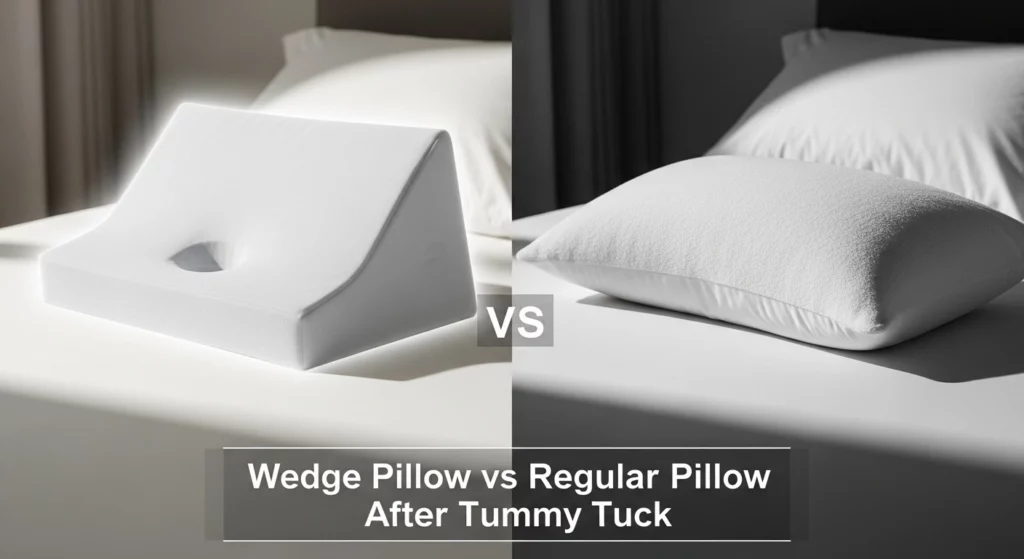
Waking up in pain following an abdominoplasty usually stems from poor resting mechanics rather than the surgery itself. When patients debate using a wedge pillow vs regular pillow after tummy tuck, they are actually deciding how to physically manage the tension on their new surgical incision. Lying flat pulls the abdominal tissues taut, creating dangerous physical stress on the sutures and surrounding musculature. To protect your investment and heal properly, you must choose a support system that maintains a flexed body position while you rest. Top Health Gear engineers recovery solutions based on these exact mechanical needs, recognizing that structured elevation is a medical necessity for safe post-operative healing.
Anatomical Stress Factors Following Abdominoplasty
During a tummy tuck, the surgeon removes excess skin and physically tightens the underlying abdominal wall. This creates a highly sensitive surgical site that requires zero physical tension to heal without widened scars or medical complications. Understanding the physical demands placed on your spine and core is necessary to make an informed choice regarding your bedding.
Tension on the Abdominal Incision
The primary goal of any post-op protocol is to keep the abdomen completely slack. If you lie flat on your back, your core muscles automatically stretch, pulling directly against those fresh sutures. Surgeons typically place surgical drains to remove excess fluid from the cavity, and stretching the abdominal wall risks dislodging these necessary tubes. You must maintain a bent position, often called the “beach chair” position, to prevent strain on the incision site. This flexed posture shortens the physical distance between your ribs and your pelvis, allowing the tissues to heal properly without being stretched apart.
Lower Back Support and Spinal Alignment
When you prop up your upper body to protect your stomach, your lower back suddenly bears the brunt of your physical weight. A common post-operative problem is developing severe lumbar pain because the spine is suspended in an unnatural curve. Proper alignment requires continuous contact between your spine and the resting surface. You must find a support system that completely fills the gap behind your lower back while you lean back. If this gap remains unsupported, the paraspinal muscles will spasm, trading abdominal pain for severe back stiffness.
Structural Advantages of Medical Foam Blocks
A medical wedge is a dense block of foam specifically cut to hold the body at a precise geometric angle. Surgeons recommend elevated positioning using these orthopedic tools because they offer rigid, unchanging support throughout the night. Evaluating this option reveals several distinct physical advantages for a recovering patient.
Torso Elevation and Fluid Drainage
A foam block is ergonomically designed to elevate the upper body at a specific 30 to 45-degree angle. This firm incline prevents gravity from pulling the torso down into a flat position while you sleep. By keeping the head and shoulders raised securely, the wedge naturally decreases tension on the healing tissues. This structured posture is clinically recommended to minimize post-surgical swelling and keep the airway completely open during deep sleep. A solid block of foam will not compress or change its shape, providing reliable elevation from night until morning.
Knee Flexion and Core Disengagement
Most specialized systems come with a secondary piece designed to sit directly under the knees. Bending the knees upward is physically required to fully disengage the psoas and lower abdominal muscles. When you elevate your legs, it works in tandem with the back support to create a completely neutral spine. This setup prevents the sleeper from unconsciously sliding down the bed and accidentally stretching the surgical site during the night. The combination of torso and leg elevation entirely removes the workload from the core.
The Mechanical Risks of Standard Bedding
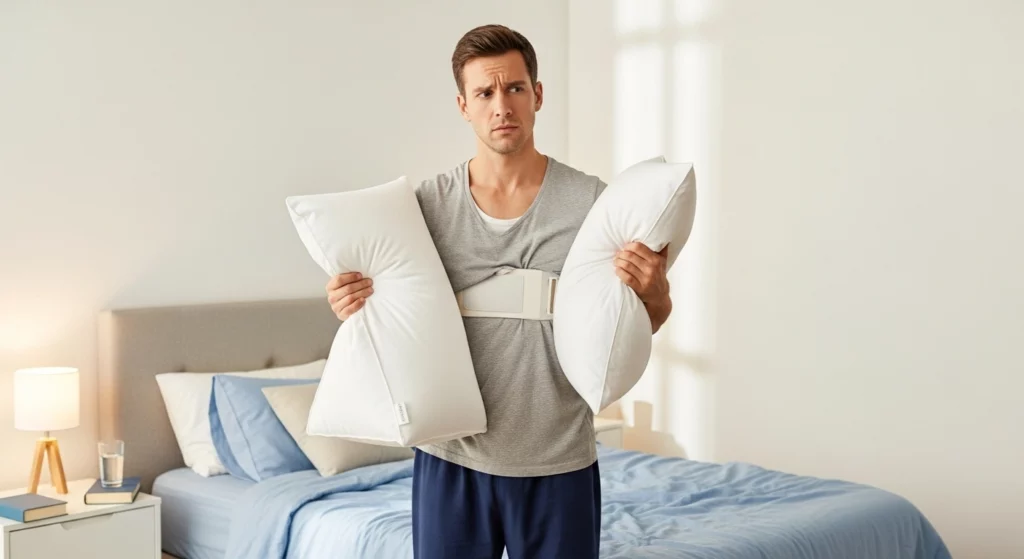
Many patients attempt to build a makeshift recliner by stacking standard bedding against their headboard. While this might seem cost-effective initially, standard pillows lack structured support and present several mechanical risks for a recovering patient.
Material Instability and Core Engagement
Standard bed pillows are filled with soft materials like down or shredded foam that compress heavily under human weight. Over the course of a few hours, these materials displace, causing your torso to slowly drop backward toward the mattress. This gradual flattening forces your core muscles to involuntarily engage to stabilize your falling body weight. Engaging your core directly pulls on your surgical drains and creates micro-tears along the healing incision. Using a regular pillow for tummy tuck recovery often leads to increased morning soreness due to this material failure.
Shifting Components and Sleep Disruption
When you sleep comfortably, you naturally make small physical shifts and adjustments to relieve joint pressure. A stack of standard pillows lacks the structural integrity to stay locked together during these involuntary movements. If one pillow slips out of place, your upper body can suddenly fall flat, causing an acute spike in pain and potential damage to the internal muscle repair. Soft cushions simply lack the dense foam core required to hold a specific medical posture overnight safely.
Wedge or Regular Pillow for Tummy Tuck Pain Management
Pain control during recovery is heavily dependent on how well you manage inflammation and physical pressure. Choosing the correct support system directly dictates how much localized pain you will experience in the first month following surgery.
Controlling Post-Surgical Swelling
Post-surgical swelling, known clinically as edema, is a primary driver of pain during the early stages of healing. Proper elevation promotes circulation and lymphatic drainage, preventing inflammatory fluid from pooling in the lower abdomen. A firm wedge maintains this exact angle without failing, ensuring fluid moves away from the surgical site efficiently. When deciding between a wedge or regular pillow for tummy tuck pain, the dense foam wedge provides the consistent elevation necessary to alleviate discomfort and accelerate healing safely.
Intersecting Recovery Needs and Everyday Gear
Many patients undergoing an abdominoplasty are mothers recovering from a combined procedure often referred to as a “mommy makeover.” These patients often already understand the value of specialized support cushions from using the best tummy time pillow with their infants to promote safe positioning on the floor. Just as infants require specific angles to develop safely, adults recovering from major abdominal surgery need rigid angles to heal without complications.
Later in the recovery timeline, once patients are cleared to sleep normally, they often re-evaluate their entire bedding setup. They might analyze a tummy sleeper vs side sleeper pillow to find a permanent solution that protects their spine without relying on heavy foam blocks. Eventually, returning to a prone position requires the best pillow for tummy sleepers to ensure the newly healed abdominal wall is not stretched uncomfortably against the mattress.
Which Pillow Aids in Tummy Tuck Problem Solving?
When assessing which pillow aids in tummy tuck problem solving, the clinical consensus always favors specialized orthopedic blocks over standard bedding. Dr. Matthew Schulman, a board-certified plastic surgeon, notes, “Maintaining a flexed position with a rigid support system is mandatory to prevent tension on the closure, which is the leading cause of widened scars and prolonged healing.”
If you find yourself struggling to stay propped up with sinking cushions, you need to transition to a medical-grade foam support. While searching for the best tummy tuck pillow, prioritize products that feature high-density memory foam designed to support the abdomen without collapsing. The right structural support will act as a physical cast for your core, allowing your tissues to mend properly.
Frequently Asked Questions
Can I just sleep in a recliner instead of using pillows?
Sleeping in a mechanical recliner is a very safe and acceptable alternative to using a wedge system in bed. A recliner locks your body into the required flexed position and physically prevents you from rolling over onto your stomach in your sleep. However, many patients find living room recliners too narrow or firm for long-term sleep, making a foam wedge on a supportive mattress a much more comfortable choice.
When can I stop sleeping elevated after an abdominoplasty?
Most surgeons advise patients to sleep in an elevated, flexed position for at least two to three weeks post-operation. You should wait until your surgeon officially clears you to lie flat, which usually happens when the internal muscle repair has scarred down enough to handle physical tension. Attempting to lie down flat too early will result in sharp pain and dangerous pulling sensations across your abdomen.
How do I get out of bed without hurting my stomach?
You must use the “log roll” technique to get out of bed safely and protect your surgical results. From your elevated position, roll your entire body to the side as a single unit without twisting your spine. Use your arm strength to push your torso up off the mattress while simultaneously dropping your legs over the edge, completely avoiding any abdominal crunches.
Final Takeaways
Protecting your surgical investment requires you to maintain a strict, flexed posture to eliminate tension on your abdominal incision. Foam blocks reduce abdominal strain by providing the dense, structured elevation needed to relieve pressure and accelerate healing safely. Stacking standard bedding often leads to material compression and accidental flattening, which places dangerous physical strain on your internal sutures. By choosing a clinically recommended support block, you can stabilize your spine, reduce post-surgical swelling, and sleep comfortably throughout your entire recovery timeline.
References
- Schulman, M. (2024). Post-Operative Guidelines for Abdominoplasty. American Society of Plastic Surgeons.
- Adams, J. (2025). Managing Edema and Swelling After Core Surgery. Journal of Aesthetic Nursing.
- Plastic and Reconstructive Surgery Journal (2023). The impact of sleep positioning on incision healing and scar widening.
- National Board of Medical Examiners. (2024). Post-op protocol and incision care standards.
- Can a Wedge Pillow Help With Tummy Tuck Recovery? - February 24, 2026
- How Firm Should a Pillow Be for Stomach Sleepers - February 24, 2026
- When to Stop Using a Tummy Time Pillow - February 24, 2026