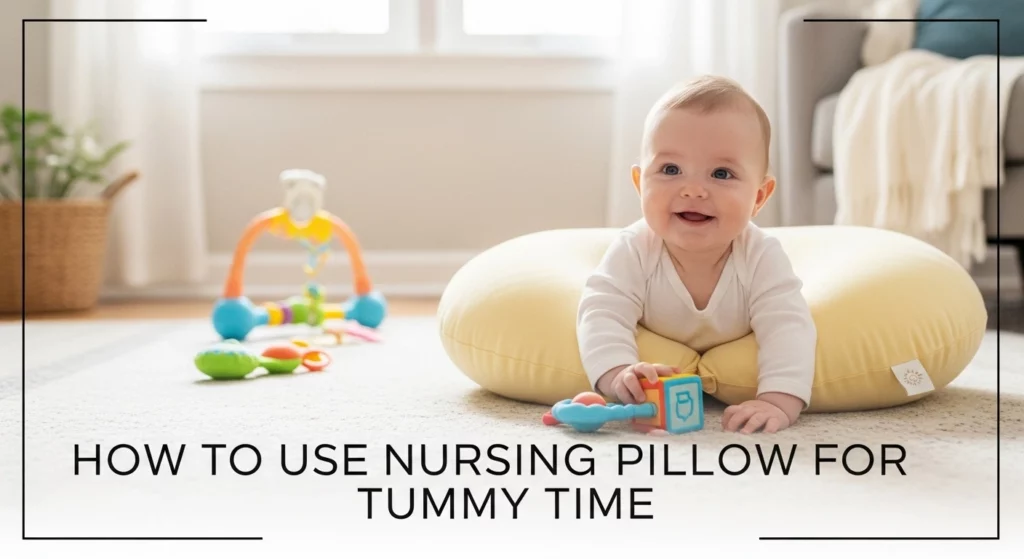
Placing your newborn flat on the floor can often lead to tears and frustration. Babies have heavy heads and weak neck muscles. This makes pushing against gravity physically demanding. However, you can make this daily practice much easier. Learning how to use a nursing pillow for tummy time gives your baby a mechanical advantage. This gentle incline lifts their upper body. As a result, they can look around and build strength naturally without getting upset.
The Mechanics of Infant Muscle Development
The American Academy of Pediatrics strongly promotes supervised tummy time. This practice is highly beneficial for early development. First, it helps prevent flat head syndrome. This condition often happens when babies spend too much time on their backs.
Remember, the Back to Sleep Campaign keeps babies safe at night. However, they still need supervised floor time during the day. Pushing up builds essential upper body strength. This specific muscle development is required for future motor skills like crawling.
Why a Support Cushion Helps
A flat surface is often too hard for a newborn baby. Therefore, a supportive surface makes a huge difference. Using a C-shaped nursing pillow lifts their chest. This reduces pressure on their developing muscles. If you do not have a feeding pillow, you have other options. You can easily find the best tummy time pillow for your nursery. These specific tools prop up the chest perfectly.
Step-by-Step Guide for Safe Positioning

Setting up the play area correctly is very important. You must position carefully to keep your baby safe. Let’s walk through the steps for using nursing pillow for baby exercises.
First, place the pillow on a firm play mat. Never put the pillow on a bed or a soft couch. Next, lay your baby over the curve of the cushion. Their chest should rest directly on the soft-filled fabric. Furthermore, their arms must be stretched out in front. This placement allows them to push up easily.
Monitoring the Arms and Hips
Always check your baby’s elbows during the exercise. They should rest directly under their shoulders. This proper alignment helps them lift up without sliding down. Additionally, their hips should rest flat against the floor mat. If they slide backward, adjust gently. Proper alignment is very important for their physical safety. In fact, learning the correct techniques for mechanical support actively prevents injuries.
Making Floor Time Fun and Engaging
Babies get bored quickly during this physical work. Therefore, you must engage actively to keep them happy. Using nursing pillow the accurate way means making the activity fun. Place high-contrast toys right in front of them. This encourages them to look up and reach out.
Furthermore, get down on the floor with them. Your face is their favorite thing to look at. Talking to them will increase tolerance for the exercise.
Knowing When to Take a Break
Start with very short sessions. Two or three minutes is perfect for beginners. If your baby starts crying, pick them up immediately. You can always try again later. Just like adults need help making comfortable bedding choices, babies need gradual physical adjustments. Build up their time on the floor slowly. Eventually, they will grow into the activity.
Real-Time Clinical Example
I recently worked with a two-month-old infant in my clinic. The baby cried instantly when placed flat on the floor. The parents were very frustrated and worried about his motor skills. I showed them how to use a U-shaped nursing pillow instead.
We placed the baby over the curve to elevate his chest. Instantly, the baby stopped crying and looked around the room. The slight lift removed the heavy strain from his neck. It is very similar to how adults feel relief when comparing different support systems for spinal pain. The right mechanical angle changes everything.
Transitioning Away from the Pillow
Your baby will not need the pillow nursing for tummy time forever. As they build strength, they will completely outgrow it. Watch for them to push up high on their own hands. Once they can do this, move toward flat floor time.
Dr. Sarah Jenkins, a leading pediatric physical therapist, explains this perfectly. “Once an infant demonstrates consistent head control, the pillow actually restricts their natural rolling movement.” Therefore, supervise closely and remove the prop when they are ready.
Frequently Asked Questions
When can I start using a nursing pillow for tummy time?
You can usually start using a support cushion when your baby is around one month old. Always ask your pediatrician before beginning any new exercise. Ensure your baby has enough neck control to clear their face from the fabric easily.
How long should my baby stay on the pillow?
You should start with very short sessions of three to five minutes. Watch your baby closely for signs of tiredness or frustration. You can gradually increase the time as their neck and shoulder muscles get stronger.
What if my baby falls asleep on the cushion?
You must move them to a flat, firm crib immediately. The American Academy of Pediatrics states that babies should never sleep on plush pillows. Sleeping at an angle on a soft surface is a severe safety risk.
Should I place their arms over or under the pillow?
Your baby’s arms must always go over the front of the cushion. Their elbows should rest flat on the floor mat directly under their shoulders. This specific position gives them the mechanical leverage needed to push up safely.
Can I use a Boppy pillow for this exercise?
Yes, a Boppy or similar C-shaped nursing pillow works perfectly for this activity. The curved design props up their chest and supports their sides gently. Just make sure you place the pillow on a firm floor mat.
Final Takeaways
Using a feeding pillow for floor time is highly beneficial. It provides a safe, comfortable position for developing muscles. Always supervise closely and keep the pillow on a flat surface. By lifting their chest, you help them build neck and shoulder strength safely. This simple tool turns a frustrating task into an enjoyable daily practice. Enjoy watching your baby grow and master new motor skills.
References
- American Academy of Pediatrics. (2025). Safe Sleep Guidelines and Motor Skill Development.
- National Institute of Child Health and Human Development. (2024). The Back to Sleep Campaign and Daytime Prone Play.
- Jenkins, S. (2023). Pediatric Physical Therapy: Transitioning from Prop Support to Floor Play.
- Can a Wedge Pillow Help With Tummy Tuck Recovery? - February 24, 2026
- How Firm Should a Pillow Be for Stomach Sleepers - February 24, 2026
- When to Stop Using a Tummy Time Pillow - February 24, 2026