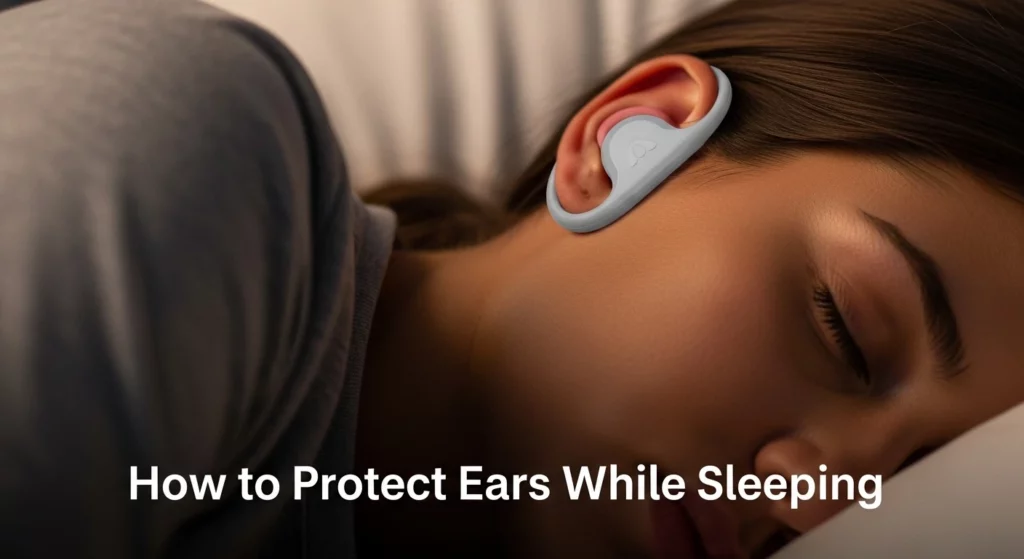
Unlike your eyes, your ears do not have lids to close them off from the world. They remain permanently open and active, processing sound signals and sensing the environment even while you are unconscious. This constant exposure makes them vulnerable to a unique set of nighttime threats that go beyond simple annoyance.
When we discuss how to protect ears while sleeping, we are not just talking about blocking out a snoring partner. We are talking about a comprehensive defense strategy against three distinct dangers: auditory damage from noise pollution, physical trauma from friction, and biological risks like infection.
Neglecting these defenses can lead to long-term hearing degradation or chronic outer ear pain. By implementing a few safety protocols, you can ensure that your ears rest just as deeply as the rest of your body.
Auditory Defense: Managing Noise Exposure
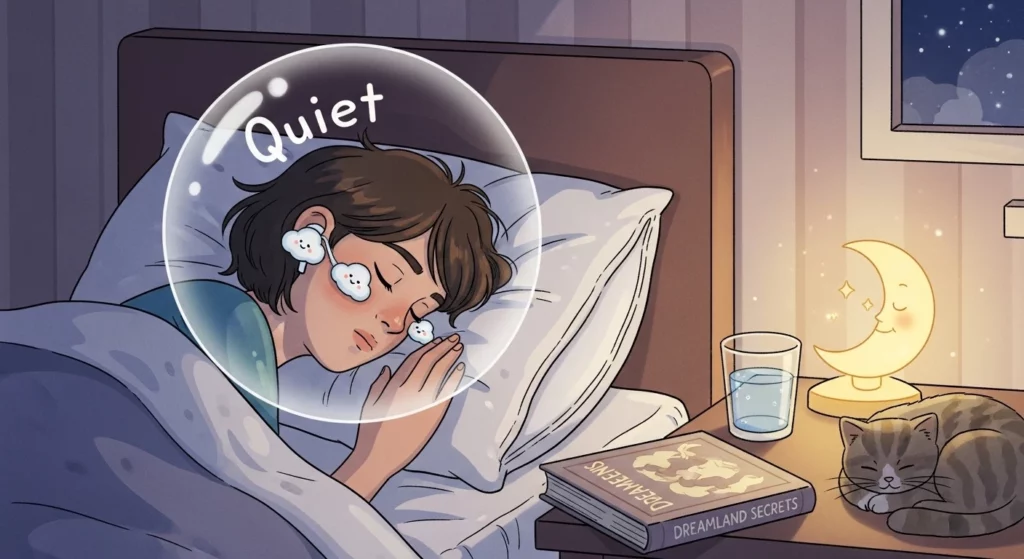
Noise pollution during sleep is a significant health risk because your brain continues to process sound as a threat signal. Sudden noises spike your cortisol levels, keeping your body in a state of low-level stress that prevents deep REM cycles. To combat this, many people turn to protecting ears via earplugs to create an artificial barrier.
If you choose to use earplugs, the material matters immensely. Foam earplugs are excellent for maximum noise reduction, but they are porous and breed bacteria quickly, meaning they must be discarded after one or two uses. Silicone or wax earplugs sit over the ear canal rather than inside it, offering a more hygienic option for long-term use, though they block less sound.
For those who find earplugs uncomfortable, white noise machines offer an alternative form of protection called “sound masking.” Instead of blocking sound, these machines fill the room with a constant frequency that smooths out sudden noise spikes. This protects your sleep cycle without requiring you to insert a foreign object into the ear canal.
Physical Defense: Preventing Trauma & Friction
While noise is an invisible threat, physical pressure is a tangible one. The relationship between sleeping position and protection of ears is critical, specifically for side sleepers. Pressing the ear against a standard pillow for eight hours creates friction that can abrade the skin and damage the underlying cartilage.
Using pillows to protect ear structures is the most effective way to mitigate this physical trauma. Specialized ergonomic pillows with ear pockets allow you to lie on your side while suspending the ear in mid-air. This prevents the “crushing” force that leads to conditions like Chondrodermatitis Nodularis Helicis (CNH), a painful pressure sore on the ear rim.
If you ignore this friction and trauma develops, the discomfort can become debilitating. At that point, protection shifts to management, and you must learn how to relieve ear pain while sleeping using thermal therapy and off-loading techniques until the tissue heals.
Biological Defense: Infection Control
The third pillar of protection is preventing infection. Your ear canal is a warm, dark environment, which makes it an ideal breeding ground for bacteria and fungi. To protect ears from infection during sleep, you must ensure the canal remains dry and ventilated.
You should never sleep with wet hair or immediately after a shower without drying your ears. The pillow traps moisture against the ear, creating a humid “swamp” effect that frequently leads to Otitis Externa, also known as Swimmer’s Ear. If you wear reusable earplugs, they must be washed with soap and water daily to prevent reintroducing bacteria into the canal.
The “Device Danger” (Earbuds & Headphones)
A modern threat to ear health is the habit of sleeping with earbuds or headphones. While listening to music or podcasts can help you fall asleep, leaving in-ear devices inserted all night is dangerous.
Earbuds block airflow completely and physically push earwax back down the canal, leading to impaction. Over time, this can cause temporary hearing loss and severe pain. If you need audio to sleep, switch to “pillow speakers” that lie under your pillowcase or a headband with flat speakers that sit on the surface of the ear without entering the canal.
Conclusion
Protecting your ears at night requires a proactive approach. You must defend against noise with clean earplugs or masking, defend against trauma with proper pillow ergonomics, and defend against bacteria by keeping the ears dry.
Your ears work 24 hours a day to keep you connected to the world. Taking these small steps to protect them ensures they remain healthy for the long term.
References
- National Sleep Foundation. (2023). “The Impact of Environmental Noise on Sleep.” (Data on cortisol and noise).
- Journal of Otolaryngology. (2021). “Earplug Use and the Risk of Otitis Externa.” (Study on hygiene and infection).
- American Academy of Audiology. (2022). “Safe Listening Habits for Sleep.” (Guidelines on earbuds vs. speakers).

- How to Use a Tummy Time Pillow Safely? - February 20, 2026
- Tummy Sleeper vs Side Sleeper Pillow: Which One Suits Whom? - February 20, 2026
- How to Choose the Best Pillow for Tummy Sleepers? - February 20, 2026