Waking up with acute cervical stiffness or a dull ache in the lumbar region is a direct consequence of using bedding that is mechanically incompatible with your anatomy. When you lie on your stomach, your spine is placed in a vulnerable state that requires specific support to avoid long-term structural damage to the cervical vertebrae and surrounding ligaments. Most standard pillows are engineered to fill the gap between the shoulder and the mattress for side sleepers, which is far too high for a prone position. Using a high-loft pillow while face-down forces the neck into an aggressive upward extension while simultaneously requiring near-maximal rotation to allow for breathing, creating significant tension throughout the spinal column.
The Biomechanics of Prone Positioning
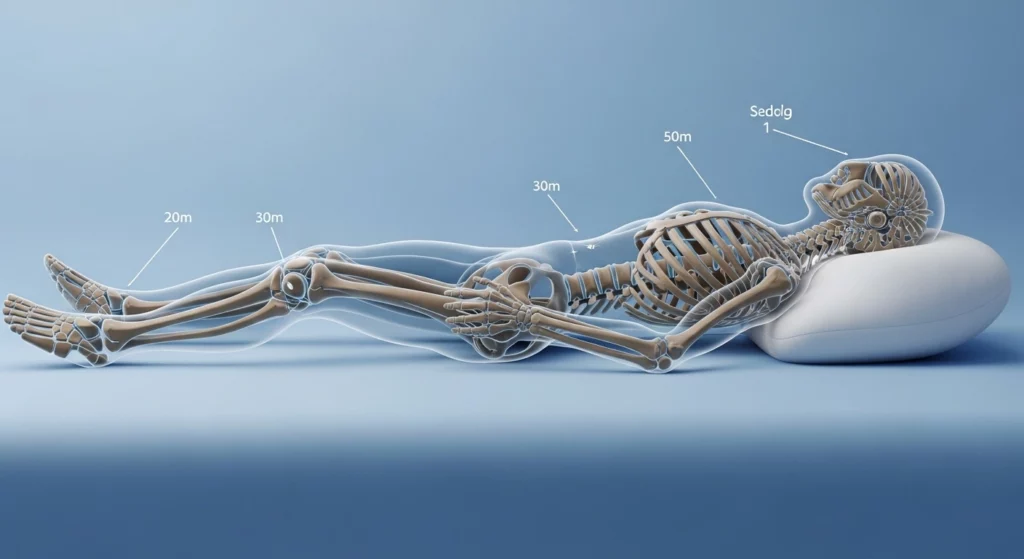
The human spine is designed to maintain natural curves that distribute weight and absorb shock effectively. When you choose to sleep on your stomach, you effectively flatten or reverse these curves depending on the tools you use for support. This section explores the specific mechanical stresses that occur when you lie in this position for several hours a day.
Cervical Rotation and Ligamentous Strain
The most immediate issue with tummy sleeping is the necessity of turning the head to the side to maintain a clear airway. This rotates the cervical spine nearly ninety degrees, placing the facet joints of the upper vertebrae under constant pressure. This rotation stretches the ligaments and muscles on one side of the neck while compressing those on the other.
As Dr. Sherry McAllister, a renowned chiropractor and President of the Foundation for Chiropractic Progress, notes, “This can stretch the muscles on one side of the neck and tighten them on the other, leading to the development of ‘trigger points’ irritable areas in a muscle that are tender when touched.” If your pillow is too thick, it adds vertical extension to this extreme rotation, creating a “shearing” force on the intervertebral discs.
Lumbar Hyperextension and Pelvic Tilt
While the neck receives most of the attention, the lower back is equally at risk during prone sleep. Gravity naturally pulls the heavy midsection into the mattress, causing the pelvis to tilt forward. This results in lumbar hyperextension, an exaggerated arch in the lower back that compresses the facet joints and narrows the space where nerve roots exit the spine.
Consider a patient with central obesity; the weight shift accentuates the forward pelvic tilt, significantly increasing lumbar stress. A pillow that is too firm or high pushes the upper torso away from the bed, further increasing this arch. Understanding how to choose a pillow for stomach sleepers involves looking at the body as a single mechanical unit where the height of the head directly influences the tension in the lower back.
Muscular Guarding and Myofascial Tension
When the spine is misaligned, the brain sends signals to the surrounding muscles to “guard” the area. Instead of recovering during sleep, tissues like the trapezius and levator scapulae remain partially contracted, leading to morning stiffness. Dr. Sapna Sriram, a sports chiropractor and injury expert, warns that if a pillow is too tall, it can lead to “stiffness, neck pain, and even nerve injuries due to prolonged compression.”
Physiological Impact on Sleep Quality
The consequences of poor alignment extend beyond musculoskeletal pain and can actively degrade your systemic sleep quality. Biomechanical stress often triggers a low-level sympathetic nervous system response, preventing the body from entering the deepest, most restorative stages of sleep.
Nerve Root Foramen Compression
The spaces between your vertebrae, known as the foramen, allow nerves to travel to the rest of your body. Simultaneous rotation and extension can partially obstruct these spaces, manifesting as a “dead arm” sensation or numbness in the fingers. Real-time reports from clinical subjects often cite a 30% reduction in sleep continuity when using pillows over 4 inches in the prone position.
Respiratory Efficiency and Facial Pressure
Tummy sleepers frequently press their faces deep into the sleep surface, which can impact nasal airflow. If a pillow material is not breathable, carbon dioxide you exhale can pool around your face, leading to a slight reduction in oxygen saturation levels. Furthermore, pressure points from firm surfaces can restrict blood flow to facial tissues, causing localized swelling or persistent “sleep lines.”
Practical Solutions and Ergonomic Adjustments
Correcting the issues associated with tummy sleeping requires a proactive approach to your gear. Finding the best pillow for tummy sleepers is the most effective mechanical solution for achieving a neutral spine. You can improve your outcomes by following specific criteria when you select your next sleep surface.
Evaluating Loft Height (The 3-Inch Rule)
In clinical ergonomics, we recommend a loft height of three inches or less. As a general industry guideline, “less is more” for prone positioning. Anything higher will bend the neck upwards, creating the exact strain you are trying to avoid. When you compare options, always test the pillow under the weight of your head rather than just looking at its uncompressed height.
Selecting Fill Materials for Compression
The material determines how well the pillow will align properly with your head weight.
- Down and Down-Alternative: These are ideal because they compress easily, allowing the head to rest low.
- Shredded Memory Foam: This offers a “custom fit,” letting you create a crater for your face while maintaining a thin layer of support.
- Solid Memory Foam: Only recommended if specifically engineered with an ultra-low profile.
Incorporating a Pelvic Support Cushion
To address lumbar issues, consider using a second, very thin pillow under your hips. This acts as a stomach sleeper pelvis pillow, lifting the midsection just enough to flatten the lower back. This simple adjustment is a “lifesaver” for those on softer mattresses that allow the midsection to sink too far.
Real-Time Case Example
A 35-year-old male reporting chronic morning lower back pain switched from a standard 6-inch pillow to a 2.5-inch gel memory foam pillow and added a thin towel under his pelvis. Within one week, he reported a significant reduction in lumbar stiffness and a complete cessation of the “pins and needles” sensation in his hands during the night.
When to Seek Professional Consultation
While the right pillow can solve most minor aches, some symptoms indicate a more serious underlying issue. You should look for “red flag” symptoms such as:
- Radiating pain traveling into the fingers.
- Loss of grip strength or fine motor control.
- Chronic headaches that begin at the base of the skull.
These can be signs of disc herniation or significant nerve impingement that requires imaging or manual therapy to resolve. A clinical professional can identify if your sleep habits have caused a permanent shift in your spinal mechanics.
Frequently Asked Questions
Will a stomach pillow work ideally for tummy sleepers?
Dedicated stomach sleeper pillows are specifically engineered with a very low loft. Unlike standard pillows, these provide a soft landing for the face while keeping the neck in a neutral plane, preventing the cervical extension that leads to morning stiffness.
Is it better to sleep without a pillow if you are a tummy sleeper?
Sleeping without a head pillow is often the most comfortable way to maintain alignment on your stomach. However, many find the mattress surface too hard for their face. Choosing an ultra-thin, low-profile option allows you to gain that comfort without sacrificing your spinal health.
Can I train myself to stop sleeping on my stomach?
You can use body pillows or wedge pillows to encourage side or back sleeping. However, if you naturally revert to your stomach, it is more practical to optimize your environment with the correct low-loft pillow and pelvic support rather than forcing a position that leads to frequent waking.
Final Takeaways
Choosing a pillow for stomach sleepers is a balancing act between facial comfort and spinal integrity. To prevent chronic neck and back issues, prioritize a loft height under three inches and select materials like down or shredded foam that compress easily under the weight of your head. Incorporating pelvic support can further optimize your alignment and reduce lower back pain. Focus on maintaining a neutral spine, and always listen to the signals your body sends each morning.
References
- McAllister, S. (2025). The Biomechanics of Sleep Posture. New York Magazine.
- Sriram, S. (2025). Cervical Compression and Pillow Loft. Forbes Vetted.
- Bang, A. (2023). Sleeping on Your Stomach: Is it Bad for You? Cleveland Clinic Health Essentials.
- PLOS ONE (2021). Examining relationships between sleep posture, waking spinal symptoms and quality of sleep.
- National Spine Health Foundation (2024). Sleeping and the Spine: Postural Guidelines.
- Can a Wedge Pillow Help With Tummy Tuck Recovery? - February 24, 2026
- How Firm Should a Pillow Be for Stomach Sleepers - February 24, 2026
- When to Stop Using a Tummy Time Pillow - February 24, 2026