Best Non Toxic Pillows: What the Labels Don’t Tell You
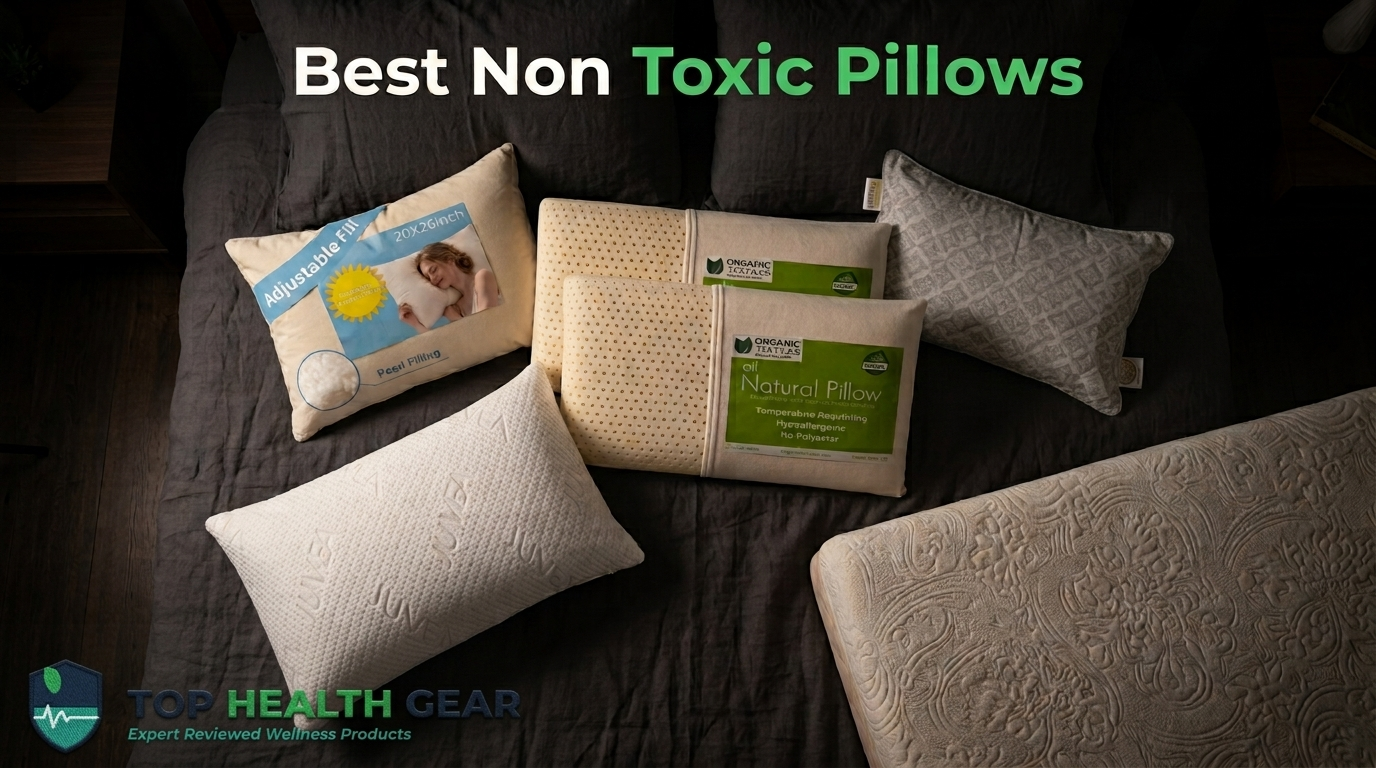
The best non toxic pillows carry verified third-party certifications like GOTS, OEKO-TEX Standard 100, or GOLS rather than self-applied “natural” labels that have no enforcement behind them. The Happsy Organic Latex Pillow is the best overall pick, holding simultaneous GOTS and GOLS certification on the finished product with no polyurethane foam or synthetic flame retardants. Most conventional pillows release volatile organic compounds during the first weeks of use, which is the core problem a certified non-toxic pillow solves. People already managing neck pain or pressure from their current pillow will find that material choice and certification level are the two factors that matter most.
Quick Comparison: Best Non Toxic Pillows
Product | Best For | Key Feature | Price |
Happsy Organic Latex Pillow | Best Overall | GOTS + GOLS certified, Made in USA | |
JUVEA Elevate Talalay Latex | Best Premium | OEKO-TEX Class 1, zero off-gassing | |
ORGANIC TEXTILES Natural Latex | Best Value | GOTS certified organic cotton cover | |
LOFE Organic Adjustable Pillow | Best Budget | OEKO-TEX + CPSC, adjustable fill | |
OrganicTextiles Cotton Pillow | Best for Hot Sleepers | GOTS certified, all-cotton fill, Made in USA |
In-Depth Reviews: Best Non Toxic Pillows
Happsy Organic Latex Pillow
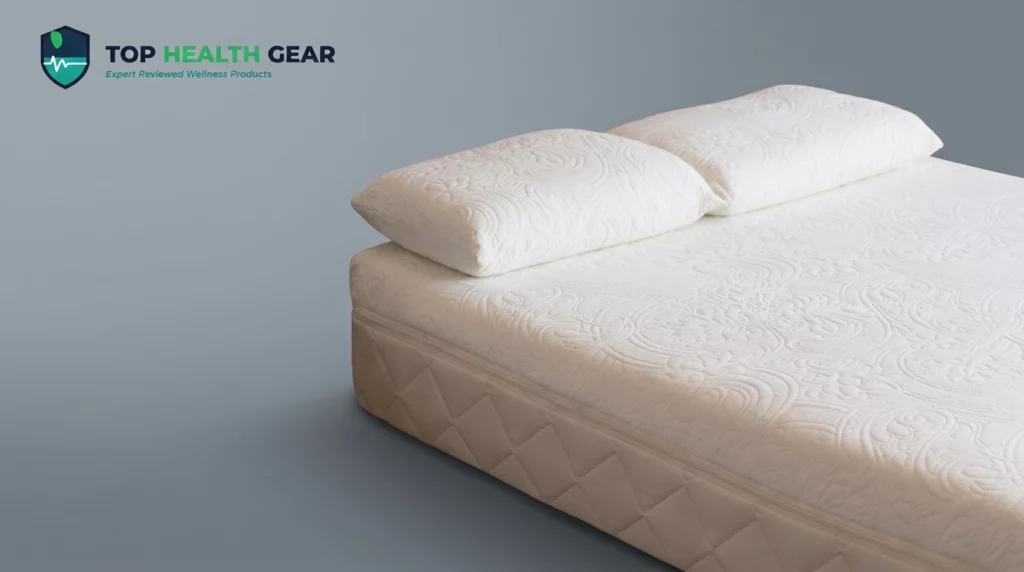
The Happsy pillow holds simultaneous GOTS and GOLS certification on the finished product, meaning both the organic latex fill and the organic cotton cover were audited through the entire supply chain rather than just at the material level. It is handcrafted in the USA without polyurethane foam, flame retardants, or synthetic fill, which makes it the most straightforwardly verifiable non-toxic option in this price range. The cover is removable and machine washable, and the natural latex core resists dust mites without chemical treatment.
Why We Picked It:
Dual GOTS plus GOLS finished-product certification and US manufacturing make this the easiest pick to verify as genuinely non-toxic.
Pros:
GOTS and GOLS certification cover both the fill and the textile, not just individual components.
Cons:
Natural latex has a mild rubber scent on first unpacking that typically clears within 24 to 48 hours of airing.
JUVEA Elevate Natural Talalay Latex Pillow
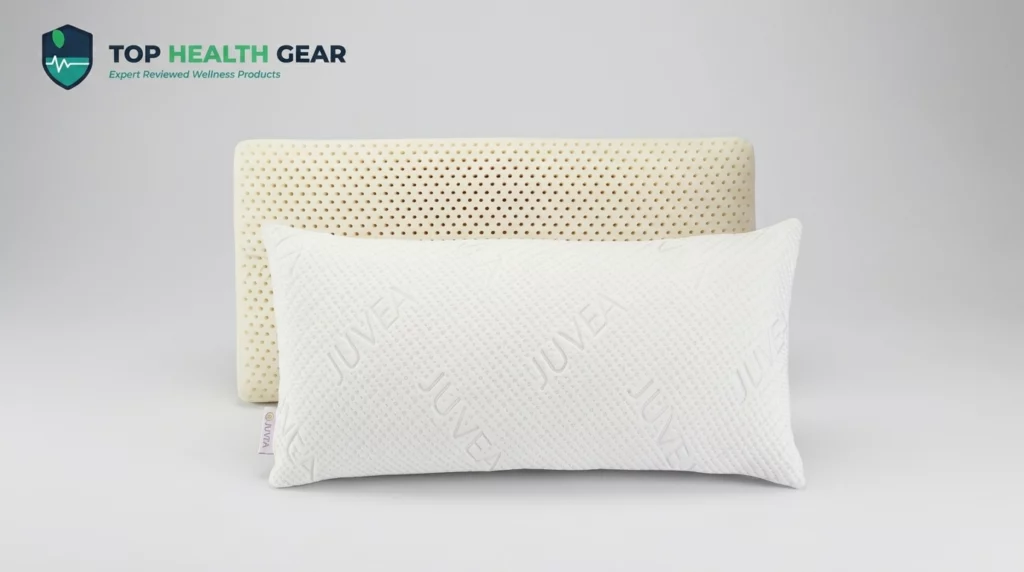
Manufactured in Shelton, Connecticut from natural Talalay latex tapped from FSC-certified trees, the JUVEA Elevate carries OEKO-TEX Standard 100 Class 1 certification, the most restrictive tier that also covers products used by infants. The open-cell Talalay structure allows airflow at the cellular level, so the pillow sleeps cool without any synthetic phase-change coating. It pairs with an organic cotton cover and holds its loft without flattening over years of regular use.
Why We Picked It:
OEKO-TEX Class 1 baby-safe certification combined with USA Talalay manufacturing provides a higher documented safety standard than most competing options.
Pros:
OEKO-TEX Class 1 is the most restrictive available tier, independently verified with a published certificate number.
Cons:
Solid Talalay core is not adjustable, so loft height is fixed to the profile you select at purchase.
ORGANIC TEXTILES Natural Latex Pillow with GOTS Organic Cotton Cover
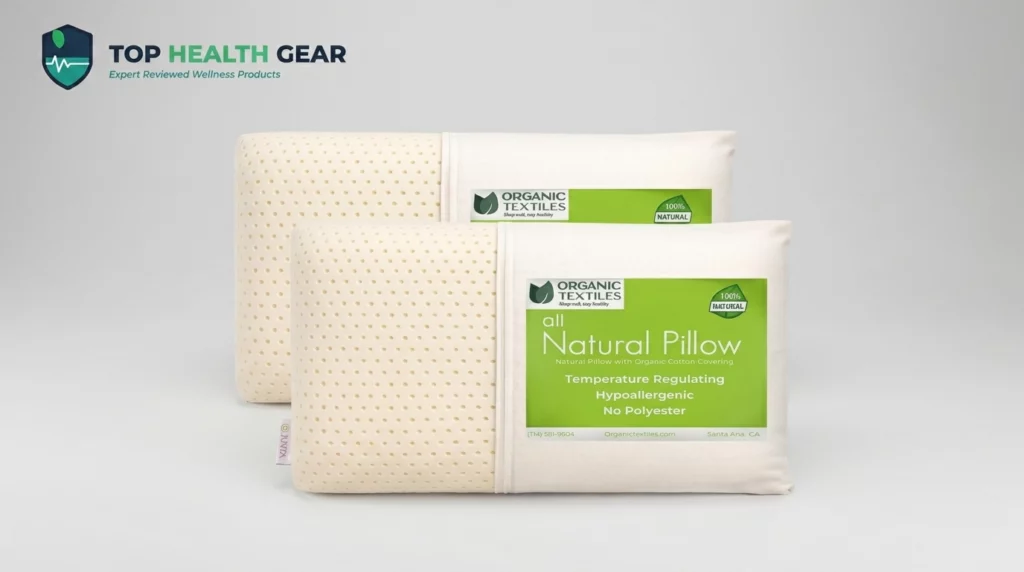
ORGANIC TEXTILES sources latex from eco-conscious suppliers and covers it in a GOTS-certified organic cotton shell that zips off for washing, giving the pillow a clean-material story at a lower price point than US-made alternatives. The natural latex fill is available in multiple firmness options from extra soft to firm, making it practical for back sleepers and side sleepers who need different levels of support. All materials are described as free from synthetic pesticide residues and conventional chemical processing.
Why We Picked It:
GOTS-certified organic cotton cover combined with multi-firmness options makes this the most flexible value choice for households with different sleeper types.
Pros:
Available in multiple firmness levels so different sleepers in one household can choose the right feel.
Cons:
Latex certification is supplier-level rather than GOLS finished-product certified, which is worth noting for buyers with strict documentation requirements.
LOFE Organic Adjustable Pillow
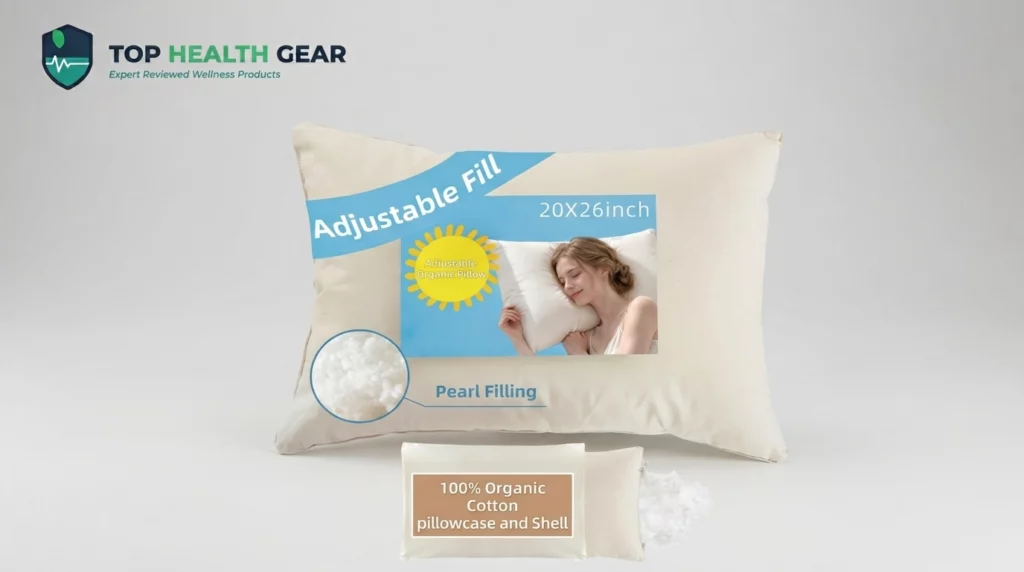
The LOFE pillow meets both OEKO-TEX Standard 100 and CPSC safety requirements, and the brand includes the actual certification documentation, which separates it from pillows that claim non-toxic status without published verification. The adjustable side zipper lets you add or remove pearl fiber fill to dial in loft for stomach, back, or side sleeping without buying a separate product. The entire pillow including the organic cotton shell is machine washable on a standard cycle.
Why We Picked It:
Published OEKO-TEX and CPSC certification numbers plus machine-washable construction make this the most practical entry-level non-toxic option.
Pros:
Comes with matching organic cotton pillowcase and documented certification numbers for verification.
Cons:
Pearl fiber fill is less resilient than latex over time and may need refluffing after extended use.
OrganicTextiles Organic Cotton Pillow
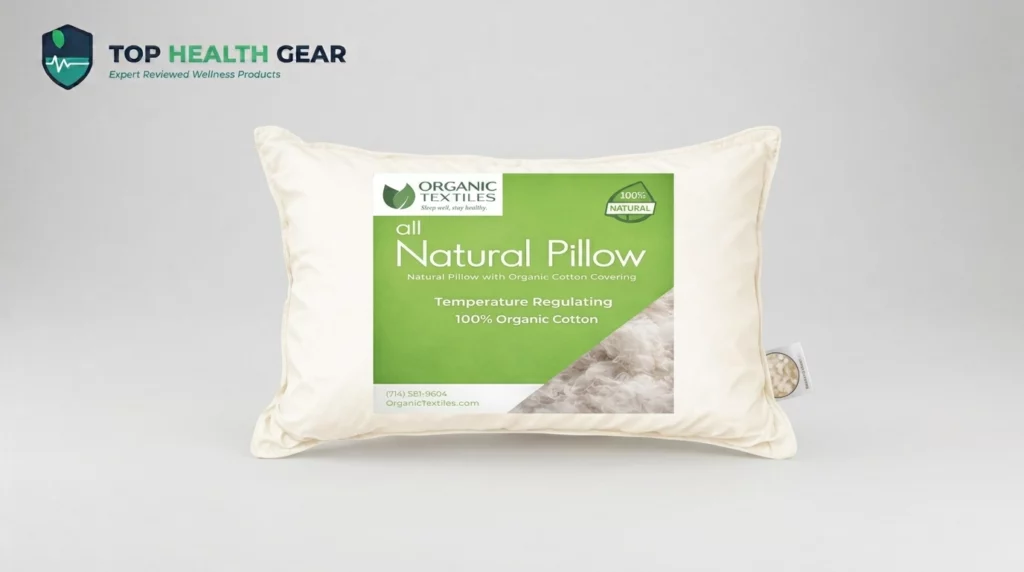
Made in the USA with GOTS-certified organic cotton for both the fill and the cover, this pillow avoids latex entirely, making it a practical choice for sleepers with latex sensitivities who still want a verified non-toxic option. The breathable cotton fill creates natural airflow that dissipates body heat more readily than foam or latex, which makes it a consistent pick for people who run warm at night. Loft is adjustable through a zipper that allows fill removal, and the whole pillow goes into a standard washing machine.
Why We Picked It:
An all-cotton fill and cover with GOTS certification and USA manufacturing is the clearest option for latex-sensitive buyers who prioritize cooling.
Pros:
Both fill and cover carry GOTS certification, which is the full-product standard rather than a component-only claim.
Cons:
Cotton fill compresses faster than latex and may need periodic top-ups to maintain consistent loft.
How Do You Know If a Pillow Is Truly Non-Toxic?
A pillow is verifiably non-toxic when it carries a third-party certification with a published certificate number that you can look up independently. The most recognized certifications are OEKO-TEX Standard 100, which tests for over 100 harmful substances at the finished-product level, and GOTS, which covers the organic integrity of textile materials through the full production chain. A label that says “natural” or “eco-friendly” without a specific certification number and issuing body is a marketing claim, not an independently verified standard.
What Pillows Don’t Have Microplastics?
Pillows filled with natural latex, organic cotton, kapok, or buckwheat do not contain microplastics because none of those materials are derived from synthetic polymers. The main sources of microplastics in conventional pillows are polyester fill, polyurethane foam cores, and synthetic down alternatives, all of which shed microscopic plastic particles through normal compression and washing cycles. Side sleepers switching to organic cotton pillows or natural latex also benefit from better airflow compared to synthetic fills, since plant-based and rubber-derived materials have open structures that do not trap heat the way closed-cell foam does. If you are also evaluating cooling mattress pads for night sweats, replacing a synthetic pillow at the same time addresses both the microplastic and the heat retention problem from two sides.
Is Organic Cotton Pillow Fill Actually Safer Than Synthetic Fill?
Organic cotton fill is grown without synthetic pesticides and processed without formaldehyde-based wrinkle treatments, which are standard in conventional cotton processing. GOTS-certified organic cotton must meet both ecological and social criteria at every step from the farm through the final product, making it one of the most traceable fill options available. The trade-off is that cotton fill compresses more quickly than natural latex, so long-term loft maintenance requires either refluffing or a pillow with an adjustable zipper that lets you add fill back. People who replace their pillow frequently tend to find organic cotton fill more cost-effective over time than solid latex cores, which hold their shape for longer but at a higher initial price point.
Non-Toxic Pillow Buying Guide
Certification Tier | GOTS and GOLS are the strongest standards because they cover the full product from raw material to finished item. OEKO-TEX Standard 100 and GREENGUARD Gold confirm the finished product is tested for harmful substance limits. |
Fill Material | Natural latex resists dust mites and mold without chemical treatments. Organic cotton breathes well and suits hot sleepers. Buckwheat and kapok are plant-based alternatives with distinct support profiles. |
Adjustable Loft | Removable fill lets you set pillow height to match your shoulder width and sleep position. This matters more for side sleepers, who need more loft than back or stomach sleepers. |
Cover Fabric | GOTS-certified organic cotton is the benchmark for covers. Tencel (lyocell) from eucalyptus is a well-documented alternative that is breathable and produced without toxic solvents. |
Washability | Some natural latex cores cannot go in a washing machine. Look for zip-off washable covers as a minimum. Fully washable pillow options simplify long-term hygiene maintenance. |
Odor on Arrival | Natural latex has a mild rubber scent when first unpacked. This is normal and typically fades within 24 to 48 hours of airing. It is not a sign of off-gassing from synthetic chemicals. |
USA vs. Imported | Made in USA products like Happsy and JUVEA give clearer supply-chain visibility. Import products can still be certified non-toxic when they carry verified third-party certification numbers. |
Frequently Asked Questions
What is the safest non-toxic pillow?
The safest non-toxic pillows carry multiple finished-product certifications, specifically GOTS, GOLS, and OEKO-TEX Standard 100, all verified with published certificate numbers. The Happsy Organic Latex Pillow holds GOTS and GOLS certification on the finished product and is manufactured in the USA, making it one of the most verifiable options currently available on Amazon.
How do I know if my pillow is non-toxic?
Check whether the brand publishes a specific certification number from a recognized third-party body such as OEKO-TEX, GOTS, or GREENGUARD Gold. If the listing only says “non-toxic” or “natural” without a verifiable certificate number and issuing organization, the claim is self-applied and not independently confirmed.
What is the best non toxic pillow for side sleepers?
The JUVEA Elevate Natural Talalay Latex Pillow is the strongest option for side sleepers because it holds OEKO-TEX Class 1 certification and provides a high-loft profile that keeps the neck aligned without relying on synthetic foam. The LOFE Organic Adjustable Pillow is a budget-friendly alternative with adjustable fill so side sleepers can set the loft they need.
What pillows do not have microplastics?
Pillows filled with natural latex, organic cotton, kapok, buckwheat, or wool do not contain microplastics. Microplastics in bedding come from synthetic polyester fill and polyurethane foam, which shed plastic particles through compression and washing. All five pillows reviewed here use plant-based or rubber-derived fills and are free from synthetic polymer fill.
Do non-toxic pillows cost more than regular pillows?
Certified non-toxic pillows generally cost more than conventional options because of the cost of third-party audits, organic sourcing, and in some cases US manufacturing. However, the price range is wide: the LOFE Organic Pillow is a budget-accessible option, while the JUVEA and Happsy options sit in the mid-range. The higher initial cost is offset by longer durability in latex-filled options.
Final Verdict
Best Overall: Happsy Organic Latex Pillow Dual GOTS and GOLS finished-product certification with USA manufacturing makes this the most verifiable non-toxic option at a reasonable price.
Best Premium: JUVEA Elevate Talalay Latex Pillow OEKO-TEX Class 1 baby-safe certification and American-made Talalay latex deliver the highest documented chemical safety standard in this group.
Best Value: ORGANIC TEXTILES Natural Latex Pillow GOTS-certified organic cotton cover and multi-firmness options make this the most versatile mid-price non-toxic pick for different sleep positions.
Best Budget: LOFE Organic Adjustable Pillow Published OEKO-TEX and CPSC certificate numbers with a fully machine-washable adjustable design provide the most documented safety proof at the lowest price.

- Best Foot Massagers With Heat for Deeper Everyday Comfort - August 21, 2026
- Best Non Toxic Pillows: What the Labels Don’t Tell You - August 17, 2026