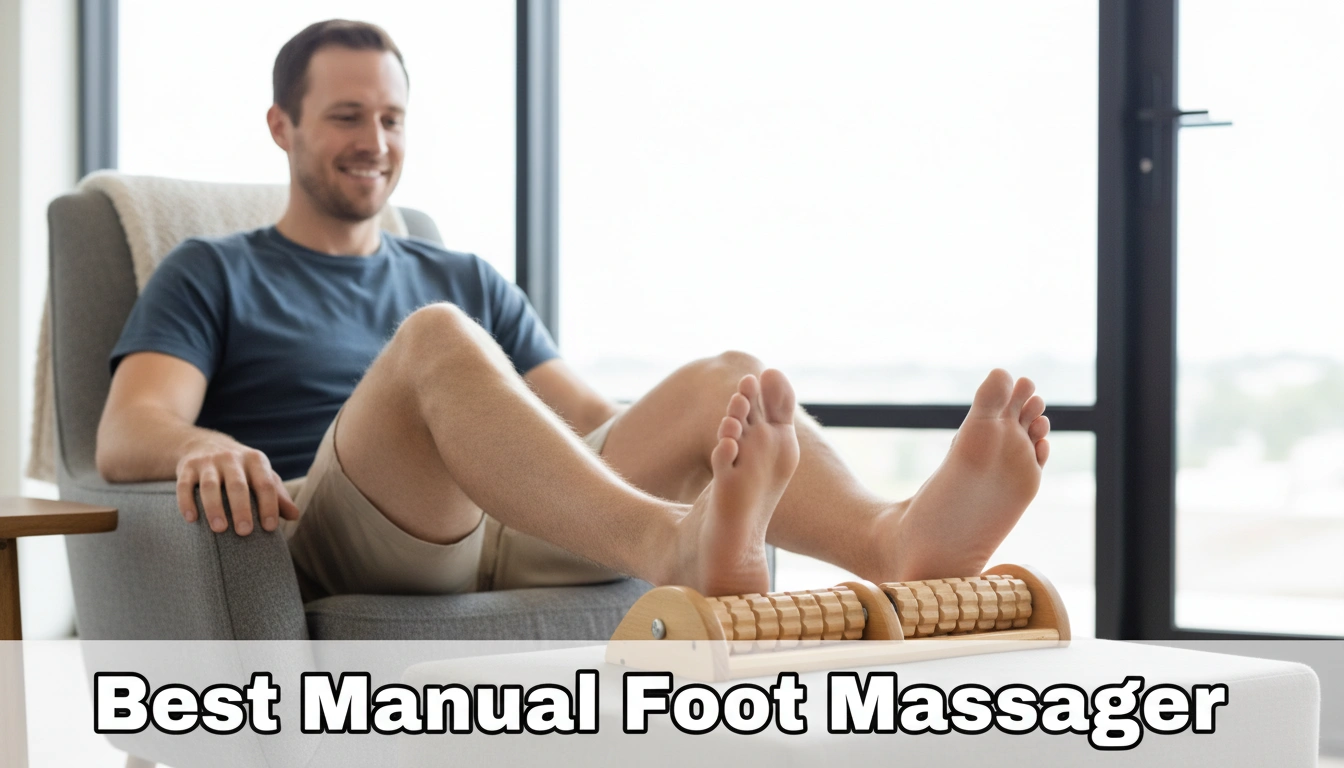
Top 3 Best Manual Foot Massagers for Targeted Arch Compression Tested for 2026
The human foot is an architectural marvel. It is constructed from 26 distinct bones, 33 joints, and over 100 complex muscles, tendons, and ligaments. This intricate structure must absorb the massive kinetic impact of your entire body weight thousands of times per day. When modern, rigid footwear restricts the natural splaying of your metatarsals, the thick connective tissue along the bottom of your foot, the plantar fascia, becomes chronically inflamed and structurally compromised.
While sophisticated electronic machines offer excellent automated relief, they completely lack the central nervous system’s proprioceptive feedback loop. A manual foot roller provides a direct, uninterrupted mechanical connection between your sensory perception and the applied therapeutic force. You dictate the exact angle, the precise depth, and the specific duration of the tissue compression. This absolute biomechanical control makes non-electric rollers highly effective instruments for dismantling isolated fascial adhesions. Let us systematically evaluate the most structurally sound manual foot massagers available for your orthopedic recovery this year.
Our Verdict: What’s the Best Manual Foot Massager?
Selecting the optimal manual roller requires evaluating the specific material density and node topography in relation to your personal pain threshold. The BESKAR model offers a highly portable, aggressive synthetic spike pattern for isolated trigger points. Conversely, the TheraFlow and R RUCKERCO models utilize classic wooden construction to treat both feet simultaneously with broader reflexology ridges.
Product Name | Key Clinical Feature | Best For | Price |
|---|---|---|---|
1. BESKAR Foot Massager Roller | Portable Synthetic Spikes | Isolated Trigger Point Therapy | |
2. TheraFlow Foot Massager | Dual-Foot Wooden Chassis | Seated Bilateral Reflexology | |
3. R RUCKERCO Foot Massager | Multi-Textured Wooden Nodes | Aggressive Medial Arch Relief |
1. BESKAR Foot Massager Roller for Plantar Fasciitis Relief
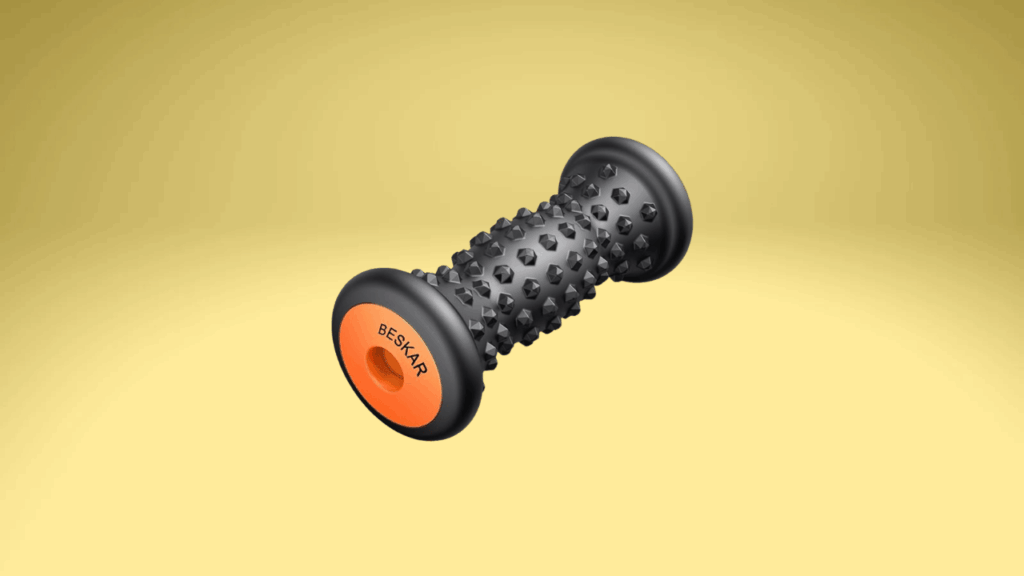
Isolating a tiny, calcified trigger point requires an instrument that can wedge itself deeply into the crevices of your foot’s musculature. Large, flat rolling devices frequently bridge across the arch, entirely missing the deepest muscular restrictions. The BESKAR massager roller solves this geometric problem by utilizing a highly compact, barbell-shaped design covered in dense, aggressive synthetic spikes.
This specific massager is molded from a firm, high-density thermoplastic rubber or polyurethane material. Unlike rigid wood, this synthetic compound offers a microscopic degree of elastic yield. When you apply your full standing body weight onto the roller, the spikes gently grip the epidermal layer, preventing the device from rapidly shooting out from under your foot. The central groove is anatomically contoured to comfortably cradle the thick plantar fascia band, ensuring the spikes strike the surrounding intrinsic foot muscles rather than bruising the central ligament.
Because the unit is entirely synthetic, it is completely impervious to moisture. You can safely soak the roller in an ice bath prior to use, effectively combining deep tissue cross-friction massage with acute cryotherapy to rapidly suppress localized inflammation. It is an exceptionally rugged, highly portable tool designed for athletes and office workers who require immediate, pinpoint structural relief.
Pros:
- Highly portable size
- Washable synthetic material
- Aggressive spiky nodes
Cons:
- Treats single foot
- Rolls away easily
Why Choose the BESKAR Foot Massager Roller
You should select this roller if you require a highly portable, travel-friendly device that can easily withstand extreme downward pressure. The synthetic spikes provide excellent targeted friction for dense, isolated muscular knots.
2. TheraFlow Foot Massager (Wooden Foot Roller)
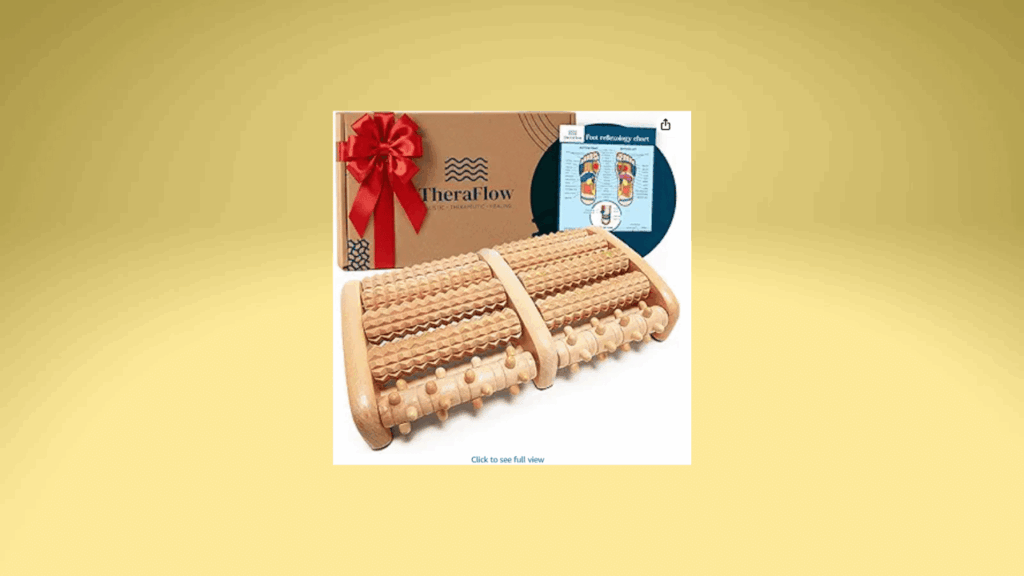
Bilateral foot pain frequently indicates a systemic kinetic chain issue rather than a singular, isolated injury. Treating one foot at a time can be tedious and time-consuming, especially after a grueling twelve-hour shift on a hard concrete floor. The TheraFlow massager fundamentally optimizes your home recovery protocol by providing a wide, dual-foot chassis. This allows you to simultaneously flush metabolic waste from both lower extremities while seated comfortably in your living room.
This classic unit is constructed from highly durable, sustainably sourced wood. It features ten independent rolling cylinders, five for each foot. The topography of these rollers is specifically designed to mimic traditional reflexology tools. Four of the rows feature horizontal, wave-like ridges designed to broadly strip the superficial fascia. The final row, positioned near the heel, incorporates highly pronounced acupressure nubs to aggressively dig into the thick, stubborn tissue surrounding the calcaneus bone.
The wooden base is intentionally curved to match the natural longitudinal arch of the human foot, ensuring maximum surface area contact throughout the entire rolling motion. Furthermore, the base is equipped with non-slip grips, preventing the entire unit from sliding across hardwood or tile floors during a vigorous session. The TheraFlow massager is a phenomenal, low-tech medical instrument for comprehensive, daily plantar maintenance.
Pros:
- Dual foot treatment
- Stable wooden base
- Reflexology ridge design
Cons:
- Squeaks during use
- Bulky for travel
Why Choose the TheraFlow Foot Massager
You must choose this device if you prefer treating both feet simultaneously while seated at a desk or on a sofa. The broad wooden ridges provide excellent, sweeping fascial release without the intense sharpness of synthetic spikes.
3. R RUCKERCO Foot Massager
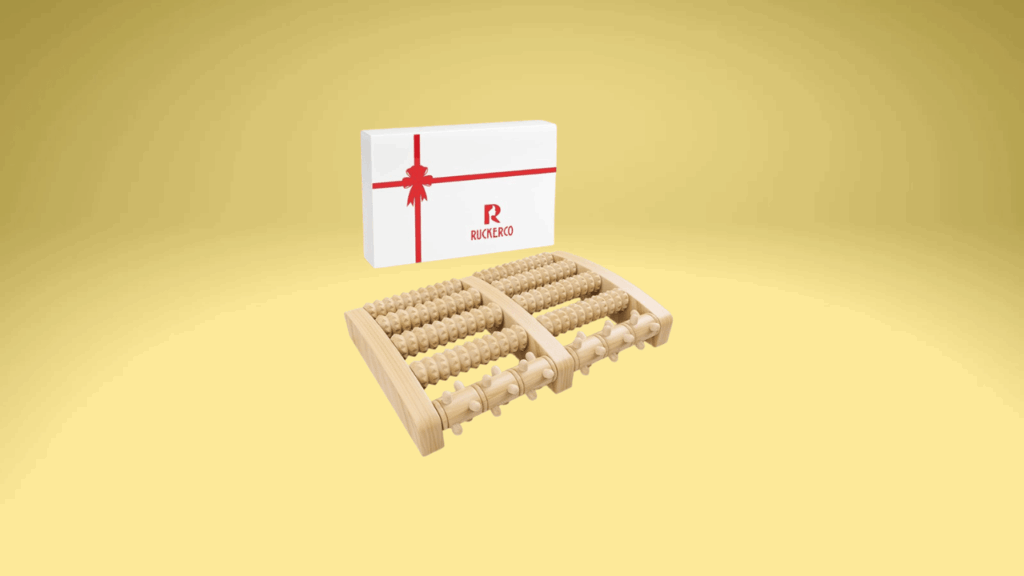
The medial longitudinal arch, the primary curve on the inside of your foot, absorbs the highest degree of mechanical stress during normal gait mechanics. When this arch collapses or becomes rigid, the resulting pain radiates directly up into the ankle and knee joints. The R RUCKERCO massager specifically targets this critical anatomical structure by employing a highly aggressive, deeply contoured wooden frame.
Similar to the TheraFlow, this device features a dual-foot, five-row configuration. However, the R RUCKERCO model distinguishes itself through its heavily textured node variety. The independent rollers are covered in pronounced, sharply cut wooden pegs rather than smooth waves. This spiky wooden topography generates significantly higher localized friction, aggressively grabbing and stretching the skin and underlying connective tissue as you roll.
The steep arch of the chassis forces your foot into an optimal degree of dorsiflexion, stretching the Achilles tendon simultaneously as you treat the sole. Consequently, the user must carefully modulate their downward pressure, as the sharp wooden pegs can easily irritate sensitive epidermal layers if utilized too aggressively. The R RUCKERCO massager provides an unyielding, incredibly deep mechanical intervention for the most stubborn, chronic fascial adhesions.
Pros:
- Multi-textured massage nodes
- Steep arch contour
- Solid wood construction
Cons:
- Pegs occasionally loosen
- Requires seated operation
Why Choose the R RUCKERCO Foot Massager
Choose this product if your foot requires an exceptionally deep, aggressive mechanical bite. The sharp wooden pegs effortlessly penetrate thick plantar calluses and highly dense scar tissue.
Extensive Buying Guide: How to Choose the Best Manual Foot Massager
Procuring a manual reflexology tool appears deceptively simple compared to purchasing complex electronic medical equipment. However, the physical geometry, material density, and node configuration of the roller completely dictate its therapeutic efficacy. To ensure you select a device that actively rehabilitates your tissue rather than merely scratching your skin, you must carefully analyze several structural parameters.
Wood vs. Synthetic Materials
The raw material of the massager determines the exact type of kinetic feedback transferred into your nervous system. Solid lotus or theaceae wood is entirely rigid. It possesses zero structural yield. When you drive a wooden peg into your foot, 100% of the mechanical force penetrates the muscle belly. This absolute rigidity makes wooden rollers exceptional tools for stripping incredibly thick, stubborn scar tissue, but they can easily cause bone bruising if you roll them recklessly over your heel or metatarsal joints.
Conversely, synthetic rollers manufactured from high-density polyurethane or thermoplastic rubber offer a microscopic degree of compression. The synthetic spikes gently bend and grip the tissue under extreme body weight. This subtle elasticity allows you to safely utilize synthetic rollers while standing up, applying massive amounts of downward force without agonizing skeletal pain. Additionally, synthetic materials are entirely non-porous, meaning they will not absorb sweat or harbor bacterial growth over years of daily use.
Node Topography and Arch Alignment
The physical shape of the contact points governs the physiological response. Broad, smooth ridges are designed for sweeping myofascial release. They act like a rolling pin, physically ironing out the superficial connective tissue and pushing stagnant lymphatic fluid horizontally out of the foot. This broad topography is highly effective for general fatigue and end-of-day muscle soreness.
Sharp, spiky nodes serve an entirely different clinical function. They are designed for ischemic compression and trigger point therapy. The sharp points physically wedge between bundled muscle fibers, breaking apart localized cellular adhesions. When evaluating a roller’s architecture, you must also ensure the central chassis curves upward to meet the natural concavity of your medial arch. A perfectly flat roller will exclusively massage your heel and the ball of your foot, completely missing the primary plantar fascia ligament suspended in the middle.
Portability and Lifestyle Integration
Compliance is the single most critical factor in orthopedic rehabilitation. If your therapy tool is inaccessible, your tissue will not heal. While a heavy-duty foot calf massager provides automated pneumatic compression for vascular return, manual rollers excel strictly in myofascial release precisely because they can be used anywhere.
Single-foot synthetic rollers are incredibly compact. They easily fit inside a gym bag, a briefcase, or a desk drawer. You can discreetly roll your foot during a corporate meeting or immediately after stepping off a treadmill. Large, dual-foot wooden chassis models are generally restricted to home use. They occupy significant floor space and often squeak audibly as the wooden dowels rotate against the frame. You must actively align the physical dimensions of the tool with your daily professional and athletic environments.
Understanding Single vs. Dual Foot Designs
Dual-foot massagers are inherently designed for seated operation. Attempting to stand on a dual-foot wooden chassis requires balancing your entire body weight on rotating wooden cylinders, which is an immediate, highly dangerous fall hazard. Seated operation naturally limits the amount of downward force you can generate, restricting the massage to a moderate, relaxing depth.
Single-foot rollers are highly versatile. You can use them while seated for gentle relief, or you can stand up, firmly plant your non-working foot on the ground, and drive 80% of your body weight directly downward into the working foot. This standing application allows for incredibly aggressive, clinical-grade ischemic compression that seated, dual-foot models simply cannot replicate safely.
The Physiology of Targeted Arch Compression
To effectively utilize a manual foot massager, you must move beyond simply rubbing your foot back and forth. You must understand the specific neurobiological and biomechanical mechanisms you are actively manipulating.
Myofascial Release Mechanics
Fascia is the tough, biological cling-wrap that tightly encases every muscle fiber, blood vessel, and nerve in your foot. Through repetitive mechanical trauma and chronic dehydration, this fascia becomes sticky and severely rigid. It physically binds the sliding muscular layers together, creating hard, painful restrictions known as adhesions.
When you apply deep, sustained pressure with a manual roller, you generate localized mechanical heat and shear force. This physical friction actively melts the ground substance, the gel-like fluid sitting between the fascial layers. As the ground substance warms and liquefies, the fascial layers unstick, immediately restoring the natural gliding mechanics of your intrinsic foot muscles. Unlike an electric shiatsu foot massager that utilizes a continuous, unyielding motorized rotation, a manual roller allows you to pause and hold pressure exactly where the fascial adhesion is thickest.
The Gate Control Theory of Pain in the Foot
When your plantar fascia is inflamed, specialized pain receptors fire a slow, continuous danger signal up your tibial nerve, through your spinal cord, and into your brain. This creates the agonizing, throbbing sensation in your heel. However, your foot is also densely packed with fast-acting touch and pressure receptors.
When you forcefully roll your foot across aggressively textured wooden or synthetic nodes, you massively stimulate these fast-acting mechanoreceptors. Because these pressure signals travel up the spinal cord significantly faster than the slow pain signals, they physically reach the brain first. This rapid influx of sensory data effectively closes the neurological gate, actively blocking the underlying pain signals from registering in your conscious perception.
Acupressure and Reflexology Neurological Pathways
Eastern reflexology maps specific zones on the sole of the foot to corresponding internal organs and systemic bodily functions. While Western allopathic medicine focuses entirely on the musculoskeletal mechanics of the foot, the neurological impact of acupressure is highly documented.
The sole of the human foot contains approximately 7,000 distinct nerve endings. Applying dense, targeted pressure to these nerve clusters triggers a massive parasympathetic nervous system response. It forcefully shifts your body out of a state of sympathetic stress and into a state of rest and digest. This rapid neurological down-regulation immediately lowers your resting heart rate, reduces systemic cortisol levels, and induces profound, full-body relaxation.
Targeted Manual Relief Strategies
Haphazardly rolling your foot across a piece of wood for thirty seconds will not yield long-term structural changes. You must approach your manual therapy with deliberate, clinical methodology.
Releasing the Plantar Fascia Before Morning Weight-Bearing
The most devastating damage to the plantar fascia occurs during your first steps out of bed. While you sleep, the injured ligament cools down and attempts to heal in a shortened, contracted position. When you stand up, your body weight violently stretches the rigid tissue, instantly tearing the fragile new healing bonds.
To arrest this cycle of daily damage, keep your manual foot roller directly beside your bed. Before standing up, sit on the edge of the mattress and place your affected foot onto the roller. Apply firm, downward pressure and slowly roll from the base of your heel to the ball of your foot for exactly two minutes. This manual friction warms the tissue, pushes fresh blood into the ligament, and safely elongates the fascia before it is subjected to load-bearing stress.
The Ice Bottle Technique vs. Manual Rollers
Physical therapists frequently recommend rolling your foot over a frozen water bottle to treat acute plantar fasciitis. While acute cryotherapy is highly effective for numbing severe pain and suppressing acute swelling, the smooth plastic bottle offers zero localized friction to break down scar tissue.
To maximize your recovery, you must combine both modalities. Utilize a solid synthetic roller and place it in the freezer for two hours. Once frozen, perform your standard rolling protocol. The dense, frozen spikes will aggressively break down the rigid scar tissue while simultaneously constricting the local blood vessels to prevent the friction from causing massive inflammatory rebound swelling.
Seated vs. Standing Compression Protocols
If your foot pain is localized strictly in the soft belly of your medial arch, seated rolling is generally sufficient. While seated, slowly trace the entire length of the arch, hunting for a specific spot that feels like a bruised, hardened marble beneath the skin. Once you locate this trigger point, stop rolling. Hold the spike directly against the knot and press downward for thirty seconds to force the toxic blood out of the localized spasm.
If your pain is located at the absolute base of the heel, seated pressure is rarely heavy enough to penetrate the incredibly thick fat pad protecting the bone. You must carefully stand up and place the heel directly over the highest node on the roller. Shift your body weight onto the affected foot until you feel a deep, highly productive pressure. If your structural restriction originates higher up the kinetic chain, combining this protocol with a targeted ankle massager can help mobilize the talocrural joint, significantly reducing the mechanical pulling force applied to the heel.
Frequently Asked Questions
Are wooden foot massagers better than plastic?
Neither material is inherently superior; they serve distinct clinical functions. Solid wooden massagers offer zero mechanical yield, making them exceptional for generating massive amounts of superficial shear force to strip tight fascia. However, they cannot be sanitized easily and often harbor bacteria if utilized with bare, sweaty feet. High-density synthetic rollers provide a microscopic degree of flexibility, allowing them to aggressively grip the skin without causing severe skeletal bruising during standing protocols. Synthetic materials are also entirely impervious to moisture and easily washable.
How much pressure should I apply when using a manual roller?
You should apply enough downward force to elicit a sensation of therapeutic discomfort. The pressure should feel deep, highly productive, and actively relieving. If you experience a sharp, stinging pain, or if you instinctively hold your breath and tense your upper body musculature to tolerate the sensation, you are applying far too much force. Excessive pressure will cause your nervous system to violently contract the intrinsic foot muscles in self-defense, completely negating the myofascial release.
Can a manual roller cure neuropathy?
A manual foot roller cannot cure neuropathy, as neuropathy is a systemic neurological condition, often diabetic in origin, characterized by damaged, misfiring peripheral nerves. However, manual rollers are highly effective management tools for neuropathic symptoms. The dense physical texture of the nodes constantly bombards the damaged sensory nerves with fresh mechanical input, which temporarily overrides the burning or tingling sensations. Diabetic patients must exercise extreme caution, visually inspecting their feet for friction blisters after every session, as compromised sensory feedback prevents them from feeling acute dermal damage.
How long should a single rolling session last?
More friction does not equal faster healing. A manual rolling session should strictly last between two and three minutes per foot. Extending the session beyond five minutes relentlessly grinds the epidermal layers, frequently resulting in severe friction burns, soft tissue bruising, and heightened inflammatory pain the following day. Your goal is to rapidly stimulate blood flow and release the fascial adhesions, not to pulverize the underlying skeletal structure.
Final Takeaways
Regaining total control over your lower extremity health requires you to actively participate in your own physical rehabilitation. A premium manual foot massager is not a passive luxury item; it is a highly calibrated, non-electric orthopedic instrument designed to brutally dismantle the rigid scar tissue causing your agonizing heel and arch pain. You must prioritize devices featuring dense, aggressive node topography, stable architectural bases, and appropriate material composition for your specific body weight.
Fundamentally, you must remember that a foot roller cannot correct a severely collapsed arch or neutralize the damage inflicted by completely unsupportive footwear. Always integrate your daily manual rolling protocols with highly structured, custom orthotic insoles and aggressive, active stretching of the gastrocnemius muscles. If your acute heel pain escalates sharply, or if you experience sudden, radiating numbness that completely eliminates your ability to flex your toes, immediately cease rolling and consult your orthopedic physician. Methodical, intelligent manual intervention yields the absolute highest ceiling for long-term athletic mobility.

- How to Speed Up Muscle Recovery: Beyond Rest and Stretching - August 13, 2026
- Best Piercing Pillows: Which Ones Actually Relieve Pressure? - August 11, 2026
- Best Red Light Therapy Panel: Expert Picks for Home Use - August 5, 2026