How to Use a Tummy Time Pillow Safely?
Understanding how to use a tummy time pillow safely is a primary concern for new parents aiming to support their baby’s motor development without risking injury. Placing a newborn flat on their stomach often leads to immediate frustration because they lack the cervical strength to fight gravity, making the position physically exhausting. A specialized support pillow acts as a mechanical lever, lifting the infant’s chest off the floor and reducing the workload on their developing neck muscles. When executed correctly, safely using a newborn tummy time pillow accelerates upper body strength and helps prevent positional plagiocephaly, commonly known as flat head syndrome. This guide outlines the exact biomechanical steps and supervision requirements necessary to make this daily exercise secure and effective.
The Biomechanics of Infant Tummy Time
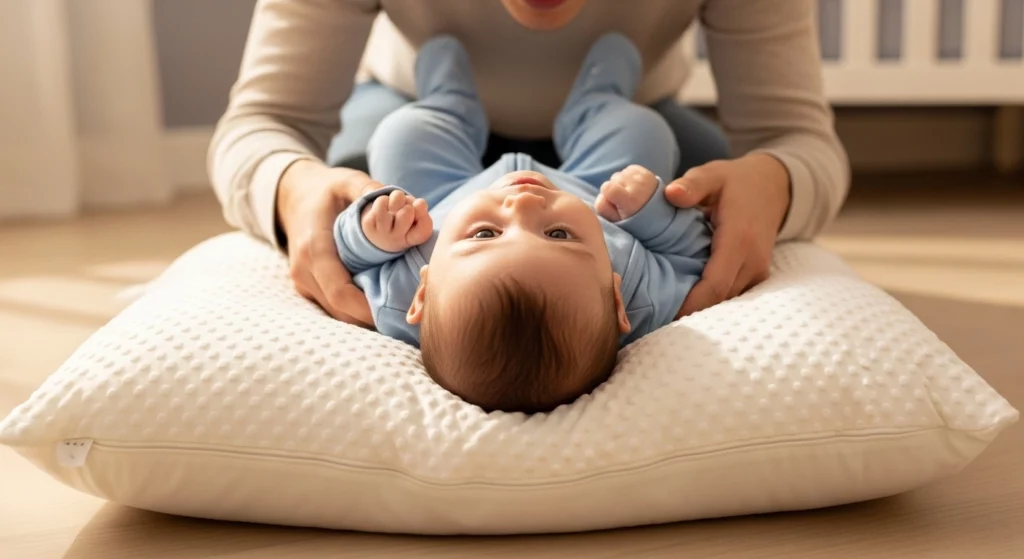
The human spine is entirely C-shaped at birth. As an infant grows, they must develop the secondary curves of the cervical and lumbar spine to hold their head up and eventually learn to walk. Active prone positioning is the mechanical catalyst for this physical development.
Cervical Extension and Head Control
When you place a baby face-down, their instinct is to lift their head to observe their surroundings. This action requires cervical extension, which forces the extensor muscles at the back of the neck to contract against gravity. In the first few weeks of life, a newborn’s head is disproportionately heavy compared to their body weight.
Using a support surface correctly alters the angle of gravity, making this heavy lifting much more manageable for a young infant. As Dr. Sarah Adams, a board-certified pediatrician, explains, “By elevating the upper chest slightly, you give the infant a biomechanical advantage, allowing them to practice head control without experiencing immediate muscle fatigue.” This gentle introduction prevents the baby from associating floor play with exhaustion and discomfort.
Building Core and Shoulder Strength
Beyond neck control, this awake playtime is responsible for building the foundational strength of the shoulder girdle and core muscles. When a baby is propped up, they naturally learn to bear weight on their forearms. This weight-bearing action stabilizes the shoulder joints and begins to stretch the chest muscles that are often tight from the fetal position.
As they push up, they engage their abdominal muscles to stabilize their pelvis against the floor. This total-body muscle activation is a mandatory prerequisite for rolling over, sitting up, and eventually crawling. Without regular, supported time on their stomach, infants often experience delays in achieving these critical physical milestones.
Step-by-Step Guide for Tummy Time Pillow Use
Executing this exercise requires more than just placing the baby on a cushion. You must ensure proper joint alignment and environmental safety to maximize the physical benefits while minimizing any potential risks.
Choosing the Right Support Surface
The physical environment where you conduct this exercise is just as important as the tool itself. You must always place the baby on a firm, flat surface, such as a carpeted floor or a dedicated play mat. You should never place the baby on a bed, sofa, or any elevated furniture where they could accidentally roll off or sink into soft bedding.
When selecting the best tummy time pillow for your nursery, look for firm, low-profile designs. If the cushion is too high, it will force the baby’s back into a severe arch, which strains their developing lumbar spine. The material should be firm enough to support their body weight without allowing their face to sink into the fabric, which poses a suffocation hazard.
Proper Pillow Placement and Body Mechanics
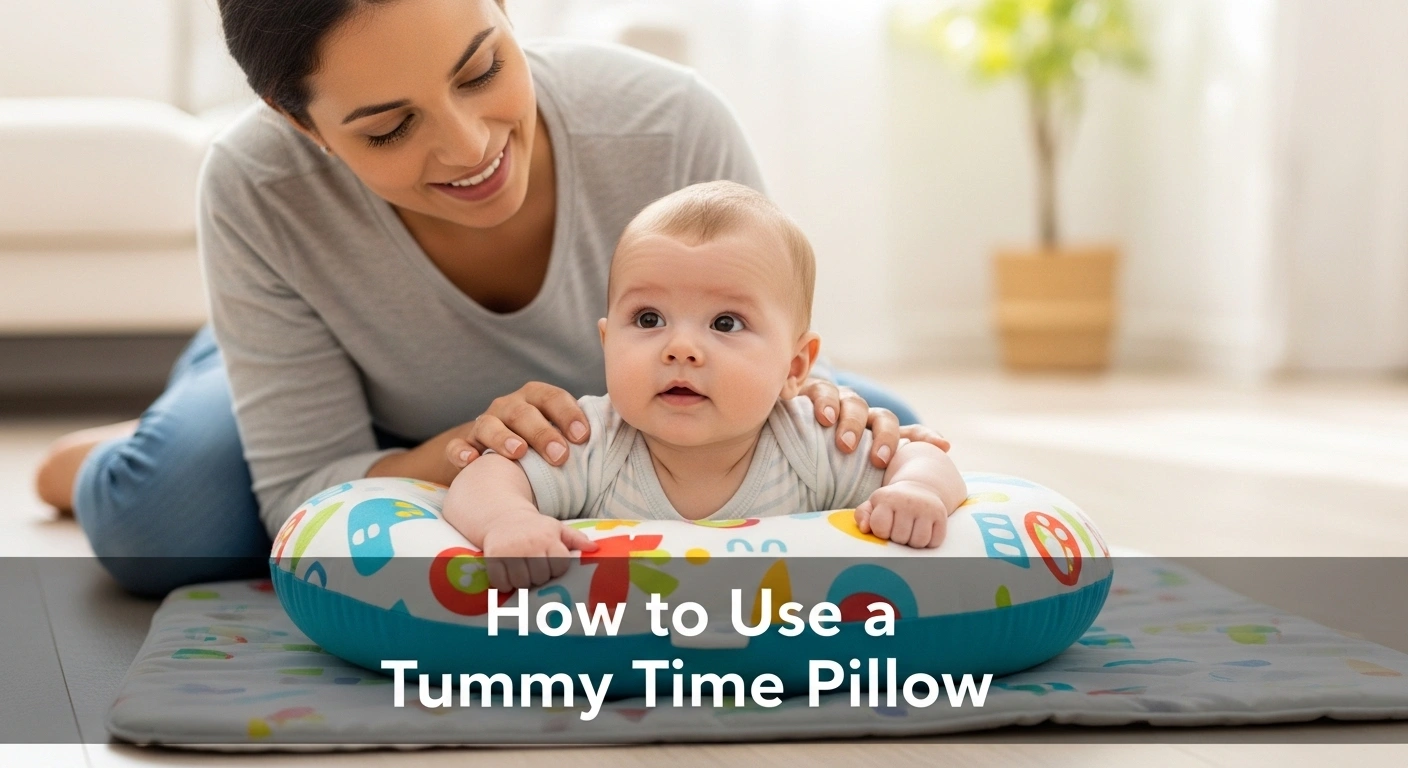
To position the baby correctly, place the U-shaped or wedge pillow directly underneath their chest and armpits. Their arms should be brought forward and draped over the top or front of the cushion so they can rest on their forearms. This specific arm placement provides a stable tripod base, preventing the baby from rolling sideways or face-planting into the mat.
Their lower body, including their hips and legs, should rest completely flat on the floor behind the pillow. This ensures their spine remains relatively neutral rather than hyperextended. You must continuously check their airway to ensure their chin is clear of the fabric and they can breathe without any obstruction.
Duration and Frequency for Newborns
Parents frequently ask when to start tummy time and how long it should last. Pediatricians recommend starting within the first few days of coming home from the hospital, provided the baby is healthy and alert. Initially, you should keep sessions very short, lasting only two to three minutes at a time.
You can gradually increase the duration as the baby builds strength and tolerance. Aim for a few short sessions spread throughout the day rather than one long, exhausting marathon. By the time the baby is three months old, they should be accumulating approximately an hour of total prone play each day.
Crucial Safety Rules and Supervision Requirements
The mechanics of infant floor play are entirely different from adult resting postures. While an adult might compare a tummy sleeper vs side sleeper pillow to relieve joint pressure overnight, an infant’s support cushion is strictly an active, supervised exercise tool.
Continuous Visual Supervision
The most critical safety rule is that a baby must be closely supervised at all times during this activity. You must stay close and maintain constant visual contact with your child. Infants can suddenly lose muscle control, dropping their face into the floor or the pillow. An adult must be present to immediately reposition their head to maintain a clear airway.
Avoiding Post-Feeding Discomfort
You should avoid scheduling floor play immediately after a full feeding. Placing direct physical pressure on a full stomach often leads to severe acid reflux, spit-up, and extreme discomfort for the baby. Wait at least thirty to forty-five minutes after nursing or bottle-feeding before placing them on their stomach.
Never Use for Sleep
A newborn tummy time pillow must never be used as a sleep aid. Allowing an infant to sleep on their stomach or on top of a plush cushion significantly increases the risk of Sudden Infant Death Syndrome (SIDS) and positional asphyxiation. Just as adults search for the best pillow for tummy sleepers to protect their cervical spine overnight, parents must protect their infant by ensuring babies always sleep flat on their backs on a firm crib mattress without any loose bedding.
Engaging Your Baby During Short Sessions
To prevent crying and encourage active head lifting, you must distract the baby from the physical effort of the exercise. Engaging their senses is the most effective way to prolong these sessions and make them enjoyable.
Utilizing Mirrors and Developmental Toys
Placing high-contrast developmental toys or a baby-safe shatterproof mirror just out of reach encourages the infant to lift their head and look forward. Visual tracking forces them to turn their neck from side to side, which prevents the development of torticollis, a condition where the neck muscles become tight on one side. Toys with crinkle fabrics or gentle rattles also stimulate their auditory senses, keeping them focused on play rather than physical fatigue.
The Role of Parental Interaction
Your presence is the most powerful tool for engagement. Get down on the floor face-to-face with your baby. Talking, singing, and making exaggerated facial expressions will naturally draw their attention upward. If the baby becomes tired or fussy despite your interaction, you should immediately stop the session and try again later when they are fully rested.
Frequently Asked Questions
When to start tummy time with a newborn?
You can begin these brief physical sessions within the first few days of bringing your healthy newborn home. Starting early helps the baby become accustomed to the posture before they develop a strong aversion to the physical exertion required to lift their head.
How do I know if the pillow is placed correctly?
The pillow should support the baby’s chest and armpits, with their arms brought forward so they can bear weight on their forearms. Their hips and legs should rest flat on the floor, and their face must be completely clear of the fabric to ensure an unobstructed airway.
Is it okay to do tummy time after feeding?
You should wait at least thirty to forty-five minutes after a feeding before initiating floor play. Placing a baby face-down on a full stomach puts mechanical pressure on their digestive tract, which often results in painful reflux and spitting up.
What should I do if my baby just cries on the pillow?
If your baby cries, try shortening the sessions to just one minute at a time and ensure they are fully awake and not hungry. You can also try laying on your back and placing the baby on your chest for “tummy-to-tummy” time, which offers the same physical benefits but provides the soothing comfort of your body heat and heartbeat.
Final Takeaways
Understanding tummy time pillow use is essential for promoting safe, effective physical development in your newborn. Always conduct these sessions on a firm, flat floor surface and remain within arm’s reach for continuous supervision. Start with very short sessions, utilize engaging toys to encourage head lifting, and never allow your baby to fall asleep on the support cushion. By following these clinical biomechanical guidelines, you will help your baby build the core and neck strength required for a lifetime of healthy movement.
References
- Adams, S. (2024). Motor Skill Development in the First Year. Journal of Pediatric Health.
- American Academy of Pediatrics. (2025). Back to Sleep, Tummy to Play: Clinical Guidelines.
- National Institute of Child Health and Human Development. (2023). Safe Infant Sleep and Play Environments.
- Occupational Therapy International (2022). The impact of prone positioning on early motor milestones.
- Morgan, N. (2025). Biomechanical Considerations for Infant Floor Play. Top Health Gear Clinical Reviews.

- How to Speed Up Muscle Recovery: Beyond Rest and Stretching - August 13, 2026
- Best Piercing Pillows: Which Ones Actually Relieve Pressure? - August 11, 2026
- Best Red Light Therapy Panel: Expert Picks for Home Use - August 5, 2026