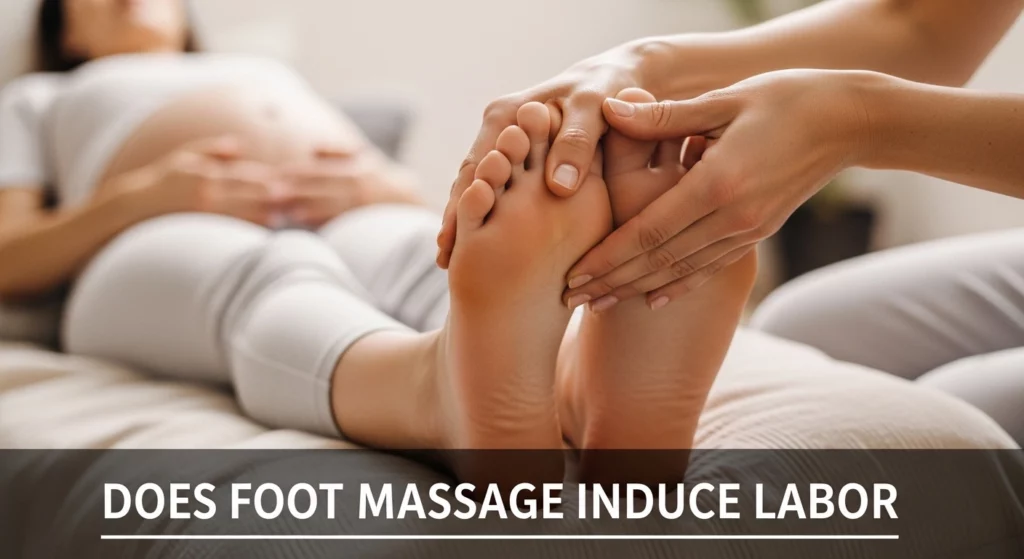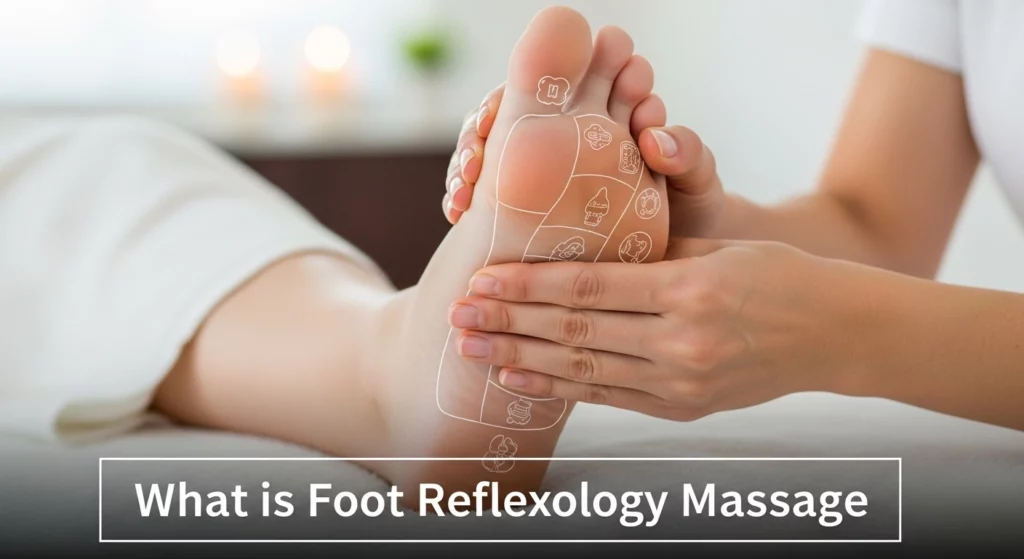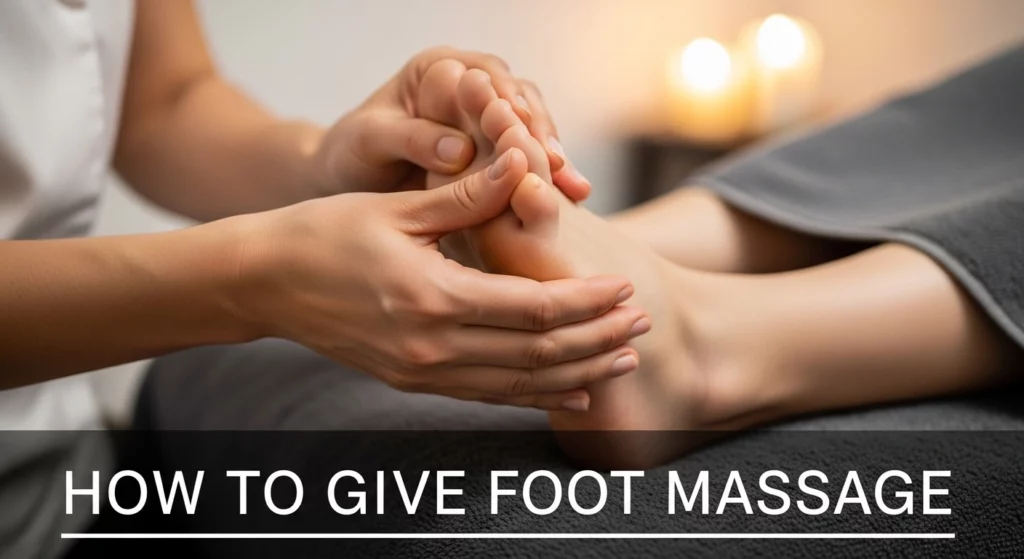
Do your feet ache constantly after a long day of standing or walking? You are not alone in dealing with this daily pain. Learning how to give a foot massage can provide immediate and soothing relief. As a physical therapist, I often teach my patients these exact manual techniques. This guide will show you simple steps to relax tired muscles safely. I will explain the best pressure points and hand movements to use. Read on to master this technique for yourself or a loved one.
Setting Up for a Relaxing Experience
Gather Your Supplies Before Starting
Before you begin the session, you need to prepare the right tools. A proper massage requires smooth, uninterrupted hand movements to be truly effective. I always recommend using a high quality massage oil or a thick lotion. This reduces uncomfortable skin friction and makes the whole process deeply relaxing.
Here are the basic items you should gather before starting:
- A bottle of warm massage oil or hydrating foot lotion.
- Several clean towels to wipe off excess oil later.
- A soft pillow to support the leg and prevent knee strain.
Standard body lotions tend to absorb into the skin far too quickly. This forces you to constantly stop and reapply more product. A dedicated massage oil provides a long lasting glide that keeps the session continuous. Sweet almond oil or jojoba oil are excellent, skin friendly choices. Warm oil is especially helpful for soothing tense muscles and increasing local circulation.
Create a Calming Physical Environment
The physical environment plays a huge role in overall muscle relaxation. Find a quiet room where you and your partner will not be disturbed. Dim the harsh overhead lights and play some soft background music. You want to trigger the body’s natural relaxation response before touching the feet.
Make sure the room temperature is comfortably warm. Cold feet will naturally tense up, making your manual techniques much less effective. Have the person sit or lie down in a fully supported position. You do not want them holding any tension in their core or neck.
Their feet should be at a height that is easy to reach. You must avoid straining your own lower back while you apply pressure. Proper body mechanics protect you while you help your partner heal. Sitting at the end of a bed usually works perfectly for this.
Step-By-Step Foot Massage Guide
Warm the Foot and Apply Oil
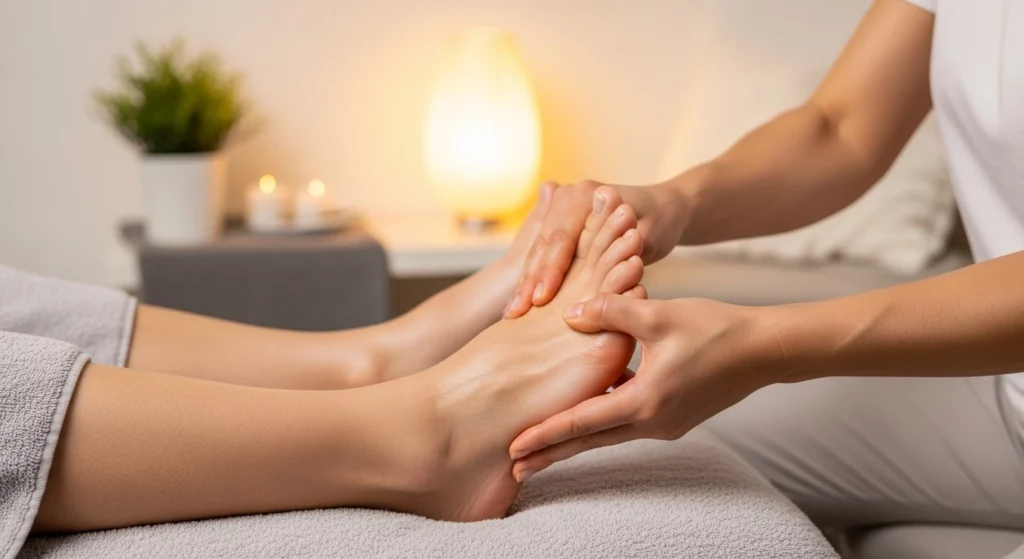
Always start by physically warming up the foot to prevent sudden cramping. Pour a small amount of massage oil directly into your palms. Rub your hands together vigorously to warm the oil before touching the skin. Apply the oil evenly over the entire foot, heel, and lower ankle.
Use long, gentle strokes from the toes moving up toward the ankle. This initial motion increases circulation and prepares the deep tissues for pressure. “Warming the superficial tissues is the first step to prevent muscle spasms,” is a rule I always follow.
Take your time and do not rush this first step. Moving too fast will startle the nervous system and cause immediate muscle guarding. You want the foot to feel completely safe and supported.
Massaging the Top of the Foot
Start your active massage techniques on the top of the foot. Place both of your thumbs on the top, resting just below the toes. Gently but firmly press and move your thumbs slowly toward the ankle. Use slow, gliding strokes to gently push trapped fluid up the leg.
Slide your hands back down to the toes using much lighter pressure. Repeat this upward motion several times to relax the superficial tendons. You can slowly increase your pressure as the muscles begin to loosen up. Always ask your partner if the pressure feels completely comfortable for them.
The tendons on the top of the foot are very close to the surface. You do not need extreme force to get a good result here. Light and consistent gliding is the best approach for this area.
Working the Arch and Soles
The thick bottom of the foot usually holds the most physical tension. Support the top of the foot securely with one of your hands. Use the thumb or knuckles of your other hand on the sole. Start at the heel and slowly work your way up to the toes.
Apply deep, circular pressure along the entire arch of the foot. This specific area responds very well to targeted reflexology techniques. Press firmly into tight spots, but never cause sharp, shooting pain. A good foot rub should feel therapeutic, never agonizing or difficult to endure.
If your partner has very ticklish feet, you must adjust your approach. Light, feathery touches will only make the ticklish sensation much worse. Use a very firm, broad pressure with the flat of your palm. This signals safety to the nervous system and stops the tickle response completely.
Soothing the Toes and Ankles
Do not forget to give proper attention to the individual toes. Gently squeeze and roll each toe between your thumb and index finger. Give each toe a very gentle pull to release minor joint tension. This simple step feels incredibly relaxing for the vast majority of people.
Next, move your attention to the delicate ankle joint. Use your fingertips to rub in small circles completely around the ankle bones. This reduces stiffness and improves overall joint mobility. Finish your sequence with a few more long, sweeping strokes over the whole foot.
The ankles support all lateral movement during the day. Keeping these joints mobile prevents larger injuries from occurring up the kinetic chain. Take a few extra minutes to really focus on these bony areas.
Incorporating Gentle Stretching
Massage and stretching work perfectly together to relieve severe foot tension. After working the sole, cup the back of the heel in one hand. Use your other hand to gently push the toes toward the shin. This safely stretches the calf muscle and the plantar fascia at the same time.
Hold this gentle stretch for about fifteen seconds before releasing it. Never force the foot past its natural and comfortable range of motion. “Gentle, sustained stretching is the real key to long term physical flexibility,” is a fact I constantly remind my patients.
It trains the muscles to stay relaxed long after the massage ends. You can repeat this stretch two or three times for maximum benefit. Always release the stretch very slowly to prevent sudden muscle rebounding.
Specific Techniques for Different Needs
How to Give Yourself a Foot Massage
You do not always need a partner to find physical relief. Learning how to give yourself a foot massage is very empowering. Sit comfortably in a chair and cross one ankle over your opposite knee. Use your thumbs to apply firm pressure along your own arch.
You can also easily use a standard tennis ball for self care. Simply roll the ball firmly under your foot while remaining seated. Press down firmly on tender areas for a few seconds to release trigger points. This is an excellent method for quick, daily pain relief at home.
You can also buy specialized wooden foot rollers for home use. These simple devices feature textured ridges that dig into the foot arch. Keep one under your work desk to massage your feet while typing. It is a brilliant way to prevent tension from building up during the day.
Targeting Plantar Fasciitis Pain
Plantar fasciitis causes severe, stabbing pain in the heel and the arch. Massage can provide excellent temporary relief for this painful inflammatory condition. Focus your pressure tightly on the thick band of tissue under the foot. Use your knuckles to firmly strip the fascia from the heel to the toes.
Be very careful not to press directly on the painful heel bone spur. Focusing on the soft tissue surrounding the heel is safer and much more effective. Always ice the foot after massaging to heavily reduce any lingering inflammation. It is a highly effective way to manage sharp morning heel pain.
Consistency is highly important when treating chronic plantar fasciitis at home. You should aim to massage the foot arch every single morning. Doing this before you take your first steps prevents severe microtears in the fascia. It warms the tissue up for the heavy load of walking.
Using an Electric Foot Massager
Sometimes, your hands are just too tired to provide deep, consistent pressure. This is when a high quality electric foot massager becomes incredibly helpful. These specialized devices simulate the exact hand movements of a trained physical therapist. They use rolling nodes and air compression to target deep muscle tension safely.
I often tell my clinic patients, “A good machine is your best backup for daily recovery.” To get the best results, start your machine on the lowest intensity setting. Slowly let your feet adjust to the mechanical pressure before increasing the speed.
Many electric massagers also feature built in heat therapy for extra physical relaxation. This gentle warmth quickly loosens up stiff joints and improves local blood flow. Finding the right device for your specific foot shape is very important. Read my detailed guide to find the best foot massager for your home recovery needs.
The Core Benefits of a Foot Massage
Improving Sluggish Daily Circulation
Most of us live highly sedentary lifestyles in the modern world. Sitting at a computer desk all day limits blood flow to the lower legs. A good foot massage helps to manually stimulate this sluggish circulation. The physical pressure forces fresh, oxygenated blood into tight, restricted tissues.
This improved blood flow helps damaged muscles heal much faster. It also reduces annoying swelling in the ankles and the lower legs. “Better circulation is one of the most important health benefits you can offer someone in pain,” is a fact I tell all my patients.
It is a very simple way to boost overall physical wellness. Getting that blood moving prevents a heavy, aching feeling at the end of the day. Consistent practice can completely change how your legs feel by the evening.
Reducing Severe Stress and Anxiety
A relaxing foot rub does much more than just relieve physical pain. It has a profound and measurable impact on your central nervous system. Gentle pressure on the feet triggers the immediate release of endorphins. These are your body’s natural, built in painkillers and mood elevators.
Many of my clinic patients report feeling deeply relaxed after a short session. It is a wonderful way to wind down before going to sleep at night. Taking ten minutes to rub your feet can drastically lower daily anxiety levels. It provides a rare moment of quiet focus in a busy, chaotic day.
This mind and body connection is a very powerful healing tool. When the mind relaxes, the physical muscles naturally follow suit. You cannot have true physical recovery without also addressing mental tension.
Easing General Muscle Soreness
Your feet carry the entire weight of your body every single day. The small muscles in your feet endure massive amounts of physical stress. Massaging these muscles breaks up painful lactic acid buildup. It also helps to manually stretch out tight, shortened muscle fibers.
This is especially helpful for runners and people who work retail jobs. Regular massage prevents acute soreness from turning into chronic, long term pain. It keeps your feet flexible, healthy, and ready for daily activities. You can literally press the tension away with your own two hands.
Shutterstock
Understanding the anatomy of the foot makes your efforts much more effective. You do not need a medical degree to feel tight muscle bands. Simply pay attention to areas that feel stiff or hardened under your fingers.
Frequently Asked Questions
How do you give a good foot massage to your partner?
Clear communication is the absolute best secret to a great massage for your partner. Ask them constantly about the pressure level and adjust your hands accordingly. Make sure they are lying in a fully supported, comfortable position before you begin.
What exactly is a reflexology foot massage?
Reflexology applies targeted pressure to specific zones on the bottom of the foot. These unique zones correspond to different internal organs and body systems. It is an ancient practice designed to promote holistic healing and deep relaxation.
How long should a basic foot massage last?
A standard therapeutic session should last between ten and twenty minutes per foot. This is enough time to effectively relax the tight muscles. It also prevents severe hand fatigue for the person giving the massage.
Can a foot massage help with plantar fasciitis?
Yes, massaging the arch can provide excellent temporary relief from plantar fasciitis. It helps stretch the inflamed band of tissue under your foot. Always combine manual massage with a cold ice pack to reduce morning swelling.
Is it safe to use lotion instead of massage oil?
You can certainly use a thick foot lotion if you do not have oil. However, standard body lotions tend to absorb into the skin far too quickly. This forces you to stop frequently, which interrupts the relaxing flow of the session.
Final Takeaways
Learning how to properly give a foot massage is a truly wonderful skill. It provides deep physical relaxation and immediate relief from daily physical stress. Remember to always start with gentle pressure and slowly work your way deeper. Use warm massage oil and focus on common tension spots like the foot arch. Keep your strokes smooth and always communicate clearly about comfort levels.

- Does a Hand Massager Help Rheumatoid Arthritis? - April 2, 2026
- How Deep Tissue Massagers Work for Pain Relief? - April 2, 2026
- Do Electric Face Massagers Actually Tighten Skin? - April 2, 2026