Foam Rollers Density and Type Comparison: Pick the Right One
Walking into a fitness store to buy a simple recovery tool feels totally overwhelming today. You just want to stretch your sore legs after a long run. Instead, you face a giant wall of brightly colored foam cylinders. Some look soft and inviting, while others have aggressive, scary spikes sticking out.
Choosing the wrong foam roller can turn a relaxing stretch into a highly painful nightmare. If the foam is too hard, you will end up bruised and angry. If it is too soft, you will waste your time rolling without actually healing anything.
You need to understand the exact science behind foam roller density before spending your money. Let us break down the confusing world of self-myofascial release tools together. We will find the absolute perfect roller to heal your tired, aching body safely.
Understanding Foam Density Levels
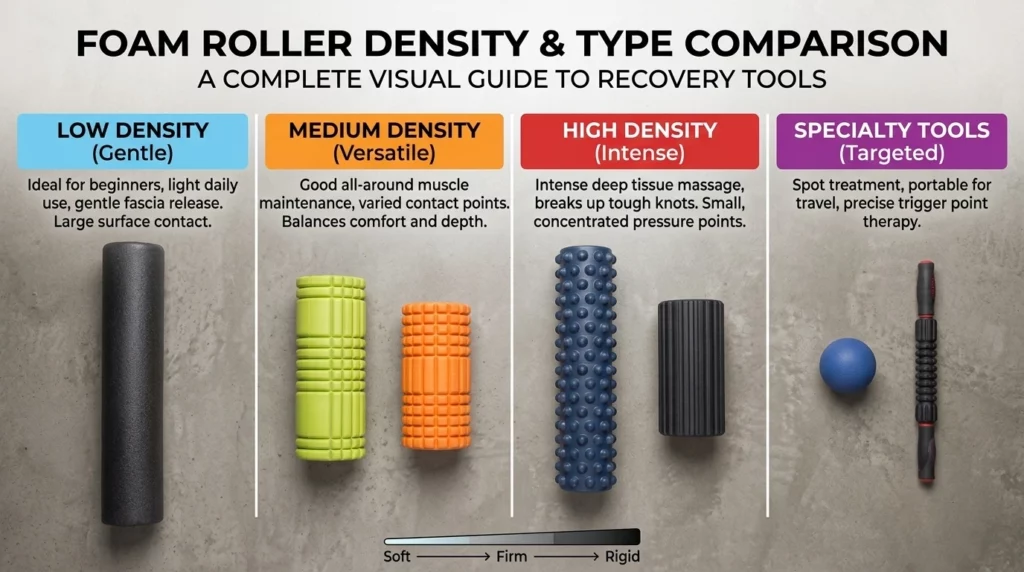
The Gentle Touch of Low-Density
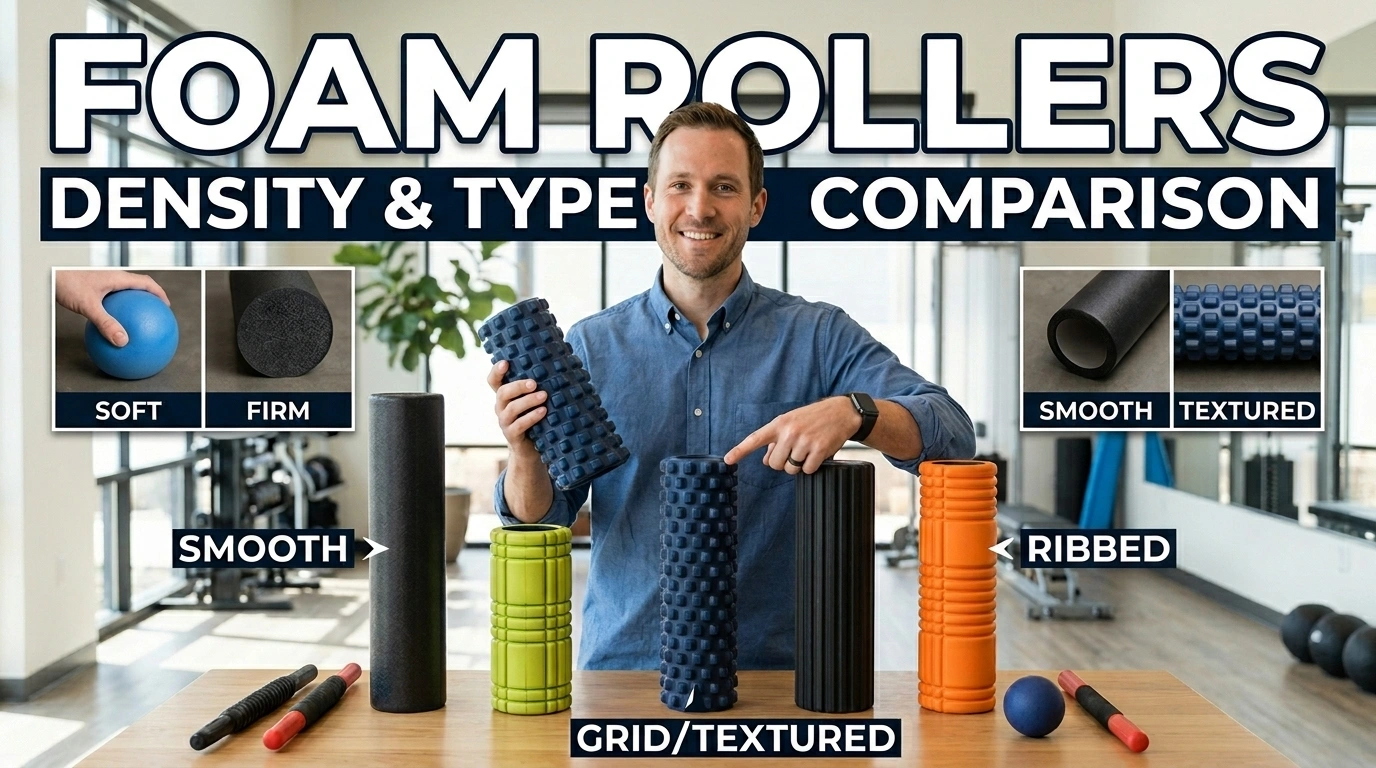
Low-density foam rollers are the softest, gentler options available on the market. They usually feel very squishy when you press your thumb hard into the foam. These are the absolute best choice for total beginners who have never rolled before. Your tight muscles need time to adapt to this brand-new type of physical pressure.
Using a hard roller on untouched fascia feels incredibly painful and shocking. A soft roller introduces your nervous system to the concept of deep tissue massage slowly. It gently irons out the wrinkles in your connective tissue without causing massive bruises.
Soft rollers are also fantastic for highly sensitive physical populations. Elderly users, pregnant women, and people recovering from surgery should always start here. You can easily use them on your sensitive neck or directly under your armpits safely.
The Sweet Spot of Medium-Density
Once your body gets used to the soft foam, you will likely need an upgrade. Medium-density rollers are the most popular and versatile tools sold today. They strike a perfect physical balance between structural firmness and forgiving comfort.
These rollers will not compress completely flat when you put your full body weight on them. They push back hard enough to actually manipulate thick, stubborn muscle tissue effectively. You can use them to warm up your cold muscles right before a heavy gym session.
They are incredibly useful for athletes who perform dynamic physical routines daily. If you are only going to buy one single roller, buy a medium-density model. It is the reliable workhorse of the modern athletic recovery world.
The Aggressive Push of High-Density
High-density rollers are incredibly firm and offer almost zero physical give. They are usually black in color and feel practically like solid wood or heavy plastic. These tools are strictly reserved for advanced athletes with extremely thick, dense muscle groups.
If you are a heavy weightlifter or a daily marathon runner, you need this aggressive pressure. Your thick hamstrings will completely ignore a soft, squishy roller. You need the solid firmness to punch through the thick outer layers of tough muscle.
You must be highly careful when using high-density foam on your body. Never use them over sensitive bony areas like your knees or your bare spine. They are built specifically for massive muscle bellies like your quads and your thick calves.
Smooth vs. Textured Surfaces
The Broad Sweep of Smooth Rollers
The original foam roller design features a perfectly smooth, flat exterior surface. This simple design remains incredibly popular for a very good reason. A smooth roller applies perfectly even, flat pressure across an entire muscle group simultaneously.
It does not target one specific spot, but rather flattens the whole area gently. This makes it perfect for sweeping out large sheets of tight, sticky fascia quickly. It is like using a massive rolling pin to flatten out a large piece of dough.
Smooth rollers are generally much less painful than highly textured ones. They are highly recommended for your daily cool-down routine after a sweaty physical workout. They help flush out harsh metabolic waste without causing your tired muscles extra stress.
The Surgical Strike of Textured Rollers
Textured rollers look like bizarre medieval torture devices covered in thick bumps and ridges. These bumps are actually designed to mimic the firm thumbs of a professional massage therapist. They are built to dig aggressively into stubborn, deeply hidden trigger points.
When you roll over a thick ridge, it penetrates much deeper than a flat surface can. It physically separates sticky muscle fibers that have glued themselves painfully together. This surgical strike is incredibly effective for sharp, isolated pain spots.
However, you must be prepared for a highly intense physical experience. You might even consider pairing this intense work with an electric recovery tool for the best overall results. Textured rollers require a massive pain tolerance and very slow, deliberate physical movements.
Choosing the Right Size and Shape
Full-Length Rollers (36 Inches)
The massive thirty-six-inch roller is the standard workhorse for physical therapy clinics. This long length allows you to lay your entire spine completely flat along the foam. You can stretch your tight chest and open your rolled shoulders beautifully.
The extra length also provides great physical stability for beginners who struggle with balance. You will not accidentally roll off the edge while treating your wide back muscles. If you have the floor space in your home gym, this is a fantastic investment.
However, they are completely impossible to travel with or easily hide away. They are strictly meant for dedicated home use or wide-open commercial gym spaces.
Half-Size Rollers (18-24 Inches)
If you live in a tiny apartment, a massive roller will just get in the way constantly. The medium-length rollers offer the perfect physical compromise for tight living spaces. They are easily long enough to roll out both of your legs at the exact same time.
They fit perfectly into a standard hall closet when you are finally done recovering. You can easily target your calves, hamstrings, and upper back without feeling restricted. They just lack the required length for full-spine physical stretching exercises.
This size is the most popular choice for casual daily fitness enthusiasts. It is highly practical and incredibly easy to manage during a sweaty workout.
Travel and Mini Rollers (4-12 Inches)
If you travel frequently for business, you cannot skip your daily recovery routine. Miniature rollers are designed specifically to fit directly inside your carry-on luggage. They are incredibly small and highly targeted recovery tools.
You can only treat one single leg or arm at a time with these tiny devices. They require much more physical core balance to use effectively on the hard floor. However, they are absolute lifesavers for treating tight hips in a cramped hotel room.
Many people keep a mini roller permanently tucked under their office desk. It is a brilliant way to sneak in some quick recovery while answering boring emails. You can also explore whether electric stimulation helps for quiet desk recovery.
Tips for a Safe Rolling Routine
Moving with Slow Intent
The most common mistake people make is rolling incredibly fast back and forth. Foam rolling is not a fast cardiovascular exercise or a race. You must move incredibly slowly to actually release your tight fascia safely.
Imagine you are trying to squeeze thick toothpaste out of a tight plastic tube. If you move too fast, the tissue will actually tighten up defensively against the pain. Move no faster than one single inch per second across your tight muscles.
When you hit a deeply painful knot, stop completely and just breathe. Hold the firm pressure directly on that sharp spot for thirty full seconds. The muscle will eventually surrender to the heavy weight and finally let go completely.
Avoiding Bony Joints
Foam rollers are strictly designed for soft, fleshy muscle tissue only. You must never roll directly over your delicate knee caps or your bare ankle bones. Pressing heavy body weight onto a solid bone causes severe, sharp physical pain immediately.
You must also be incredibly careful when rolling near your lower lumbar spine. If you lean back too far, you can easily hyperextend your lower back dangerously. Always support your upper body weight safely with your hands and your elbows.
If you suffer from chronic lower back pain, you might need a supportive workplace chair first. Fixing your daily sitting posture prevents those painful back knots from forming entirely. Foam rolling should only be used as a supplementary physical treatment.
FAQs
Which foam roller is best for a total beginner?
A low-density, perfectly smooth roller is always the safest starting point. It allows your sensitive muscles to adapt to the new physical pressure slowly.
How often should I use my foam roller each week?
You can safely foam roll every single day for about ten to fifteen minutes. Consistency is the true secret to gaining permanent joint flexibility.
Why does foam rolling hurt so badly at first?
Your fascia is likely incredibly tight, sticky, and highly inflamed. The sharp pain will fade away as your connective tissue becomes healthier and smoother.
Can I use a hard foam roller on my lower back?
No, you should never roll directly over your lower lumbar spine with heavy pressure. It can easily force your back into a highly dangerous physical arch.
What is the point of a spiky, textured foam roller?
The thick ridges are designed to dig deeply into isolated, stubborn muscle knots. They mimic the strong hands of a professional deep tissue massage therapist.
Final Takeaways
Picking the perfect foam roller requires honesty about your own physical pain tolerance. Do not buy a rock-hard, spiky roller if you are a total beginner. Start your journey with a soft, smooth cylinder to let your body adapt slowly safely. You can always upgrade to a firmer density later as your tight tissue heals.
Smooth rollers are fantastic for broad, sweeping stretches across massive muscle groups. Textured rollers provide surgical strikes against deeply buried, stubborn trigger points. Consider exactly where your body hurts the most before choosing your exterior surface design.
Remember that a foam roller is a highly active physical recovery tool. You must put in the physical work and move incredibly slowly to see real results. Breathe deeply through the discomfort and hold firm pressure on your worst spots. Your daily flexibility and overall mobility will improve drastically with consistent, patient practice.

- How to Speed Up Muscle Recovery: Beyond Rest and Stretching - August 13, 2026
- Best Piercing Pillows: Which Ones Actually Relieve Pressure? - August 11, 2026
- Best Red Light Therapy Panel: Expert Picks for Home Use - August 5, 2026