Memory Foam Pillow VS Regular Pillow: Which is Better for Ear Pain?
Choosing a pillow when you suffer from ear pain often feels like picking your poison. On one hand, you have the “regular” pillow (down, feather, or synthetic fiber) which feels soft initially but collapses during the night. On the other hand, you have the memory foam pillow, which offers incredible structural support for the neck but feels like a brick against sensitive ear cartilage.
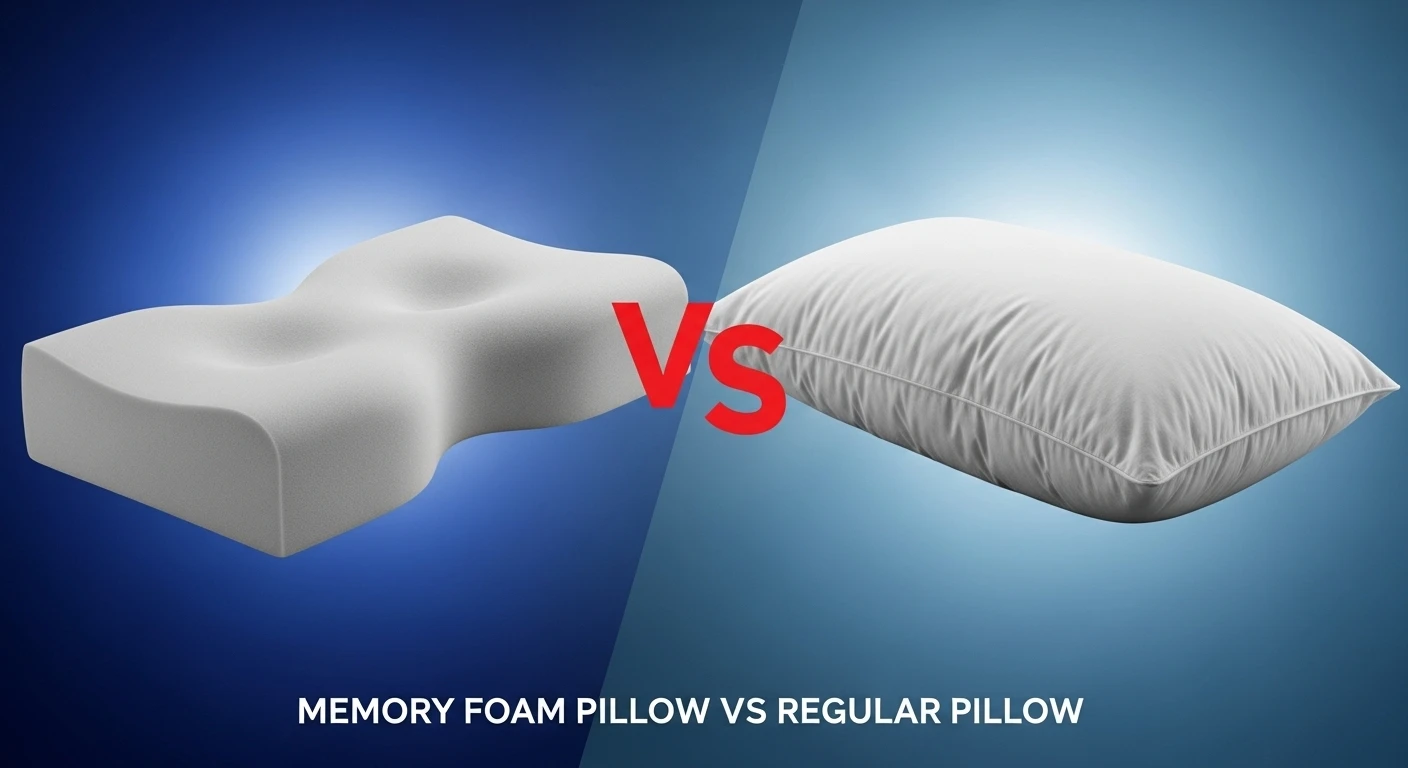
The debate of memory foam pillow vs regular pillow is not just about comfort; it is about biomechanics. Ear pain and its relation with using pillow materials usually comes down to two factors: compression (direct pressure on the ear) and alignment (neck position affecting the jaw).
To find the right tool for relief, we have to look at how these materials interact with the anatomy of the ear and the cervical spine. It is a battle between surface softness and structural integrity.
The Mechanics of “Regular” Pillows (Poly, Down, Feather)
Regular pillows, typically filled with polyester fiber, down, or feathers, are defined by their low resistance. They are malleable and soft, meaning they do not exert a strong “push-back” force against the head. For someone with acute ear tenderness, this lack of resistance can feel like immediate relief compared to a dense block of foam.
However, the downside of a regular pillow for ear pain is the “Wrapping Effect.” Because the material is so soft, your head sinks deeply into it. The fabric and fill collapse around the ear, effectively wrapping it in a cocoon of material.
This increases surface friction and traps heat against the ear, which can aggravate inflammation. You might be asking, can a hard pillow cause ear pain? The answer is yes, but a pillow that is too soft poses a different risk by suffocating the tissue and causing friction burns.
The Mechanics of Memory Foam (Viscoelasticity)
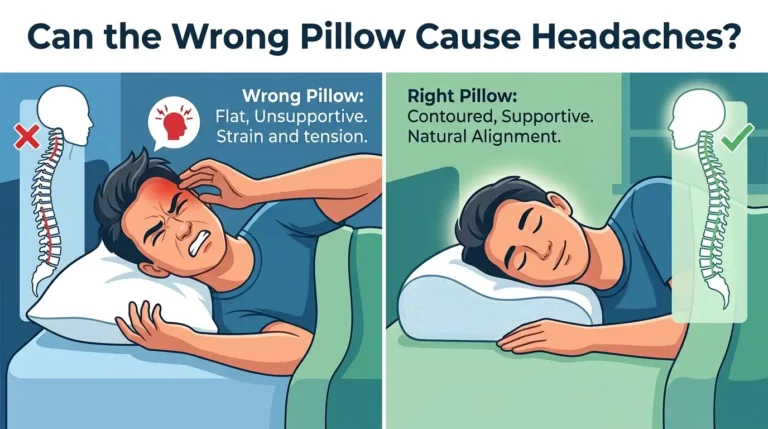
Memory foam is a viscoelastic material, meaning it molds to shape under heat and pressure. Its primary advantage is density. A memory foam pillow for ear pain is often recommended by chiropractors because it does not collapse. It maintains a consistent loft throughout the night, holding the cervical spine (neck) in neutral alignment.
This alignment is crucial because many cases of ear pain are actually referred pain from the Temporomandibular Joint (TMJ). By supporting the neck, memory foam relaxes the jaw muscles, reducing the tension that radiates into the ear.
However, that same density is a double-edged sword. As we explored in our deep dive on can memory foam pillows cause ear pain?, the foam takes time to mold. During that transition, it exerts significant focal pressure on the high points of the ear cartilage, potentially cutting off blood flow (ischemia).
Ear Pain Showdown: Alignment vs. Compression
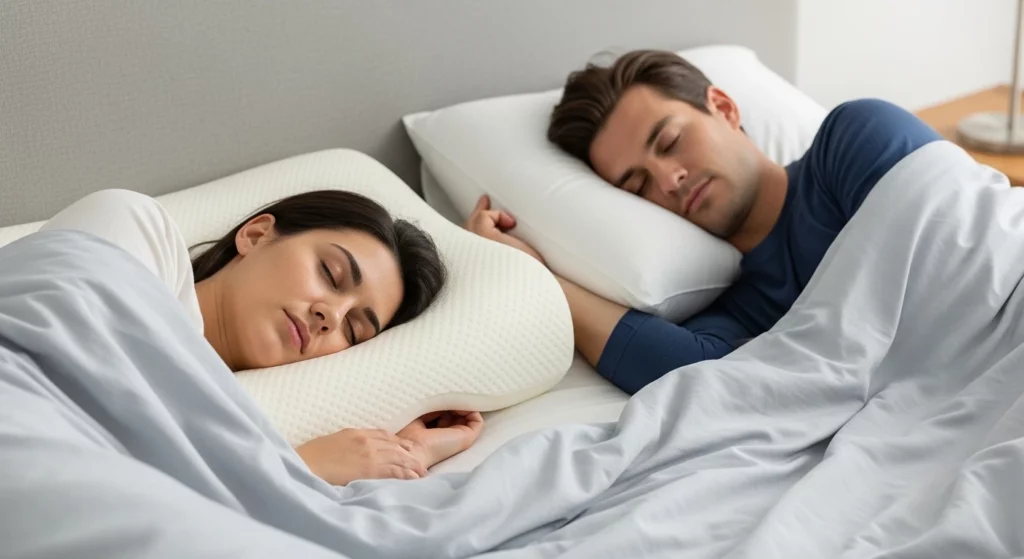
When we compare them head-to-head, it becomes a question of what is causing your pain. If your ear pain is caused by Chondrodermatitis Nodularis Helicis (CNH) or direct pressure sores, a solid memory foam pillow is usually the wrong choice because the surface is too hard. A regular pillow is safer in this specific instance, though imperfect.
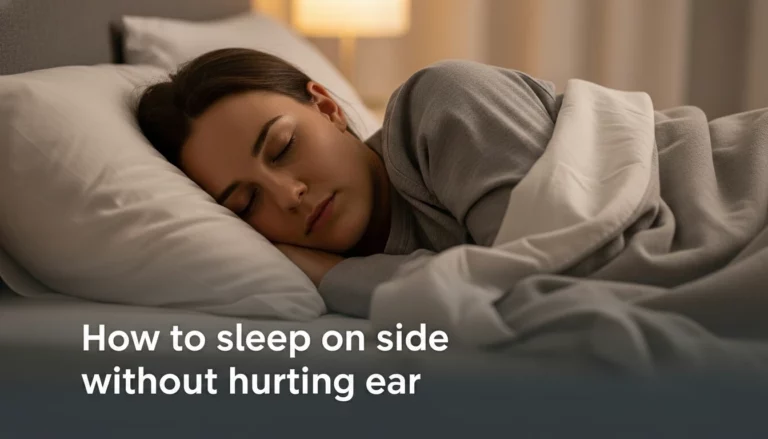
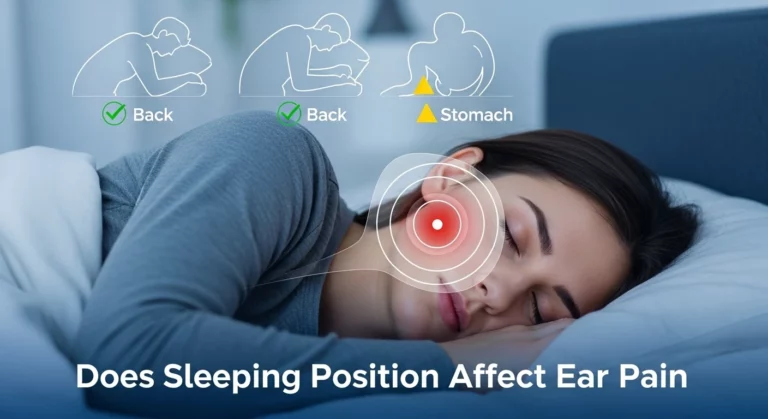
If your ear pain is deep, aching, and connected to jaw tension, the regular pillow is the loser. Its lack of support allows the neck to kink, aggravating the TMJ. Understanding sleeping position affect on ear pain reveals that you cannot maintain a healthy side-sleeping posture without the structural support that only foam can provide.
The Winner? Neither (Unless Modified)
The truth is that neither a standard block of memory foam nor a bag of feathers is the perfect solution. To solve ear pain, you need the structural support of memory foam combined with the pressure relief of a cavity.
Using an ear pillow for ear pain is the only way to get the best of both worlds. These specialized ergonomic pillows typically use high-density memory foam to hold the neck and jaw in perfect alignment. However, they feature a central cutout or hole that allows the ear to hang freely, eliminating the “push-back” force entirely.
Conclusion
If you are forced to choose between a standard regular pillow and a standard memory foam pillow, the answer depends on your pathology. For jaw-related ear pain, choose memory foam. For surface-level skin tenderness, choose a regular pillow.
But for true relief, do not settle for either. Look for a modified memory foam design that offers the spinal support you need without the cartilage compression you hate.
References
- Journal of Chiropractic Medicine. (2021). “The Effect of Pillow Material on Cervical Alignment.” (Study on memory foam vs. feather).
- Sleep Health Foundation. (2023). “Pillows and Sleep Quality.” (Analysis of heat retention in foam).
American Physical Therapy Association. (2022). “Ergonomics of Sleep: Neck Support.” (Clinical guidelines on alignment).

- How to Speed Up Muscle Recovery: Beyond Rest and Stretching - August 13, 2026
- Best Piercing Pillows: Which Ones Actually Relieve Pressure? - August 11, 2026
- Best Red Light Therapy Panel: Expert Picks for Home Use - August 5, 2026