Can a Hard Pillow Cause Ear Pain? Causes and Remedies
You wake up in the morning. Your neck feels fine. But your ear is throbbing. It feels like you spent the night sleeping on a brick.
You touch your ear. It is tender, red, and angry.
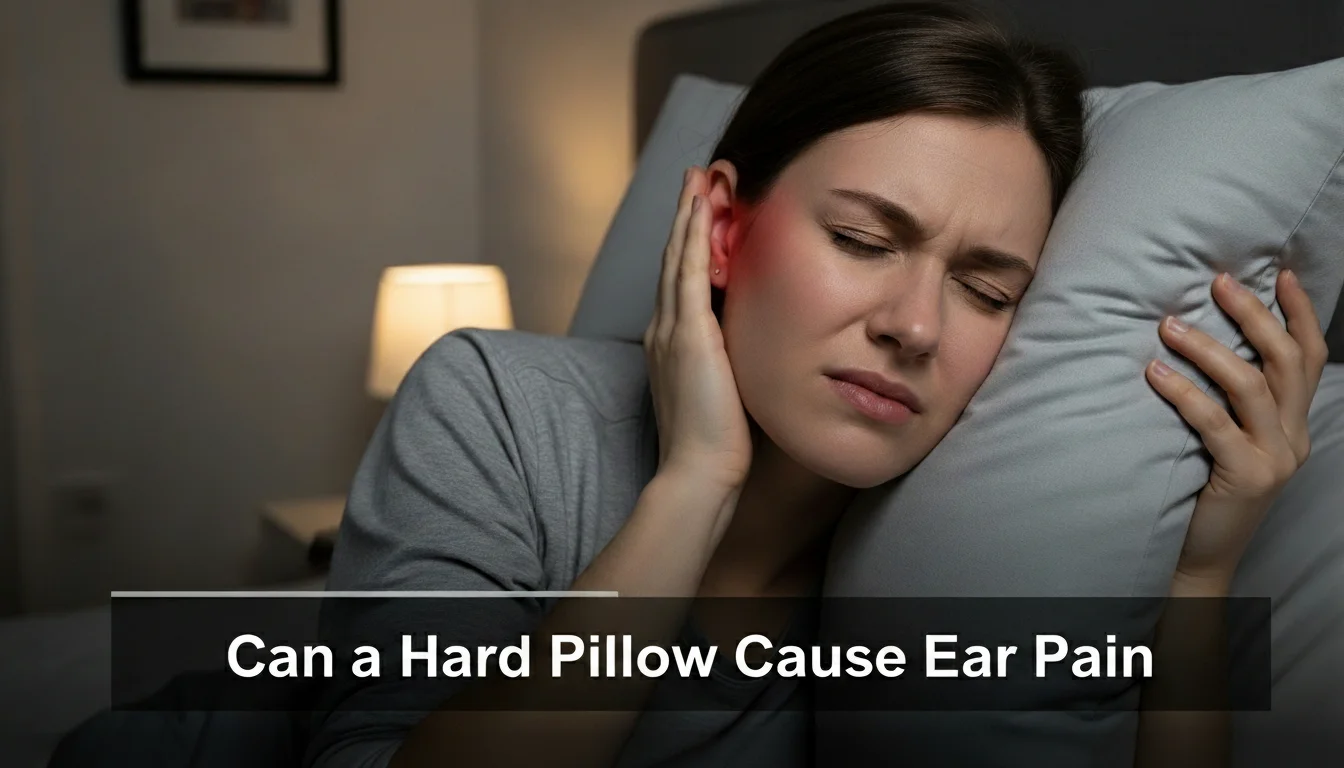
You might be asking, “Can a hard pillow cause ear pain?“
The answer is yes. In fact, pillow firmness is the single biggest factor in mechanical ear pain.
While firm pillows are great for your neck alignment, they are often terrible for your ears. They create a “Concrete Effect.” They do not conform to your shape. Instead, they force your ear to flatten out.
This creates extreme pressure points. Understanding why this happens is the first step to fixing it.
The Physics of Hardness: Why Firmness Hurts
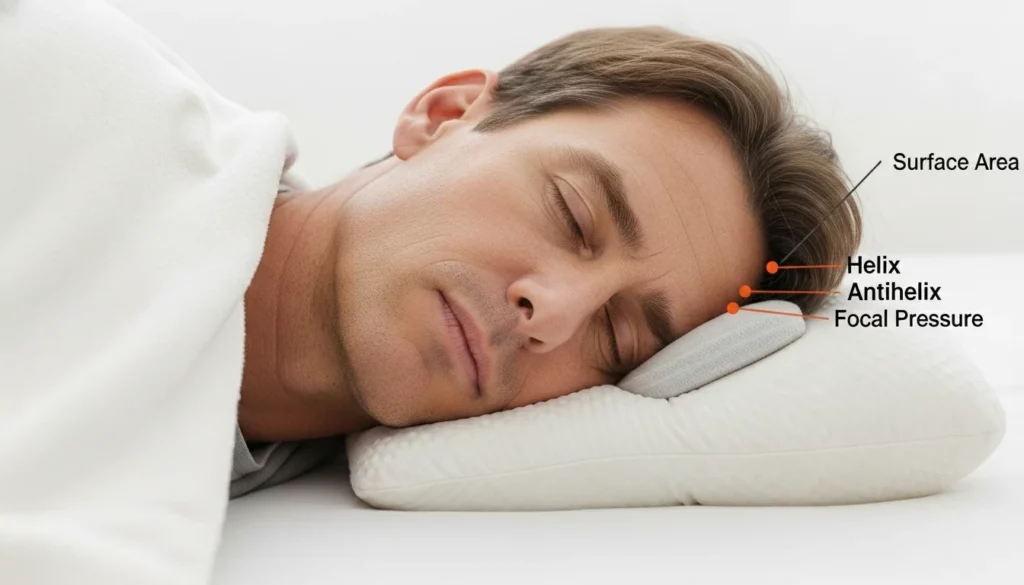
To understand the cause of ear pain while using pillow supports, you have to look at physics. Specifically, you need to look at “Surface Area.”
When you sleep on a soft, fluffy pillow, the material wraps around your head. This distributes the weight of your head (about 11 pounds) across your cheek, temple, and jaw.
A hard pillow does not do this. It resists you.
This resistance is the primary reason why your ear hurts when you sleep on your side. Because the pillow is rigid, it only touches the parts of your head that stick out the furthest.
Specifically, it is the Helix (the outer rim) and the Antihelix (the inner ridge).
These tiny ridges take 100% of the load. This creates a massive spike in “Focal Pressure.”
High pressure restricts blood flow rapidly. This condition is called Ischemia. On a hard surface, your ear loses blood flow much faster than on a soft one. This is why you wake up with ear pain that feels deep and bruising.
3 Negative Effects of Hard Pillows on Ear Health
The ear pain relation with hard pillow surfaces goes beyond just morning soreness. Using a pillow that is too firm can lead to actual damage.
Accelerated CNH Formation
Chondrodermatitis Nodularis Helicis (CNH) is a painful pressure sore that forms on the ear cartilage.
It is caused by friction and pressure. A hard pillow accelerates this process.
Because the pillow does not have “give,” the skin is pinched between your cartilage and the pillowcase. Over time, this constant trauma creates a permanent, sensitive nodule.
The “Folding” Effect
Have you ever woken up with your ear folded forward? We call this “Bat Ear” in the clinic.
Soft pillows allow the ear to sink in. Hard pillows do not.
When you slide your head onto a firm pillow, the friction grabs your ear and folds it against your skull. You then sleep on this folded cartilage for hours.
This strains the ligaments that attach the ear to the head. It causes a specific type of ache behind the ear that can last all day.
Aggravation of Inflammation
If you have a fresh piercing, a hard pillow is your worst enemy.
A healing piercing needs space. A firm surface presses the metal jewelry directly into the wound. This presses against nerve endings and increases swelling.
Even without piercings, if your ear is already sensitive, a hard pillow acts like a hammer. It offers no relief.
Hard vs. Soft: Finding the “Goldilocks” Zone
This creates a dilemma for side sleepers.
If your pillow is too soft, your head sinks too low. This bends your neck and causes spinal pain.
If your pillow is too hard, your neck is supported. But your ear is crushed.
You need a solution that offers Structural Firmness for the neck but Surface Softness for the ear.
The Solution: Off-Loading
The best way to solve this is “Off-Loading.” You want to support the neck while physically removing the pressure from the ear.
This is why pillows with ear holes were invented.
These pillows use firm materials (like high-density memory foam) to keep your spine straight. However, they feature a cutout or “pocket” for the ear.
This gives you the orthopedic benefits of a hard pillow without the negative uses of hard pillow for ear pain. Your ear floats freely. Your neck stays aligned.
Other “Pillow Factors” That Cause Ear Pain
Firmness is the main culprit. But other factors can worsen symptoms.
Fabric Friction
The fabric of your pillowcase matters.
Rough fabrics like low-thread-count cotton or linen act like sandpaper. On a hard pillow, your ear is pressed tightly against this rough surface.
Every time you move, it creates friction. This can chafe the skin of the Helix. It makes it raw and tender.
Hygiene
Old pillows can harbor bacteria and dust mites.
If you use a hard pillow that is old, you are pressing your ear into a surface that may be dirty. This can lead to Otitis Externa (swimmer’s ear).
This is an infection of the ear canal skin. It makes the ear incredibly sensitive to touch. Even light pressure becomes agonizing.
Conclusion
So, can pillows cause ear pain? Absolutely.
If you are using a pillow that feels like a rock, you are subjecting your ear to high focal pressure. This stops blood flow. It crushes cartilage.
Do not sacrifice your ear health for neck support. You can have both.
Look for a pillow that creates a “pressure-free zone” for your ear. It is the simple fix that lets you sleep soundly and wake up pain-free.
References
- Winkler, M. (1915). Chondrodermatitis nodularis chronica helicis. (The original medical study linking pressure to ear sores).
- Gordon, S.J., et al. (2019). “Pillow use: The behavior of cervical stiffness, headache and scapular/arm pain.” Journal of Pain Research. (Discusses the balance between pillow firmness and comfort).
- Gmitrov, J. (2025). Vascular mechanoreceptor magnetic activation, hemodynamic evidence and potential clinical outcomes. Electromagnetic Biology and Medicine, 44(2), 228-249.

- How to Speed Up Muscle Recovery: Beyond Rest and Stretching - August 13, 2026
- Best Piercing Pillows: Which Ones Actually Relieve Pressure? - August 11, 2026
- Best Red Light Therapy Panel: Expert Picks for Home Use - August 5, 2026