Author: Aashan Javed Khan
Affiliate Disclosure: This article contains Amazon affiliate links. As an Amazon Associate, I earn from qualifying purchases.
Table of Contents
Introduction
Fitness trackers have evolved far beyond simple step counters. The WHOOP 4.0 is one of the most talked-about wearables today because it focuses not just on activity, but on recovery, strain, and readiness. Designed to help athletes and stress-conscious users optimize training and rest, WHOOP takes a unique approach that many fitness fans swear by.
But is WHOOP 4.0 truly worth the recurring subscription fees and hype in 2026? In this expert WHOOP 4.0 review, we’ll dive into the science, the data tracking accuracy, real-world performance, strengths, weaknesses, and ultimately whether this device deserves a spot on your wrist.
Medical Disclaimer
I am not a doctor. The content of this article is for informational and educational purposes only. Fitness trackers and wearable health tech should not replace professional medical advice or diagnostic tests. Always consult a healthcare professional before making lifestyle changes based on wearable device data.
What is WHOOP 4.0?
The WHOOP 4.0, as the name suggests, is the 4th iteration of WHOOP’s fitness wearable. Unlike most smartwatches or bands that emphasize notifications and apps, WHOOP focuses on biometric performance insights. It is built to track:
- Strain (how hard your body worked)
- Recovery (how well your body is prepared for performance)
- Sleep performance (quality and quantity)
- Heart rate variability (HRV)
- Resting heart rate
- Respiratory rate
The device prides itself on personalized analytics that aim to guide users on when to push hard and when to rest. We put all of this to test in this WHOOP 4.0 review.
Quick Feature Summary:
Feature | WHOOP 4.0 | Notes |
Strain Score | Yes | Measures physical stress |
Recovery Score | Yes | Based on HRV, RHR, sleep |
Sleep Coaching | Yes | Automatic sleep recommendations |
Battery Life | ~4–5 days | Competitive for trackers |
Display | No | Data via app only |
Subscription Required | Yes | Core model for analytics |
Design, Comfort & Wearability
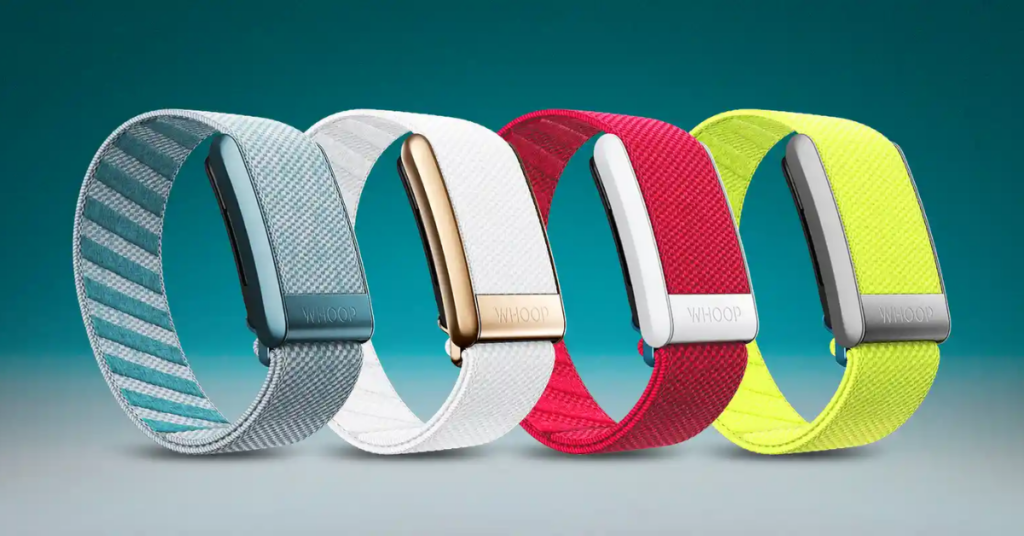
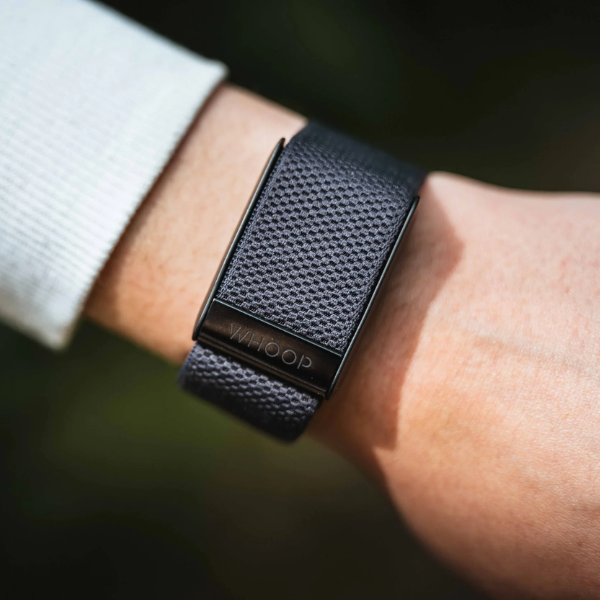
WHOOP 4.0 is designed to be worn 24/7. Its lightweight, soft strap makes it feel almost invisible after a day or two. Unlike watches or larger fitness bands, WHOOP sacrifices a screen for battery life and comfort.
Design Highlights:
- Smooth, low-profile module
- Multiple band sizes and materials
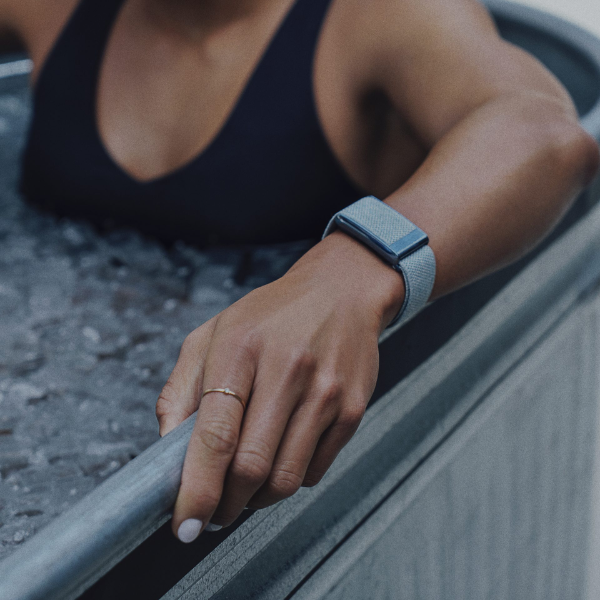
- Water-resistant for workouts and showering
Users generally praise its comfort, especially during sleep tracking, a critical component of WHOOP’s analytics. Because the device doesn’t have a screen, all insights are accessed via the WHOOP app.
WHOOP Subscription Model Explained
One of the biggest discussions around WHOOP is its subscription. WHOOP provides hardware free with membership plans that can be monthly, annual, or longer. This model is different from most fitness tech brands. We’ll break this down in this WHOOP 4.0 review.
What You Get With Subscription:
- Real-time analytics
- Personalized recovery & strain coaching
- Sleep performance and suggestions
- Training insights
- Community challenges
While the recurring cost may deter some users, supporters argue that it’s what enables WHOOP’s advanced analytics and continual algorithm updates.
Performance & Tracking Accuracy
Strain Score
WHOOP’s signature metric is its Strain Score, a number meant to reflect overall physical stress for the day. It combines:
- Heart rate
- Activity duration
- Intensity
This score helps users identify how hard their body worked relative to their baseline. In our WHOOP 4.0 review, we have found that this score is actually quite accurate and is better than most of the competitors although it is not the best.
Recovery Score
WHOOP calculates recovery by evaluating:
- Heart rate variability (HRV)
- Resting heart rate (RHR)
- Sleep performance
The score is expressed as a percentage and categorized into zones (e.g., low, medium, high). A higher recovery score means your body is more prepared for intense activity.
Expert Thought: Controlled first-person experience and expert sources suggest that HRV + RHR trends are credible when measured consistently, though absolute medical accuracy is less important than trend analysis for daily decisions.
Sleep Tracking & Recovery Science Behind WHOOP 4.0
Sleep is not just another metric in the WHOOP ecosystem. It is the foundation upon which recovery, strain tolerance, and long-term performance are calculated. WHOOP 4.0 continuously tracks sleep duration, sleep stages (light, deep, REM), disturbances, and sleep consistency, then converts this data into actionable recovery guidance rather than raw numbers.
What separates WHOOP from many fitness trackers is how deeply it connects sleep quality with next-day performance. Instead of simply telling you how long you slept, WHOOP evaluates how restorative that sleep was in relation to your cardiovascular recovery and nervous system readiness.
This approach aligns closely with established sleep science. Dr. Matthew Walker, Professor of Neuroscience and Psychology at the University of California, Berkeley, explains the critical role of sleep in recovery:
“Sleep is the most powerful recovery tool we have. Even small reductions in sleep quality can have measurable effects on physical performance, immune function, and cardiovascular health.”
WHOOP uses nightly sleep data to calculate sleep debt and recommend how much rest your body actually needs, especially after high-strain days. For athletes or individuals under chronic stress, this can be far more useful than generic “8-hour sleep” advice.
From a physiological standpoint, WHOOP’s sleep analysis feeds directly into its recovery score, which is heavily influenced by heart rate variability (HRV) measured during deep sleep. HRV is widely regarded as one of the most reliable indicators of how well the body is coping with physical and mental stress.
Dr. Marco Altini, PhD, a biomedical scientist specializing in HRV research, supports this approach:
“Heart rate variability is one of the most meaningful markers we have for understanding how the body responds to stress and recovers from it, especially when tracked consistently over time rather than as a single measurement.”
This emphasis on trend-based data, rather than one-off readings, is where WHOOP delivers real value. While it should not be viewed as a diagnostic tool, its ability to highlight declining sleep quality, rising stress, or poor recovery can serve as an early signal that lifestyle adjustments or medical consultation may be needed.
From an expert reviewer perspective, WHOOP’s sleep tracking is not about perfection in sleep-stage classification. It’s about behavioral change. When users consistently see how alcohol, late workouts, travel, or stress affect recovery, the data becomes practical rather than overwhelming.
This is where this device performs exceptionally well according to our in depth WHOOP 4.0 review.
Sleep Tracking & Coaching
Sleep is where WHOOP shines for many users. It doesn’t just measure duration; it analyzes:
- Sleep stages (light, deep, REM)
- Efficiency
- Disturbances
- Sleep debt
- Recommended sleep based on strain and recovery
Unlike many fitness trackers that only passively record sleep, our finding in the WHOOP 4.0 review we have found that WHOOP gives actionable sleep targets, which many users find valuable if they are actively trying to improve rest quality.
How Lifestyle Factors Impact WHOOP Strain & Recovery Scores
One of the most valuable aspects of WHOOP 4.0 that we found in our WHOOP 4.0 review is that it does not treat recovery and strain as isolated numbers. Instead, it looks at how daily lifestyle choices affect your nervous system and cardiovascular response over time. Three factors consistently show up in WHOOP data: alcohol intake, sleep quality, and baseline physiology.
Why HRV Drops After Alcohol
Heart Rate Variability (HRV) reflects how well your autonomic nervous system adapts to stress. A higher HRV generally indicates better recovery and resilience, while a lower HRV suggests physiological strain.
Alcohol has a well-documented effect on HRV. After drinking, even in moderate amounts, the body shifts toward sympathetic nervous system dominance (the “fight or flight” state). This happens because alcohol:
- Increases resting heart rate
- Disrupts parasympathetic recovery during sleep
- Dehydrates the body, stressing cardiovascular regulation
As a result, WHOOP often detects lower HRV and elevated resting heart rate overnight, leading to a reduced recovery score the next day.
This aligns with existing research. According to the American College of Cardiology, alcohol consumption is associated with reduced HRV and impaired autonomic balance, especially during sleep. WHOOP’s value lies in making this effect visibly measurable, allowing users to connect cause and effect rather than guessing.
From an expert reviewer standpoint, this is one of WHOOP’s most behavior-changing features. When users repeatedly see recovery scores drop after drinking, the data often encourages more mindful consumption without needing strict rules.
Why Poor Sleep Reduces Strain Tolerance
Strain tolerance refers to how much physical or mental stress your body can handle before performance and recovery begin to decline. Sleep plays a central role in determining this tolerance.
When sleep quality or duration is poor, several physiological changes occur:
- Cortisol levels remain elevated
- Muscle repair and glycogen replenishment are reduced
- The nervous system remains partially stressed
WHOOP integrates sleep performance directly into its recovery algorithm. If you sleep poorly, even moderate physical activity can register as higher strain, because your cardiovascular system is working harder to meet demands.
Dr. Matthew Walker, Professor of Neuroscience and Psychology at UC Berkeley, explains this clearly:
“Even one night of insufficient sleep can significantly reduce physical performance and increase perceived exertion during exercise.”
In practical terms, WHOOP may recommend lighter activity on days following poor sleep. This is not a limitation of the device, but rather an accurate reflection of reduced physiological capacity.
This insight is particularly useful for people who push through workouts despite poor rest. WHOOP reframes recovery as a performance strategy, not a weakness.
How WHOOP Uses Baselines, Not Absolute Numbers
One common misunderstanding with wearable health technology is the obsession with “perfect” numbers. WHOOP intentionally avoids this trap by focusing on personal baselines, not population averages.
Instead of asking, “Is your HRV good or bad compared to others?”, WHOOP asks:
- Is your HRV higher or lower than your normal range?
- Is your resting heart rate deviating from your baseline?
- Is your recovery trending upward or downward?
This approach is scientifically sound. HRV, heart rate, and sleep needs vary widely between individuals based on genetics, fitness level, age, and stress exposure. Absolute comparisons often lead to confusion or unnecessary anxiety.
Dr. Marco Altini, PhD, a biomedical scientist specializing in HRV research, supports this method:
“Physiological data is most useful when evaluated longitudinally within the same individual, rather than compared across populations.”
WHOOP’s baseline-driven model makes its insights more reliable for daily decision-making. It also explains why two people can have very different HRV values yet both be considered “well recovered” relative to their own physiology.
From a reviewer perspective, this is a critical distinction that separates WHOOP from many generic fitness trackers.
Why This Matters for Real-World Use
Taken together, these factors, according to our WHOOP 4.0 review, explain why WHOOP is especially effective for:
- Athletes managing training load
- Professionals under chronic stress
- Users trying to optimize sleep and recovery
Rather than chasing idealized numbers, WHOOP helps users understand how their own body responds to habits over time, which is where meaningful health improvements actually occur.
WHOOP vs Other Trackers
Here’s a direct comparison between WHOOP 4.0 and other popular wearables:
Feature | WHOOP 4.0 | Apple Watch Series 11 | Fitbit Charge 6 |
Strain Tracking | Advanced | Basic | Basic |
Recovery Score | Yes | No | Limited |
Sleep Coaching | Yes | Moderate | Good |
Display | No | Yes | Yes |
Subscription | Required | Optional apps | None |
Battery Life | 4–5 days | ~18 hrs | ~5 days |
Where to Buy |
Insight: WHOOP focuses on performance analytics rather than consumer tech features like notifications or apps. This makes it less versatile but more specialized.
Pros & Cons
Pros:
- Excellent recovery and strain insights
- Lightweight and comfortable
- In-depth sleep analytics
- Encourages smarter training decisions
Cons:
- Requires ongoing subscription
- No on-device screen
- Less versatile than smartwatches
- Price adds up over time
Who Should Use WHOOP 4.0? (Buyer’s Guide)
Best For:
- Athletes and serious fitness enthusiasts
- Users focused on recovery and training optimization
- Those who prefer data-driven coaching
Not Great For:
- Casual users who want notifications and apps
- Users who dislike subscription models
- Individuals wanting medical-grade diagnostics
Check WHOOP 4.0 and current offers on Amazon.
FAQs
Q1: Is WHOOP better than Apple Watch for health tracking?
Q2: Does WHOOP track steps?
Q3: Do you have to wear WHOOP all day?
Q4: How accurate is WHOOP’s HRV?
Q5: Can WHOOP replace a fitness coach?
Conclusion
The WHOOP 4.0 is a specialized fitness tracker designed for people who want in-depth insight into how their body performs and recovers. Its analytics, particularly in recovery and sleep, are powerful tools for athletes and fitness-focused individuals.
However, the subscription model and lack of a screen make it a unique choice that may not suit everyone. If your priority is data-driven performance and optimization, WHOOP 4.0 can be worth the investment in 2026.
Affiliate Disclosure: This article contains Amazon affiliate links. As an Amazon Associate, I earn from qualifying purchases.