The process of dissolving freeze-dried peptide powder into a usable solution requires precision,
appropriate technique, and understanding of underlying principles to maintain peptide integrity
and achieve accurate dosing.
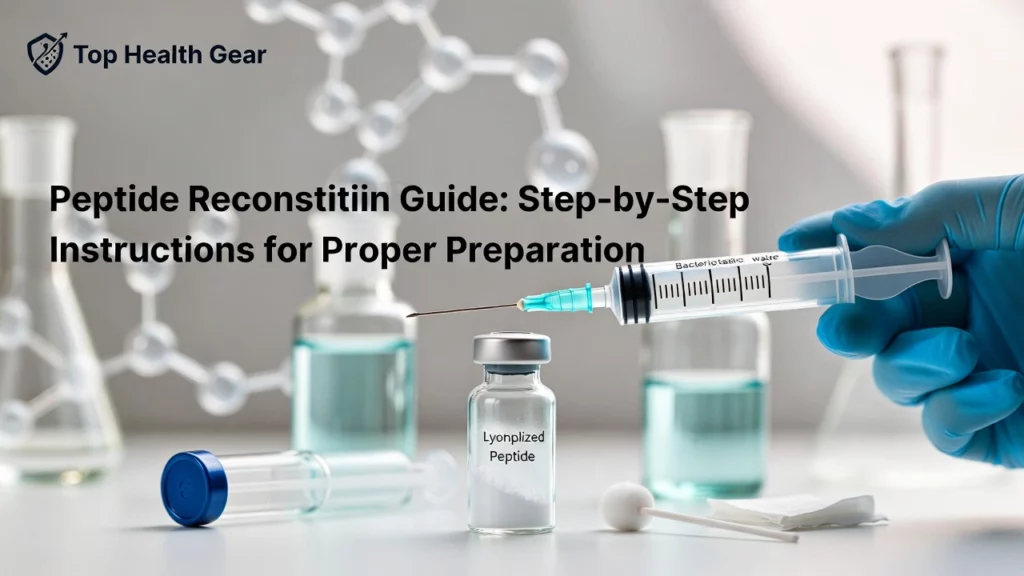
This comprehensive guide provides step-by-step instructions for reconstituting peptides,
selecting appropriate solvents, calculating concentrations, troubleshooting common issues,
and ensuring stability throughout the process.
Understanding Lyophilized Peptides
Before diving into reconstitution procedures, it’s helpful to understand what lyophilized
peptides are and why reconstitution is necessary.
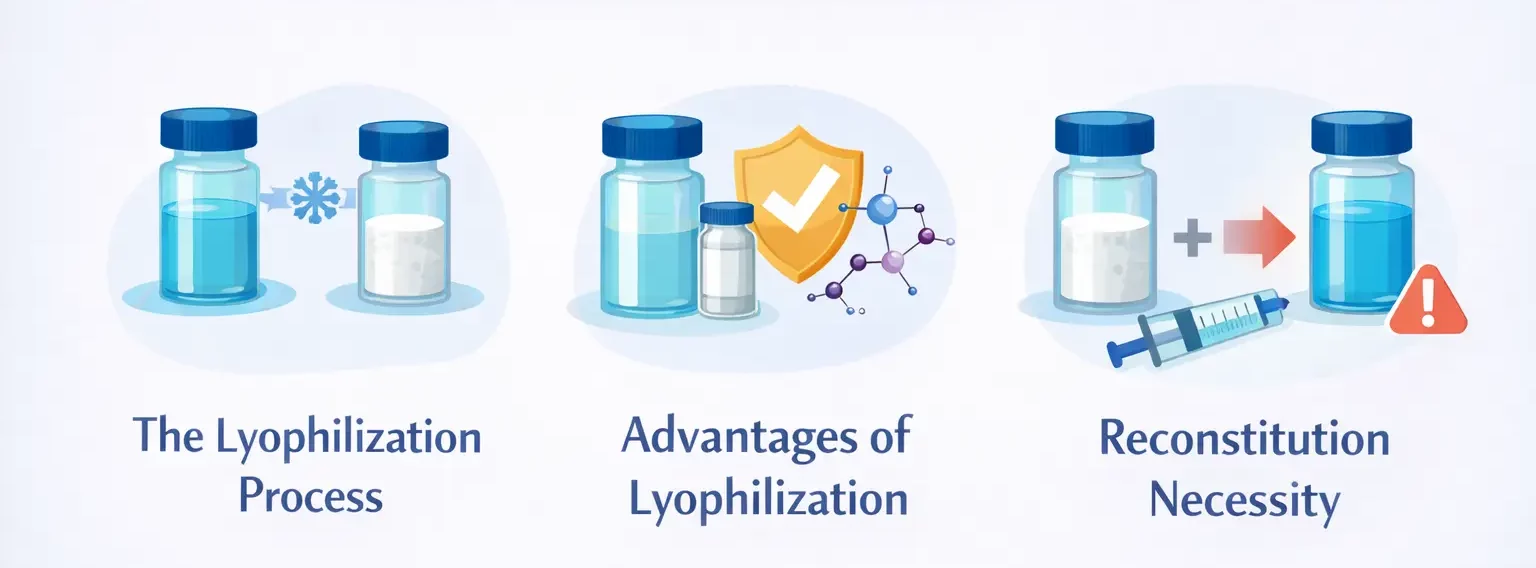
The Lyophilization Process
Lyophilization, or freeze-drying, is the process by which peptides are preserved in stable,
solid form. The process involves freezing the peptide solution, reducing pressure to allow
frozen water to sublimate directly from solid to vapor, and removing residual water molecules
through secondary drying.
This process leaves a dry, porous powder or cake that contains the peptide along with any
excipients added before lyophilization.
Advantages of Lyophilization
Lyophilized peptides offer several benefits including extended shelf life, reduced degradation
rates, easier shipping and storage, and improved physical stability.
Reconstitution Necessity
To use lyophilized peptides, they must be reconstituted into solution, as most applications
require peptides in liquid form for accurate measurement and delivery.
Pre-Reconstitution Preparation
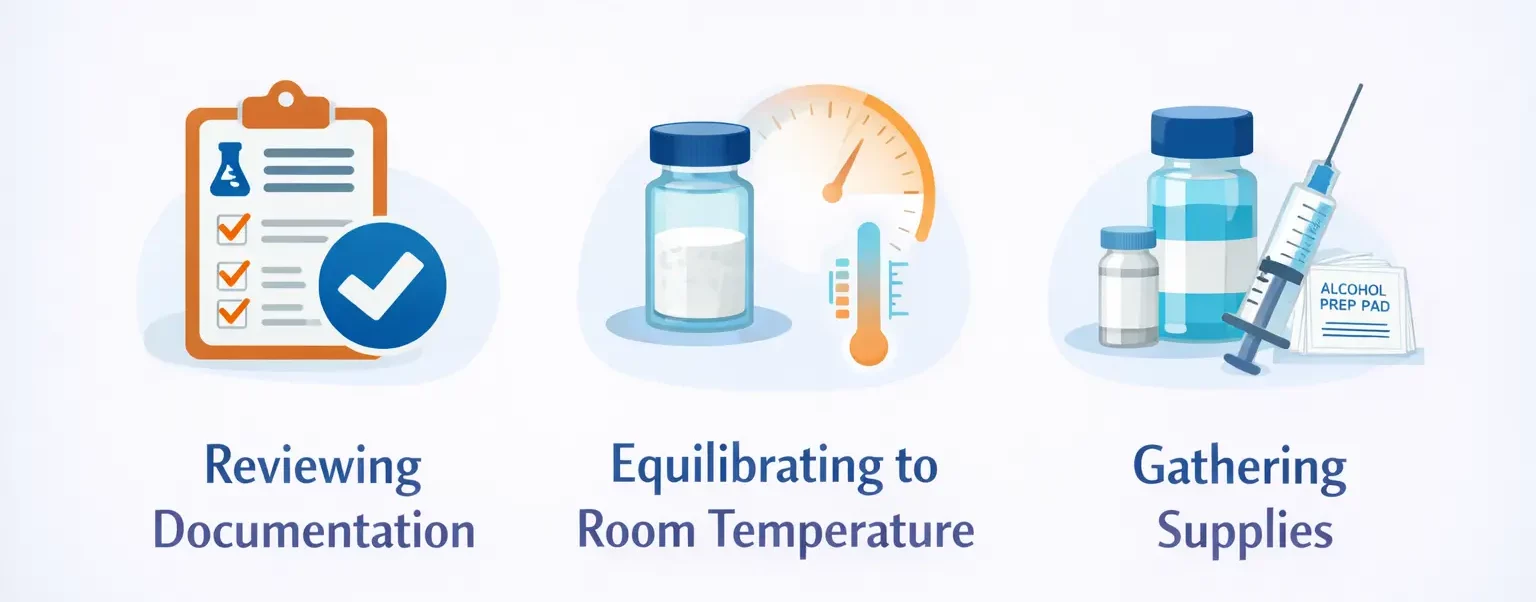
Proper preparation before reconstitution ensures success and maintains peptide integrity.
Reviewing Documentation
Review the certificate of analysis to confirm peptide purity and identity, note peptide mass,
and identify any excipients or special instructions.
Understanding peptide content is crucial for accurate concentration calculations.
Equilibrating to Room Temperature
Frozen peptides must reach room temperature before opening to prevent moisture condensation
that can initiate degradation.
Gathering Supplies
Assemble all necessary materials including solvent, syringes, needles, alcohol swabs,
calculator, labels, sterile containers, and documentation tools.
Selecting the Appropriate Solvent
Solvent selection is critical, as the wrong choice can lead to incomplete dissolution or
peptide degradation.
Understanding Peptide Properties
Peptide solubility depends on amino acid composition, hydrophobicity, and charge distribution.
Common Reconstitution Solvents
Common solvents include sterile water, bacteriostatic water, PBS, saline, acetic acid solutions,
DMSO, DMF, ethanol, and methanol.
Special Solubilization Agents
Difficult peptides may require surfactants, chaotropic agents, or cyclodextrins to improve
solubility.
Solvent Selection Strategy
Start with simple aqueous solvents and escalate to acidified or organic solvents as needed,
documenting successful approaches.
Calculating Reconstitution Volume
Determining solvent volume requires careful calculation to achieve the desired final
concentration.
Basic Calculation
Volume (mL) = Peptide Mass (mg) / Desired Concentration (mg/mL)
Accounting for Purity and Content
Adjust calculations based on peptide purity and content listed in the certificate of analysis.
Practical Considerations
Consider vial dead space, ease of dosing, and future dilution needs when choosing volumes.
Step-by-Step Reconstitution Procedure
Step 1
Sanitize the vial top using an alcohol swab and allow it to dry.
Step 2
Prepare the syringe with the exact calculated solvent volume.
Step 3
Add solvent gently along the vial wall, avoiding direct contact with the peptide.
Step 4
Allow the peptide to dissolve undisturbed for several minutes.
Step 5
Mix gently using swirling, rolling, or inversion. Avoid vigorous agitation.
Step 6
Allow sufficient time for complete dissolution.
Step 7
Verify complete dissolution by visual inspection.
Step 8
Label the vial clearly with concentration, solvent, date, and identifiers.
Step 9
Store the reconstituted peptide under appropriate temperature conditions.
Troubleshooting Common Reconstitution Issues
Problem
Peptide will not dissolve, precipitates, becomes cloudy, forms foam, or sticks to vial walls.
Solutions
Adjust solvent type, pH, temperature, concentration, or technique as appropriate.
Special Reconstitution Scenarios
Reconstituting for Multiple Uses
Use bacteriostatic water, maintain aseptic technique, and monitor for contamination.
Reconstituting Very Small Amounts
Use low volumes, low-binding containers, and precise calculations.
Reconstituting Large Amounts
Allow more time for mixing and consider aliquoting immediately.
Reconstituting for Specific Applications
Adjust solvents and sterility based on whether use is analytical, in vitro, or in vivo.
Verification and Quality Control
Verify appearance, concentration, pH, and sterility when required.
Documentation Best Practices
Maintain detailed records of peptide identity, calculations, solvent, storage, and observations.
Long-Term Storage of Reconstituted Peptides
Aliquot, freeze appropriately, avoid repeated freeze-thaw cycles, and monitor stability.
Conclusion
Proper peptide reconstitution ensures peptide integrity, accurate dosing, and reliable results.
Careful technique and documentation make the difference between success and failure.

- Peptides for Weight Loss: What Current Research Suggests - February 18, 2026
- IV Hydration Therapy: Benefits, Safety, and When It’s Most Effective - February 4, 2026
- The Future of Peptide Research: Emerging Trends and Innovations - January 30, 2026