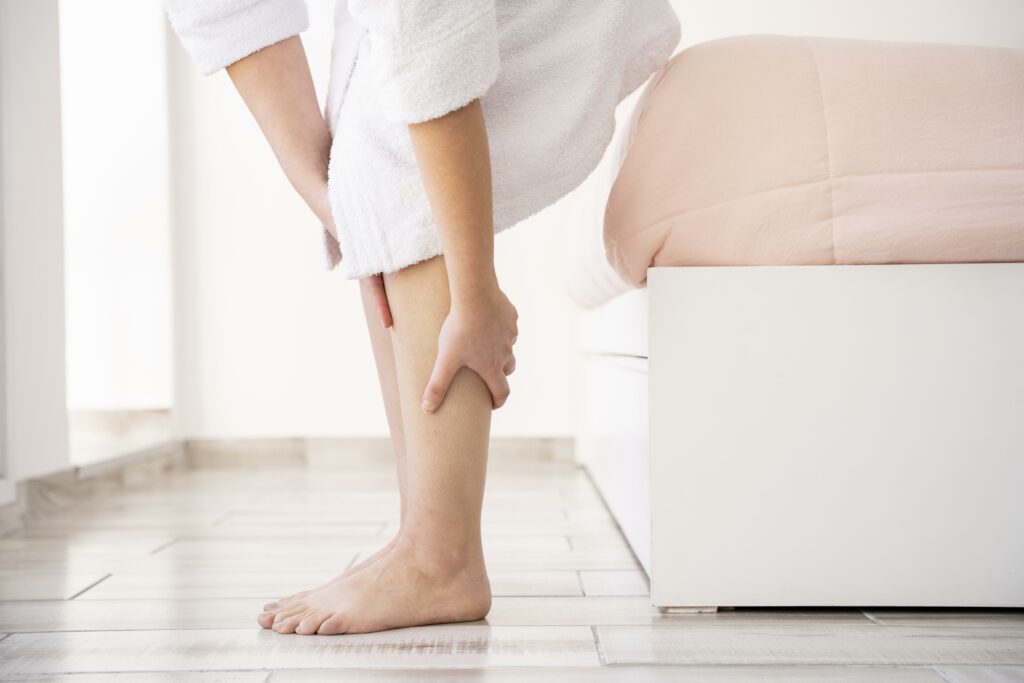
Leg cramps can appear suddenly often at night or after physical activity and the intense, sharp pain can make it difficult to move. These involuntary muscle contractions commonly affect the calf, foot, or hamstring and are usually caused by dehydration, muscle fatigue, electrolyte imbalance, long periods of sitting or standing, or poor circulation.
Fortunately, several practical home remedies can provide quick relief and help prevent these cramps from returning.
Below are 15 trusted, evidence‑supported remedies to stop leg cramps immediately and support long‑term comfort.
1. Stretch the Muscle Immediately
Gentle stretching is one of the fastest ways to release a tight muscle.
- For calf cramps, slowly straighten your leg and flex your foot upward toward your body.
- For hamstring cramps: Straighten the leg and lean forward slightly.
These stretches help lengthen the contracted muscle and relieve tension.
2. Massage the Affected Area
Applying light pressure and massaging the cramped muscle encourages relaxation and increases blood flow. Even a few minutes of gentle kneading can help reduce tightness and ease pain.
3. Apply Heat for Fast Relaxation
A warm towel or heating pad helps loosen tight muscles quickly. Heat works by improving circulation and relaxing the muscle fibers that have tightened during a cramp.
4. Use a Cold Compress to Reduce Soreness
Cold therapy helps numb sharp pain and decrease lingering soreness after the cramp releases. It’s invaluable if the muscle feels swollen or tender.
5. Hydrate Right Away
Dehydration is a common trigger of leg cramps. Drinking water or fluids rich in natural electrolytes, such as coconut water, broth, or water with a pinch of salt, supports muscle function and helps the cramp fade more quickly.
6. Walk or Move the Leg Gently
Light movement improves circulation and helps the affected muscle relax. This technique works especially well for nighttime cramps, encouraging the muscle to return to its normal state.
7. Elevate the Leg
Raising the leg can reduce pressure and improve blood flow. Elevation also eases the tight sensation that often lingers after a cramp.
8. Take a Warm Bath or Shower
Warm water helps soothe tense muscles throughout the leg, not just at the site of the cramp. A 10–15‑minute warm bath can provide lasting relief.
9. Perform Light Calf and Hamstring Exercises
Simple movements like ankle rotations, calf raises, and gentle hamstring bends support muscle flexibility and prevent cramps from recurring.
10. Apply Magnesium Lotion or Cream
Topical magnesium may help relax tense muscles. Lotions or creams are generally considered safe and can ease discomfort without requiring oral supplements.
11. Wear Proper Footwear
Shoes with adequate support reduce strain on leg muscles and help prevent daytime cramps. Good arch support and cushioning contribute to healthier muscle function.
12. Avoid Sitting or Standing for Too Long
Long periods in the same position can contribute to muscle tightening. Moving every hour helps maintain circulation and reduces the risk of sudden cramping.
13. Use a Heating Pad Before Bed
If you frequently experience nighttime cramps, using a heating pad beforehand helps keep muscles relaxed and reduces sudden tightening during sleep.
14. Maintain a Balanced Diet
Eating foods rich in potassium, calcium, and magnesium, such as bananas, leafy greens, yogurt, seeds, and beans, supports proper muscle function and reduces cramp frequency.
15. Know When to Seek Medical Care
Most leg cramps are harmless, but medical evaluation is important if cramps are:
- Frequent
- Severe
- Occurring with swelling or redness
- Associated with weakness or numbness
- Interrupting sleep regularly
Medical Disclaimer
This article is for educational purposes only and does not replace professional medical advice, diagnosis, or treatment. Always consult a qualified healthcare provider regarding any medical condition or symptoms.
Final Thoughts
Leg cramps can be painful, but many simple remedies provide fast relief. With gentle stretching, hydration, heat therapy, and proper muscle care, most cramps ease quickly and become less frequent over time.
FAQs
What causes leg cramps at night?
Nighttime cramps often result from dehydration, muscle fatigue, long periods of inactivity, or electrolyte imbalance.
What helps leg cramps immediately?
Stretching, massage, heat therapy, gentle walking, and hydration provide the fastest relief.
Are leg cramps dangerous?
Most are harmless, but persistent or severe cramps may need medical attention.
Do home remedies work for everyone?
They help many people, but effectiveness varies based on the cause of the cramp.
When should I see a doctor?
Seek medical care if cramps are severe, frequent, worsening, or accompanied by unusual symptoms.