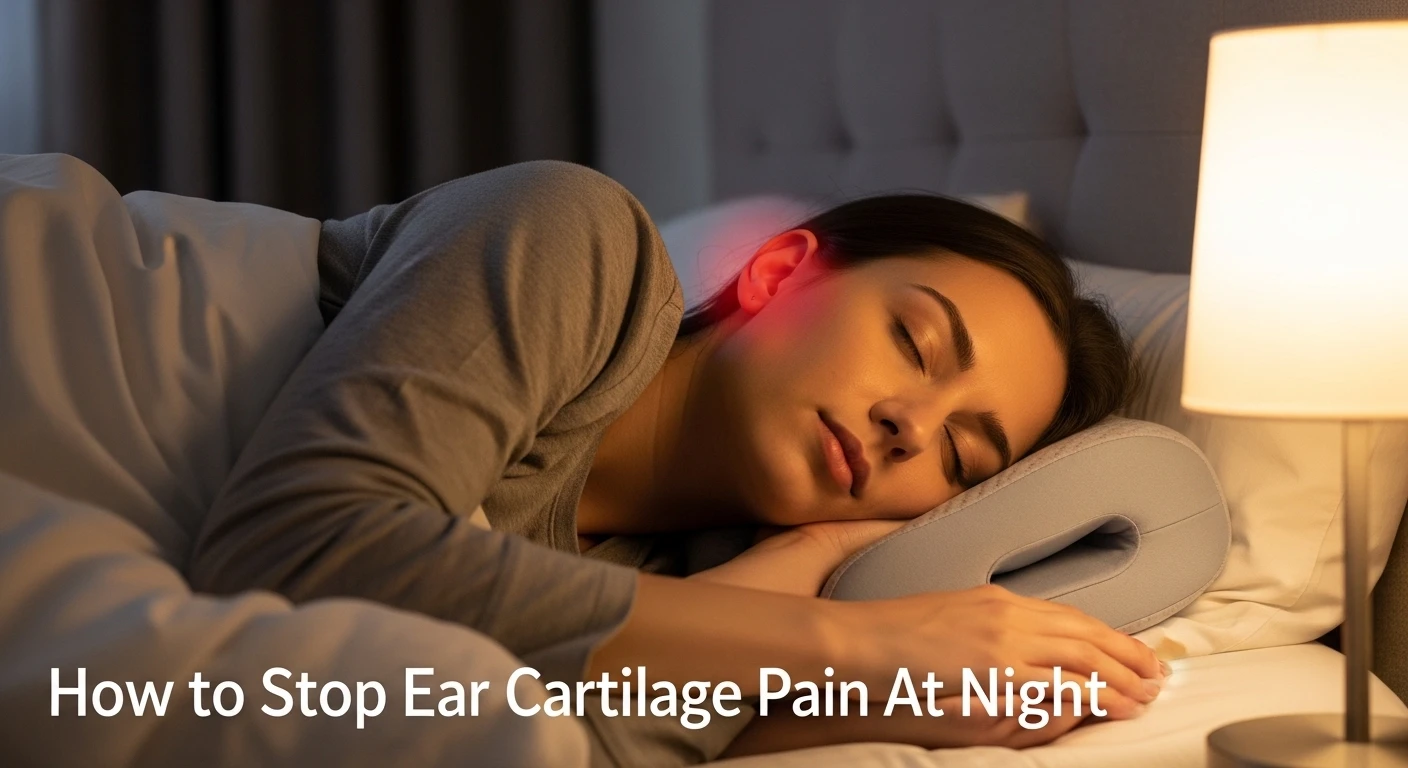
How to Stop Ear Cartilage Pain at Night: The Ischemia Protocol
Your outer ear is constructed from auricular cartilage, a specialized tissue that is biologically unique because it is avascular. This means it contains no blood vessels of its own to deliver nutrients or remove waste. Instead, it acts like a sponge, relying entirely on the surrounding skin to diffuse oxygen into the structure.
When you ask how to stop ear cartilage pain at night, you are really asking how to stop “cartilage starvation.” When you press your ear against a mattress for eight hours, you clamp shut the capillaries in the skin. This cuts off the oxygen supply to the cartilage underneath.
The resulting pain is not just a surface bruise. It is a deep, metabolic ache caused by Ischemia (lack of blood flow). To stop this cycle, we must move beyond simple comfort and focus on restoring circulation through physics and ergonomics.
Why Cartilage Hurts: The “Starvation” Effect
The outer ear is incredibly resilient to bending, but it is highly vulnerable to sustained pressure. Because the cartilage feeds via diffusion, it requires a constant, uninterrupted connection to the blood-rich skin layers.
This is the core reason sleeping positions may affect ear pain. When you lie on your side, the weight of your cranium (about 10 pounds) creates a tourniquet effect. It squeezes the blood out of the skin, effectively suffocating the cartilage below.
This explains why the pain often feels like a burning sensation that intensifies the moment you lift your head off the pillow. That burn is the blood rushing back into the starved tissue, a phenomenon known as reperfusion.
The Clinical Solution: Suspension (Not Just Softness)

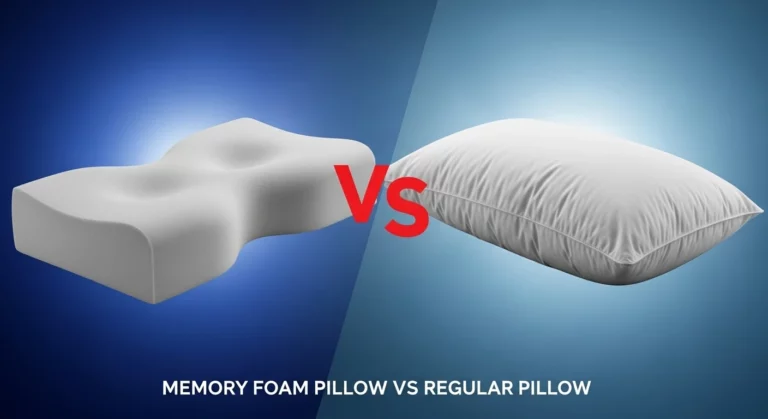
Many patients assume the answer is a softer pillow, but this is often a trap. A soft pillow creates a “wrapping” effect where the material conforms tightly around the ear, increasing the surface area of contact and trapping heat. This can actually worsen inflammation and Perichondritis.
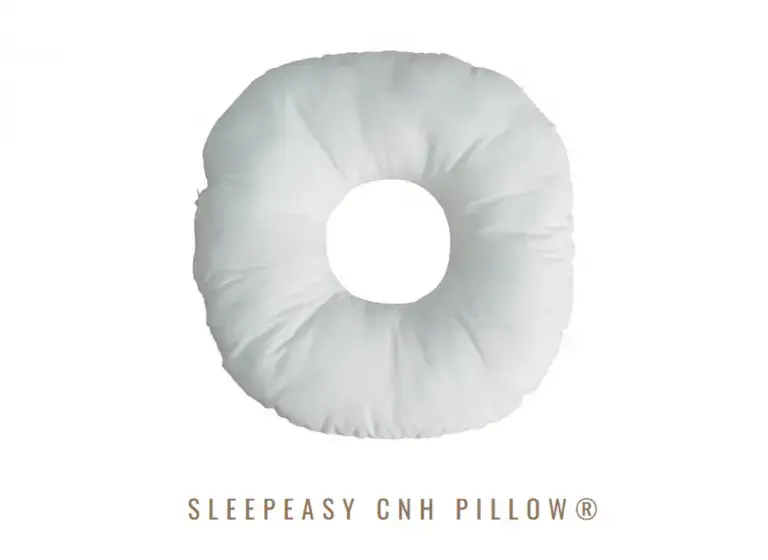
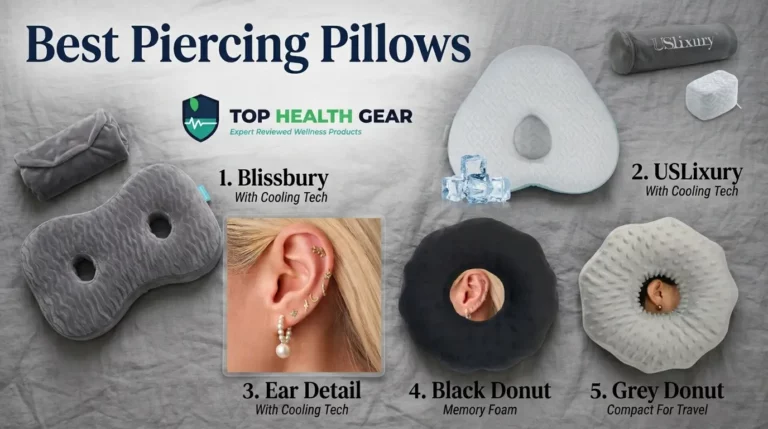
The only definitive mechanical cure is stopping cartilage pain with ear pillow supports. These devices are designed to hold the weight of the skull at the jaw and temple while leaving a hollow space for the ear.
Using an ear-specific pillow creates a suspension system. Your ear floats in the open air, ensuring that the capillaries in the skin remain open and flowing throughout the night. It is the closest thing to sleeping on your back while remaining on your side.
Dealing with CNH (The Pressure Bump)
If your pain is localized to a specific, sharp point on the rim of the ear, you may be developing Chondrodermatitis Nodularis Helicis (CNH). This is a small, tender nodule that forms when the cartilage and skin are pinched together repeatedly.
CNH is not an infection. It is a pressure ulcer of the ear. The only way to heal it is to ensure that absolutely nothing touches that spot while you sleep. Continued pressure on a CNH nodule can lead to permanent erosion of the cartilage, requiring surgical removal.
Ear Cartilage Pain Relief Remedies at Home
If you are currently in pain, you can use thermal therapy to manage the symptoms. The type of temperature matters depending on the sensation you are feeling.
For sharp, hot, or swollen pain, use a cold compress wrapped in a cloth for 10 minutes. This reduces the inflammation associated with Perichondritis. For a dull, deep ache, use a warm compress to dilate the blood vessels and encourage oxygen delivery to the starved tissue. For a detailed breakdown of these protocols, refer to our guide on how to relieve ear pain while sleeping.
Positional Strategy
If you do not have a specialized pillow yet, you must alter your body mechanics to protect the ear. One effective short-term method is the “Arm Gap” technique, where you use your bicep and forearm to support your head, leaving a space for your ear in the crook of your elbow.
Alternatively, try to transition to back sleeping, even if just for a few hours, to give the tissue time to reperfuse. Learning how to sleep on your side requires you to be mindful of these contact points. If you feel pressure building, you must rotate immediately to prevent the onset of ischemia.
Conclusion
Cartilage pain is your body’s way of telling you that your tissue is suffocating. It is a mechanical problem that requires a mechanical solution.
Do not try to tough it out. Respect the avascular nature of your ear. By off-loading the pressure and allowing the blood to flow, you can stop the pain at its source.
References
- British Journal of Dermatology. (2020). “Management of Chondrodermatitis Nodularis Helicis.” (Clinical standards for off-loading).
- Journal of Anatomy. (2019). “Vascularity of the Auricular Cartilage.” (Study on diffusion and oxygen supply).
- Mayo Clinic. (2023). “Perichondritis: Causes and Prevention.” (Overview of cartilage inflammation).

- Best Heating Pads for Back Pain: Electric, Cordless, or Microwavable? - October 9, 2026
- How Do Air Purifiers Work? Inside the Filtration Process - October 9, 2026
- How to Use a Massage Gun: A Safe Guide for Beginners - October 7, 2026