How to Relieve Ear Pain While Sleeping: A Nighttime Protocol
Ear pain has a nasty habit of spiking exactly when you try to rest. During the day, gravity and distraction help keep the discomfort manageable, but the moment you lie down, the throbbing begins. This nocturnal increase in pain is biological, not accidental.
Your body’s natural anti-inflammatory hormone, cortisol, drops to its lowest point at night. Combined with the horizontal posture of sleep, this creates a perfect storm for inflammation and pressure buildup. Finding relief requires more than just willpower.
To actually sleep through the night, you need a strategy that addresses the physics of the ear. This involves a three-part protocol: mechanical off-loading, thermal therapy, and positional adjustment.
Why Ear Pain Spikes at Night
The primary reason for increased night pain is “hydrostatic pressure.” When you are standing or sitting, gravity naturally pulls fluid down away from your head. This keeps congestion in the middle ear manageable.
When you lie flat, that gravitational help disappears. Blood and fluid pool in the head, increasing pressure in the delicate tissues of the ear. This is often exacerbated by the Eustachian tube, which struggles to drain fluid effectively when it is in a horizontal position.
This fluid buildup pushes against the eardrum. It creates a vacuum effect or positive pressure that registers as sharp, throbbing pain. This physical pressure is why painkillers alone often fail to provide complete relief.
Mechanical Relief: The “Off-Loading” Method
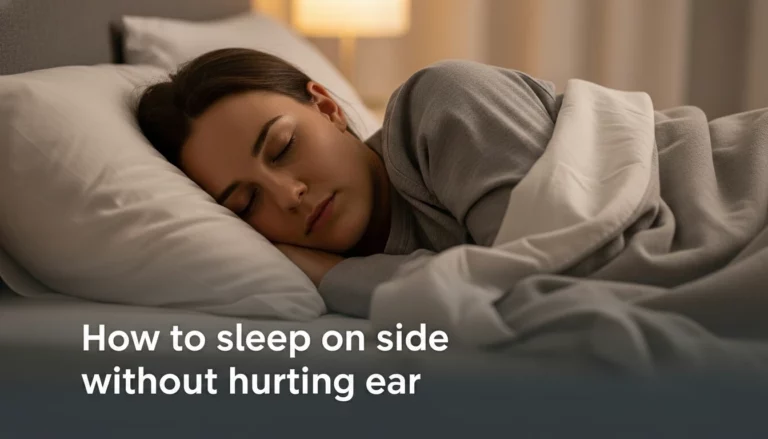
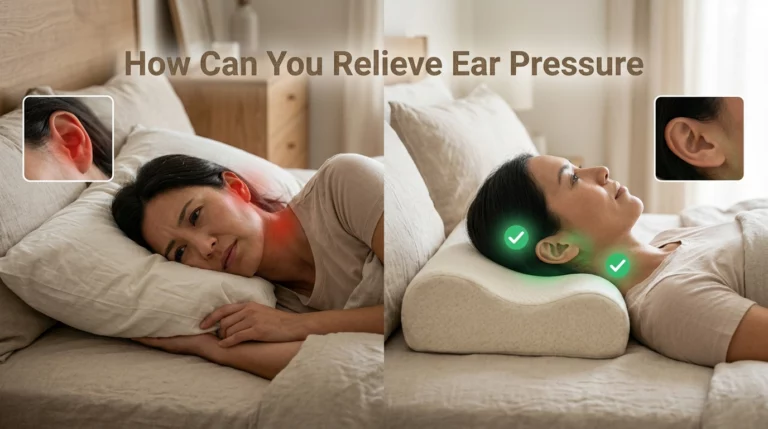
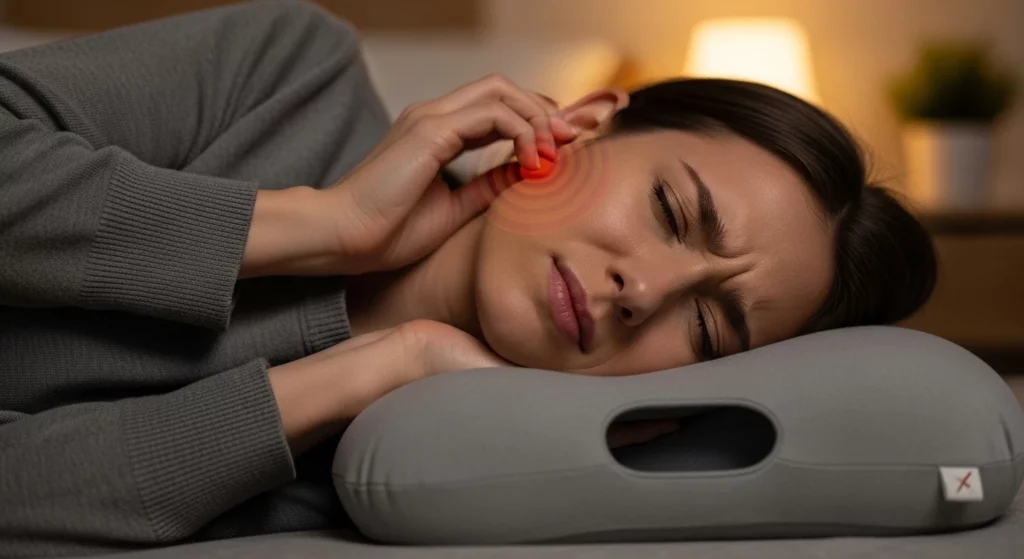
For side sleepers, the bed surface itself is often the enemy. Pressing an inflamed ear against a pillow compresses the cartilage and traps heat, which worsens the inflammation. This is the main reason why your ear hurts when you sleep on your side.
To fix this, you must “off-load” the ear. This means supporting the weight of the head without touching the sensitive ear structure. Standard pillows, even soft ones, fail to do this because they still contact the auricle.
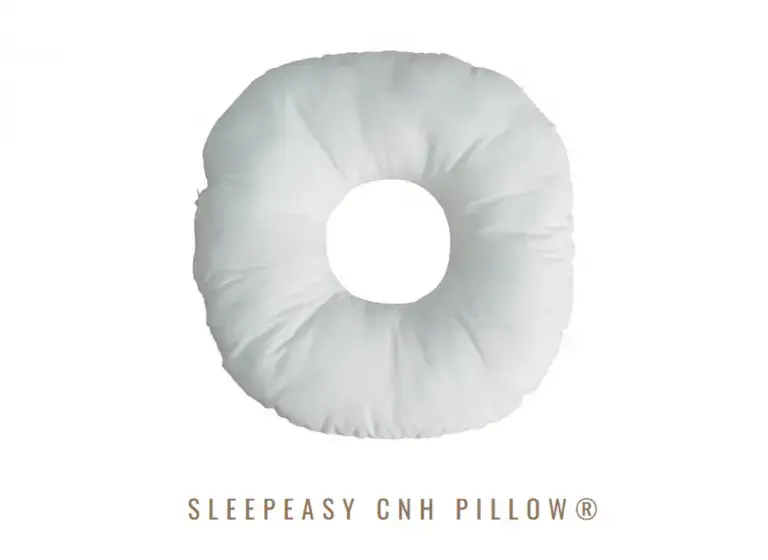
The clinical solution is using an ear pillow for ear pain. These specialized pillows feature a cutout or hole in the center. By placing your ear in this cavity, you remove 100% of the contact pressure while keeping your neck aligned.
Positional Therapy: Gravity is Your Friend
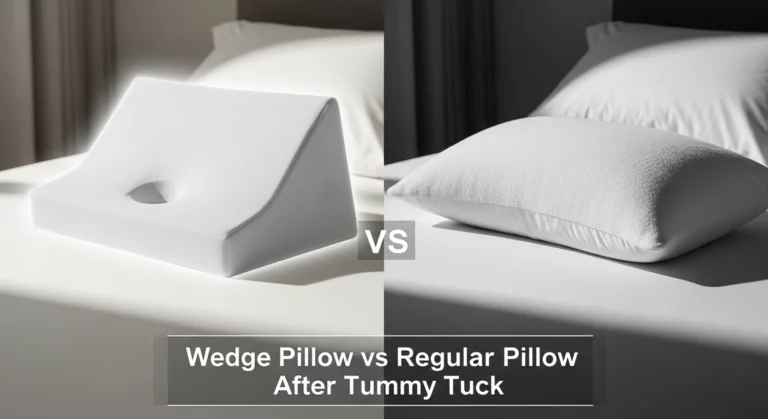
If you do not have a specialized pillow, you must use gravity to your advantage. The most effective immediate fix is to prop up your upper body using a wedge pillow or by stacking several standard pillows.
Elevating your head keeps it above the level of your heart. This slight angle is enough to encourage the Eustachian tube to drain naturally rather than pooling fluid. It reduces the hydrostatic pressure inside the head significantly.
If the pain is unilateral (on one side), you must sleep on the unaffected side. This keeps the painful ear airborne and prevents compression. Learning how to sleep on your side is largely about mastering this combination of elevation and “bad-ear-up” positioning.
Thermal & Atmospheric Remedies
Warm Compresses
Heat is a powerful tool for ear pain because it acts as a vasodilator. Applying a warm compress to the area behind and below the ear (not directly over the canal) increases blood flow. This helps flush out inflammatory chemicals.
Heat also relaxes the muscles of the jaw and neck. Since tension in the Temporomandibular Joint (TMJ) often radiates to the ear, relaxing these muscles can provide surprising relief. Use a warm, damp cloth for 15 minutes before attempting to sleep.
Humidifiers
Dry air is a silent aggravator of ear pain. When the air in your bedroom is dry, the mucous membranes in your nose and Eustachian tubes shrink and become sticky. This prevents proper drainage.
Running a humidifier next to your bed keeps these passages moist and open. This allows the middle ear to equalize pressure more easily while you sleep.
Medical & OTC Solutions
If mechanical and thermal methods are not enough, OTC pain relievers can bridge the gap. Ibuprofen is generally preferred over acetaminophen for ear pain because it reduces inflammation rather than just blocking pain signals.
Be very careful with “ear drops” or oils. If your eardrum has ruptured (perforated), putting fluids into the ear canal can cause severe damage. Always consult a doctor before putting anything liquid inside the ear.
Conclusion
Relieving ear pain at night is about fighting gravity and pressure. Do not simply lie flat and hope for the best.
Elevate your head to stop fluid pooling. Off-load the ear to stop contact pressure. Apply heat to relax the tissues. By following this protocol, you can quiet the throbbing and get the rest you need to recover.
References
- Seattle Children’s Hospital. (2024). “Earache Relief and Home Remedies.” (Clinical guidelines for OTC and thermal relief).
- Harvard Health Publishing. (2023). “Eustachian Tube Dysfunction: Causes and Treatments.” (Explanation of fluid dynamics and gravity).
- American Academy of Pediatrics. (2022). “Management of Acute Otitis Media.” (Guidelines on pain management and sleep position).

- Best Lumbar Support Pillows: Which Ones Really Help? - October 14, 2026
- Best Heating Pads for Back Pain: Electric, Cordless, or Microwavable? - October 9, 2026
- How Do Air Purifiers Work? Inside the Filtration Process - October 9, 2026