What Causes Ear Pain from Sleeping? 5 Reasons Explained
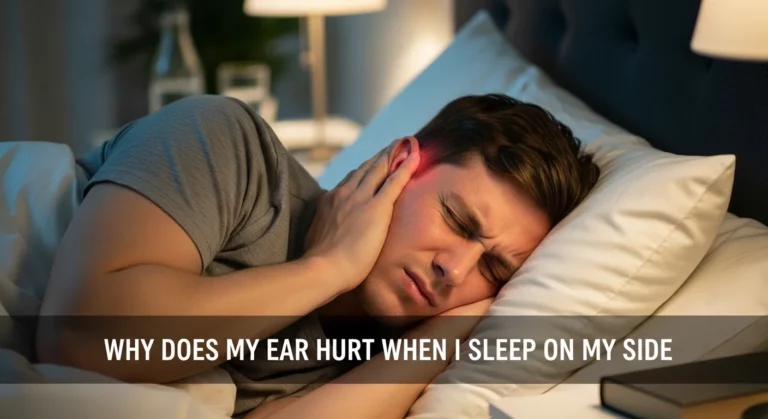
You go to bed feeling fine, but you wake up with an ear that feels like it has been folded in half. It is hot, tender to the touch, and deeply achy.
It is a specific kind of morning misery. You didn’t injure it. You didn’t pull it. You just slept on it.
If you are asking what causes ear pain from sleeping, the answer is rarely an infection. It is usually a physics problem.
Your ear is a delicate structure made of cartilage, and it is fighting a losing battle against the weight of your head.
Whether it is mechanical pressure, a hidden nodule, or a jaw issue, understanding the root cause is the only way to stop waking up in pain.
The #1 Culprit: Mechanical Pressure (Ischemia)
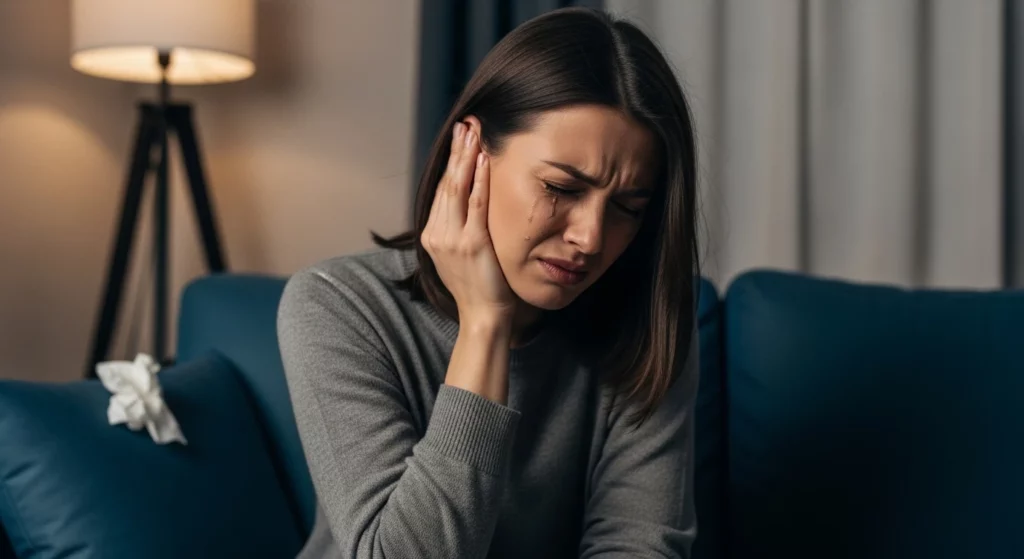
The most common reason for night pain is simple compression.
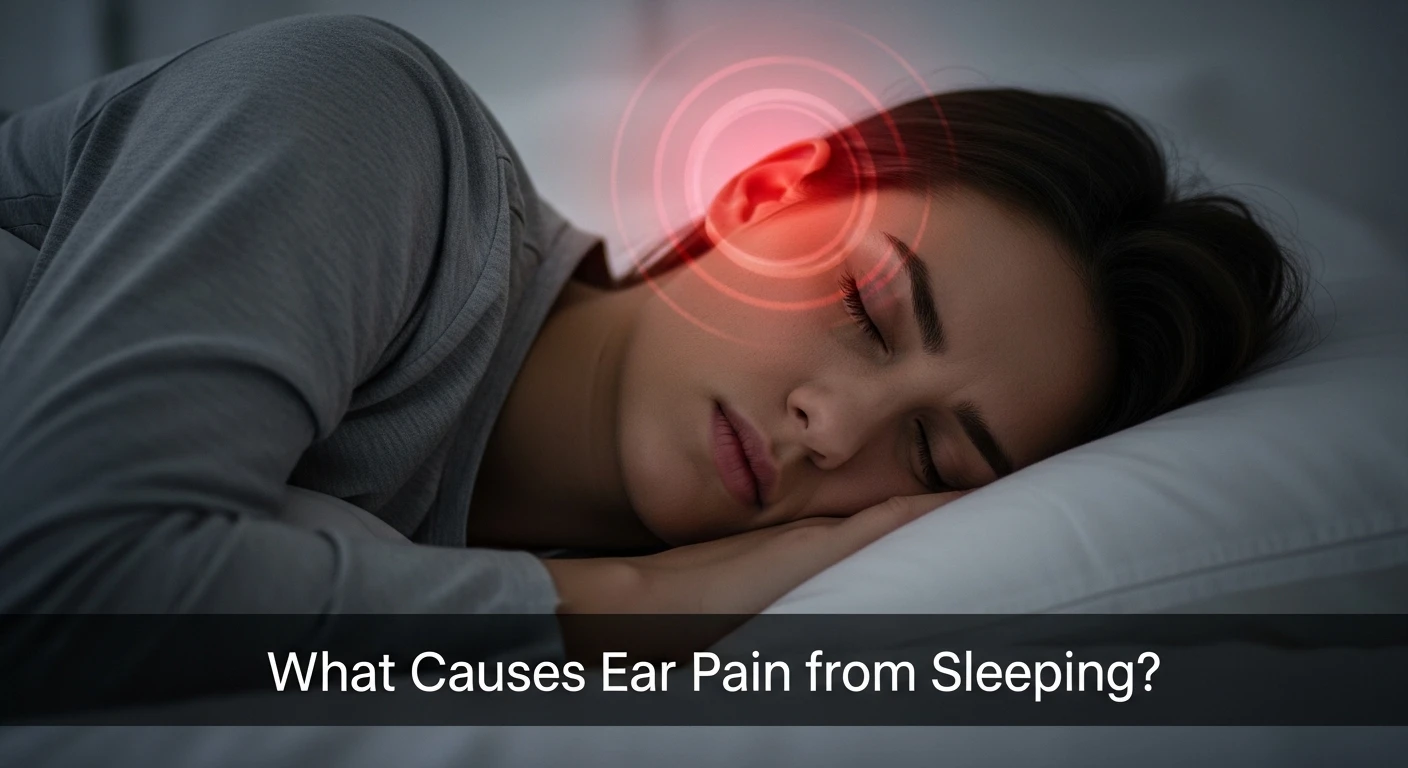
Your Outer Ear (the pinna) is unique. It is made of cartilage. Unlike your muscles, cartilage does not have its own direct blood supply. It relies on oxygen diffusing from the skin.
When you lie on your side for hours, the weight of your head compresses the skin. This restricts blood flow.
In medicine, we call this Ischemia.
The oxygen supply is cut off. The nerves in the ear begin to signal distress. This is the primary reason why your ear hurts when you sleep on your side.
When you roll over, blood rushes back in. This causes that intense, burning sensation you feel in the morning.
Medical Conditions That Trigger Night Pain
Sometimes the pressure reveals an underlying medical issue. Here are three conditions that flare up at night.
CNH (The Pressure Sore)
Chondrodermatitis Nodularis Helicis (CNH) is a mouthful to say. But it is simple to identify.
It is a small, painful bump on the rim of the ear. It feels like corn or a blister.
CNH is caused specifically by friction and pressure from your pillow. If you sleep on the same side every night, the cartilage gets irritated. It creates this nodule as a defense mechanism.
TMJ Dysfunction
Your jaw joint (TMJ) sits millimeters away from your ear canal.
Many people grind their teeth at night due to stress. This tension radiates from the jaw directly into the ear.
If your ear pain is accompanied by a headache or a clicking jaw, it is likely TMJ, not an ear issue.
Ear Infections
Real infections, like Otitis Media or Swimmer’s Ear, cause fluid buildup.
These are different from pressure pain. They usually come with a fever. You might notice fluid drainage on your pillow.
If the pain persists even when you are not touching the ear, it may be an infection.
The Hidden Cause: Your Pillow Choice
Your bedding plays a massive role in ear pain while sleeping.
If your pillow is too firm, it acts like a brick wall. It does not contour to your ear. Instead, it crushes the cartilage against your skull.
You might be wondering, can a hard pillow cause ear pain?
The answer is yes. Firm pillows create “focal pressure points.” They force all the weight of your head onto the tiny rim of the ear. This accelerates tissue damage and pain.
Cervical Spine Misalignment (Neck Issues)
Sometimes the pain is not in your ear at all. It is in your neck.
Your Cervical Spine (neck) houses nerves that travel up the head. Specifically, the C2 and C3 nerves provide sensation to the ear.
If your pillow height is wrong, your neck twists. This postural alignment issue can pinch these nerves.
The result is “referred pain.” You feel a sharp stab in your ear, but the problem originates in your spine.
How to Fix It (Quick Solutions)
You do not have to live with this pain. Here are three clinical ways to solve it.
Off-Loading the Ear
The fastest fix is to remove the pressure entirely.
I recommend using the best ear pillow for relieving pain and suffering.
These pillows create a pocket of air. Your head is supported, but your ear floats freely. This prevents Ischemia and allows CNH sores to heal.
Positional Strategy
If you struggle to stay comfortable, learning how to sleep on your side without hurting your ear involves strategic elevation. Propping your head up slightly can improve drainage and reduce pressure intensity.
If you can, try sleeping on your back. This removes all pressure from the ears. If you must sleep on your side, switch sides throughout the night to prevent prolonged compression.
Conclusion
Ear pain from sleeping is rarely a mystery.
It is usually a sign that your ear is under too much pressure. Whether it is Ischemia, CNH, or a bad pillow, the solution is the same.
Relieve the pressure. Restore the blood flow. Protect the cartilage.
References
- El-Khatib, H.A. (2018). “Chondrodermatitis Nodularis Helicis: A Review.” Journal of Dermatology. (Study on pressure sores).
- Greenbaum, T., et al. (2020). “The association between cervical spine dysfunction and temporal mandibular disorder.” (Link between neck and jaw pain).
Mayo Clinic. (2023). “Earache: Causes and Fixes.” (General medical overview).

- Best Lumbar Support Pillows: Which Ones Really Help? - October 14, 2026
- Best Heating Pads for Back Pain: Electric, Cordless, or Microwavable? - October 9, 2026
- How Do Air Purifiers Work? Inside the Filtration Process - October 9, 2026